
What is Mercedes' Plan After US$1.2bn Trump Tariffs Blow?
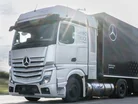
The 2025 financial year has been defined by significant disruptions to the global automotive supply chain, with Mercedes-Benz Group reporting a 57% drop in full-year reported profit.
A major factor in this decline was the US$1.2bn hit from global tariff costs, which significantly eroded margins in the core cars division. Beyond the immediate financial impact of trade barriers, the group has faced a multitude of challenges, including rising production costs and foreign exchange issues.
For supply chain executives, the Mercedes-Benz experience illustrates the vulnerability of highly globalised logistics networks to shifting geopolitical tides. Consequently, the group is now accelerating a radical restructuring of its supply chain to prioritise resilience over the traditional just-in-time model, alongside reshaping the production footprint.
Tariffs impact adjusted return on sales
The impact of tariffs was particularly visible in the car division’s adjusted Return on Sales, which fell to 5% in 2025. Without the tariff burden, this figure would have been 6.1%.
To mitigate these pressures, the company is intensifying its focus on cost discipline and efficiency. Supply chain disruptions, particularly in the transit of components between Europe, North America and China, have forced a rethink of how parts are moved and stored to prevent costly assembly line stoppages.

Logistics halls integrated with assembly sites
In Swindon, UK, and other key production hubs, the company has integrated new logistics halls with automated pressing facilities to streamline the flow of sub-assemblies.
This physical integration reduces the "dead time" between manufacturing and logistics, ensuring that components like doors and fenders move through the supply chain with minimal friction.
This strategy is also being applied to the electric vehicle transition, where battery assembly sites are being situated within or adjacent to vehicle plants to manage the complex logistics of high-voltage components.
The "under one roof" approach to powertrain activities – combining planning, purchasing and production – is designed to improve the overall speed of the supply chain while reducing its carbon footprint.
Decarbonising the global value chain
Sustainability has become a core requirement for all supply chain partners, as the company works toward its "Ambition 2039" goal of a net carbon-neutral vehicle fleet.
From 2025, the group will integrate CO2-free "green steel" into its vehicle production, with over 85% of its supplier base already committed to carbon-neutral materials.
Ola Källenius, Chairman and CEO of Mercedes-Benz Group AG, said: “The Mercedes-Benz Team did an outstanding job in 2025 as we successfully kicked off our biggest-ever product and tech launch programme. We debuted class-leading innovations such as the MB.OS.”
By mandating that logistics and supply chain partners align with these green standards, the company is reducing environmental impact and insulating itself from future regulatory penalties and carbon-border taxes in key markets like the European Union.
Company portals

Executives

Joerg Burzer
Member of the Board of Management, Chief Technology Officer, Development & Procurement

Ola Källenius
CEO