
What UNESCO Withdrawal Means for Trade and Conservation Ties
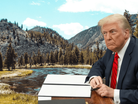
The United States has confirmed plans to leave UNESCO by the end of 2026, setting off alarm bells over the future of global conservation efforts, the integrity of trade-linked environmental oversight and the long-term stability of its own World Heritage sites.
While framed as a political move, the decision places new pressure on international supply chains and the environmental standards that underpin global commerce.

The decision, first triggered during US President Donald Trump's first term and set for renewal following his return to office, carries economic consequences that go beyond diplomatic fallout.
The withdrawal is officially framed around ideological differences.
According to US Department of State spokesperson Tammy Bruce, UNESCO’s backing of what she describes as "divisive social and cultural causes" and the agency’s support for the United Nations Sustainable Development Goals are among the reasons cited.
She also reiterates long-standing US objections to UNESCO’s 2011 recognition of Palestine, saying it fosters "anti-Israel bias".
Behind the rhetoric, however, lies a fundamental shift in how the US chooses to engage with international environmental regulation.
UNESCO’s oversight plays a critical role in holding governments to account for how they treat natural resources, especially those with cross-border relevance such as water systems, migratory wildlife corridors or geological formations straddling national boundaries.
With 26 UNESCO World Heritage sites across the US – 13 of them natural sites like Yellowstone, Yosemite and the Grand Canyon – the exit reduces the layers of international scrutiny that guide and constrain industrial development in ecologically sensitive areas. These locations are not just cultural landmarks but economic engines.
Many support tourism and research industries, while others intersect directly with national infrastructure and supply chain routes.
This points to a trade-off. The move away from UNESCO loosens external environmental obligations that can slow or limit energy extraction, pipeline development or mining.
However, it also introduces instability for businesses reliant on the environmental certifications or soft power influence UNESCO provides. From ecotourism to academic exchanges and science-led trade policy, the reputational and regulatory benefits of UNESCO partnership often help secure market access abroad.
Conservation bypassed for extraction
The environmental impact of disengagement is already visible in regulatory behaviour.
Ingmar Rentzhog, CEO and Founder of climate media outlet We Don’t Have Time, sums it up bluntly on LinkedIn: "It’s about power, profit and the fear of science stopping them."
Ingmar highlights how recent federal actions have clashed with UNESCO’s conservation mission. These include reauthorising oil drilling in Alaska’s Arctic National Wildlife Refuge, ending a pause on uranium mining near the Grand Canyon and proposing gas pipelines close to Yellowstone.
In Utah, protections were stripped from Bears Ears National Monument, exposing Indigenous sacred land to mining. These steps reflect an approach where environmental science is often sidelined in favour of short-term economic gains.
UNESCO has historically offered a layer of multilateral pressure in such cases. International attention can delay or even prevent extractive projects that risk breaching conservation standards. Without that pressure, the pathway for large-scale resource extraction widens, potentially weakening commitments under broader trade and sustainability agreements.
Sites like Papahānaumokuākea Marine National Monument and Great Smoky Mountains National Park are ecologically delicate and internationally important. With fewer external checks, these locations risk environmental degradation, threatening biodiversity, tourism and, in some cases, the freshwater sources and climate stability underpinning surrounding agriculture or industry.
Multilateralism’s financial and political cost
UNESCO, for its part, has spent the last decade reducing reliance on US contributions. In 2011, American funding made up 22% of its budget. That figure now sits at 8%.
According to Director-General Audrey Azoulay, the organisation has secured doubled voluntary donations from other member states and private funders since 2018, signalling a shift towards more resilient financial planning.
Despite these reforms, the political weight of a US withdrawal still matters.
UNESCO operates as the sole United Nations body dedicated to Holocaust education and combating antisemitism – an area where it has long worked with American civil society. It also plays a crucial role in shaping norms around education, science and ethics in emerging fields such as artificial intelligence.
The absence of the US risks ceding influence to other states, including China, whose rising involvement in multilateral organisations comes with its own agenda.
There is also concern at home. Communities seeking World Heritage status or international educational partnerships now face greater uncertainty.
As Audrey states: “This decision contradicts the fundamental principles of multilateralism and may affect first and foremost our many partners in the United States of America – communities seeking site inscription on the World Heritage List, Creative City status and University Chairs.”
For supply chains, academic institutions and industries tied to sustainability credentials, that uncertainty translates into potential cost.
Whether it's maintaining forest preservation standards, enforcing sustainable tourism protocols or meeting international benchmarks in science funding, UNESCO provides a framework that helps American organisations and businesses remain globally competitive.
Without it, oversight becomes fragmented, and the protective measures around trade-linked environmental stewardship lose their international backing.
The full impact of this shift may not be felt immediately, but its erosion of global trust and environmental accountability could affect policy, investment and public health far beyond US borders.