How Walmart's Supplier Network Delivers Grapes Year-Round
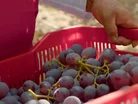
Many consumers are left wondering exactly where out-of-season produce comes from, and if it's even worth the price, as they scan the supermarket shelves.
One of these problem foods is grapes.
For Walmart, the solution is not just a matter of purchasing, but of building a procurement network that spans continents.
Javier Hernandez, Director in Global Produce Sourcing at Walmart, explains the issue: "There's something fundamental about grapes, which really makes them a challenge.
"They are very complex because they're very perishable. And getting them in store, flavourful and full, 52 weeks a year, is a massive challenge."
That perishability leads to regular supply shortages. Walmart’s task is to close the gaps so its shelves stay stocked.
Procurement lessons from Chile
The company’s answer started in 2005 with a step into global sourcing.
Walmart opened its first international office in Chile, a country with climates ranging from desert to rainforest. This variety offered the chance to procure different grape types across extended growing seasons.
Mark Adamy, Senior Director in Walmart Sourcing, recalls the beginning: "The question was, 'where in the world can we go to get grapes?' Well, Chile had grapes and they could be sold, and so we started there.
"But think about what Walmart would mean to a grower in Chile, who can go back to their board and say Walmart was willing to work with them. It opened doors for everyone."
The early supply had drawbacks.
Javier notes: "Back then, you would finish the season in California and you would have a gap without grapes for two or three months, and then we would start in the early part of Chile. But, these early varieties we were working with there weren't consistent – they could be tart or acidic – and we always want the best experience for customers.
"Working with the merchants, learning from each other, we as a sourcing team said, 'okay we're starting to get somewhere. Now, we have the merchant, we have the suppliers in Chile, we can really make this happen.' And it was this approach that got us into Peru."
This expansion set the pattern: identify a supply gap, build relationships with growers and gradually map out a supply chain that follows the seasons.
Following the sun to secure supply
In 2025, Javier is in Arequipa, Peru, with colleague Catherine Pastor, an agronomist whose role is to assess quality in the field. Grapes grown in the Andes foothills can be excellent but must be harvested precisely to protect flavour and condition.
The sourcing journey now follows a clear path. Grapes start in California, then move to Peru, then Chile, back to Peru, and on to Mexico.
By shifting locations in step with climate cycles, Walmart mirrors natural rhythms in its procurement strategy. The comparison made is with wildebeest following rainfall across Africa: supply flows by tracking the best growing conditions.

This strategy has yielded results. Gerardo Guerrero, the merchant managing Walmart’s grape category for the past three years, has seen the impact.
"We've covered all the gaps," he says. "We have 52 weeks' availability, with all the options across the year. We've reduced our markdowns and we're selling – and the customers are buying – the kind of fruit we want to sell."
By 2024, Walmart had sold more than 22 million cases of grapes, including more than one million pounds every day in the US alone.
Between 2019 and 2024, imports through its direct sourcing programme almost doubled, and grape availability rose by more than 500 basis points from 2021 to 2024.
Supplier relationships as procurement currency
Walmart credits this performance to its supplier relationships, which act as protection against risks in the supply chain. Strikes, weather disruption and political unrest have all affected production, yet grapes continued to reach shelves.
Gerardo stresses: "When you have these relationships, they're what protect you when supply is limited. Those relationships are value. With our growers and suppliers, you get a depth of commitment – they value us, we value them and they do everything in their power to ensure we have the very best grapes."
Mark adds another layer. The Innovation Centre in Arkansas has been used to trial new grape varieties, from red to black, seeded to seedless. Lessons are fed back to global sourcing teams, who adjust procurement strategies in the field.
Through Chile, Peru, Mexico and California, a single lesson keeps repeating: procurement succeeds when it blends consistent product quality with trust in suppliers.