What Would US Rail Network Merger mean for Supply Chains?
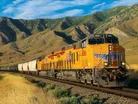
A transcontinental rail merger could soon reshape the United States freight landscape.
Union Pacific, the dominant rail operator in the western US, is reportedly in early-stage talks with Norfolk Southern, a major player across the eastern seaboard, to explore a merger worth close to US$200bn.
If completed, the deal would create the largest freight rail network in North America, spanning coast to coast with more than 52,000 miles of track.
The two operators are among the six remaining Class 1 railroads—US freight carriers defined by the Surface Transportation Board (STB) as earning revenue above a set annual threshold, currently US$504.8m. A merger would reduce that number to five, a move that has already sparked debate among regulators, investors, unions and shippers.

Connecting east and west
For decades, transcontinental rail has faced a core logistical hurdle: no single railway spans both coasts. Freight travelling from Los Angeles to New York, for instance, typically requires a handover in Chicago.
Union Pacific CEO Jim Vena says a combined network would eliminate such delays, delivering greater efficiency for customers and making supply chains smoother across the board.
“Bottom line is, do I, Jim Vena, think that a merger would be beneficial for the country? Absolutely,” he said at an investor conference.
“I think it would be fantastic for our customers, fantastic for competition, fantastic politically and I think the regulators would have to deal with it, if somebody went forward.”
The two companies have a combined revenue of US$36.4bn based on last year’s figures—Union Pacific contributing US$24.3bn and Norfolk Southern US$12.1bn.
Together, they operate across 45 states, with Union Pacific controlling the western two-thirds of the country and Norfolk Southern concentrated in the Midwest and along the Atlantic coast.
From a logistics standpoint, the merger would simplify shipping for manufacturers and bulk goods suppliers who currently rely on complex interline agreements between different railways. It would also potentially allow rail to compete more aggressively with long-haul trucking, which benefits from door-to-door flexibility.
Regulatory scrutiny
Despite the clear operational advantages, regulators are expected to scrutinise any deal closely.
The STB raised the bar for rail mergers following a series of disruptions in the 1990s, notably the Union Pacific–Southern Pacific merger in 1996 and the breakup of Conrail in 1999, both of which caused widespread delays and supply chain blockages.
To proceed under current STB rules, any rail merger must demonstrate that it enhances competition and serves the public interest.
The 2021 merger between Canadian Pacific and Kansas City Southern, which created the first single-line freight railway linking Canada, the US and Mexico, was approved largely because Kansas City Southern held a pre-existing exemption from these stricter rules.
Union Pacific and Norfolk Southern would not benefit from such a waiver and their size presents a much more complex regulatory challenge. The deal would be reviewed by the STB, the Department of Justice and potentially Congress.
Ariel Rosa, Analyst at Citi Research, cautions that “a major transcontinental railroad merger would likely prove costly and time consuming, risking a years-long distraction to management, while facing significant pushback from regulators, politicians, employee unions, competitors, customers and other stakeholders.”
Impact on workers and the market
Labour unions are already preparing for what such a merger might mean for jobs, conditions and bargaining power.
According to TD Cowen: “Getting the unions onboard will be crucial to getting a blessing from the White House.”
While an end-to-end merger is unlikely to result in widespread job losses beyond corporate roles, any plan would need to offer unions tangible benefits to win support.
Norfolk Southern has experienced management turbulence, including the departure of Chief Executive Alan Shaw and Chairman Claude Mongeau.
Meanwhile, investors appear intrigued. Shares in Norfolk Southern rose 3.7% on the day the talks were reported, climbing another 4.7% in after-hours trading.
The boost reflects optimism over potential cost savings. Norfolk Southern’s 2024 operating ratio - costs as a percentage of revenue - was 66%, compared to Union Pacific’s 60%, suggesting scope for improving efficiency and extracting value.
For the freight industry, a Union Pacific–Norfolk Southern merger could represent a major inflection point, restructuring how goods move across the country and possibly prompting further consolidation.
TD Cowen has predicted such a deal could see the US rail sector consolidate to just two major east–west freight corridors, mirroring the structure already in place in Canada.
Whether this cross-country rail link-up makes it through regulatory hurdles is far from certain. If successful, it could redraw the map of American logistics.