US-Japan Trade: Lower Car Duties & Major Investment
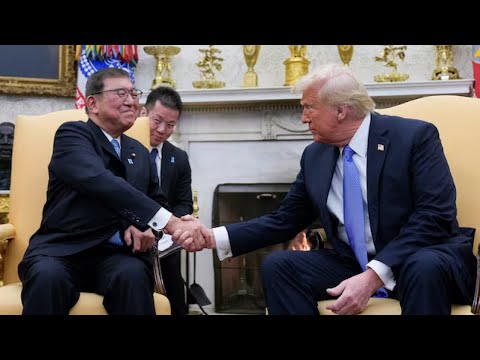
After months of back-and-forth, the US and Japan have agreed a trade pact that US President Donald Trump claims is the “largest deal ever made.”
It may be the most substantial agreement since President Trump introduced his “Liberation Day” tariffs in April, which shook global markets and sent ripples through international trade.
The new deal lowers tariffs on Japanese autos and opens Japan’s markets to more American agricultural goods. It also outlines plans for Japan to invest US$550bn in the US economy, particularly in sectors critical to supply chain resilience like pharmaceuticals and semiconductors.
Japanese Prime Minister Shigeru Ishiba calls it a step that will “help the global economy.”
Lower tariffs, stronger incentives
Japan remains the world’s fourth largest economy and a major player in international trade.
With a heavy reliance on energy and food imports, Tokyo leans on its exports of electronics, machinery and cars to sustain growth. The US, as Japan’s top export market, plays a vital role in that balance.
Trump’s initial tariffs had economists warning that Japan could lose up to one percentage point of GDP, risking recession.
With this agreement, Japanese exporters gain predictability and the lowered auto tariff, now set at 15% instead of 27.5%, gives major manufacturers like Toyota, Honda and Nissan a cost advantage in the US market.
Shigeru confirmed the cuts are without quotas, meaning no cap on the number of cars Japanese firms can export. That positions Japanese auto firms competitively against rivals in countries like China.
The US dollar’s dip against the Japanese yen also boosts the purchasing power of Japan’s manufacturers, giving them leverage in buying raw materials and expanding production.
However, not everyone is pleased. US auto firms have voiced concern. While Japan gets a 15% tariff rate, North American-built vehicles still face a 25% charge.
Matt Blunt of the American Automotive Policy Council said: “Any deal that charges a lower tariff for Japanese imports with virtually no US content than the tariff imposed on North American-built vehicles with high US content is a bad deal for US industry and US auto workers.”
Cash, commodities and competition
The Japanese commitment to invest US$550bn in the US could create thousands of jobs and support industrial development. Shigeru says the funds are intended to build resilient supply chains in key areas including artificial intelligence, energy and shipbuilding.
Trump, posting on his social media platform, Truth Social, wrote: “Japan will invest, at my direction, $550 Billion Dollars into the United States, which will receive 90% of the Profits.”
He adds that this will help generate hundreds of thousands of new jobs. While no details are offered about timelines or investors, Tokyo says the government will guarantee investments in industries linked to national security.
Agriculture is also on the table. Trump says Japan will purchase more American rice, a shift that could relieve pressure on US farmers, though it may rattle Japan’s domestic producers already facing shrinking market share.
As Trump puts it: “Japan will open their Country to Trade including Cars and Trucks, Rice and certain other Agricultural Products and other things.”
Beyond Japan, the deal sets a new benchmark. South Korea and Taiwan, both currently engaged in trade discussions with the US, are paying close attention to the 15% auto tariff.
Japan’s move may nudge them towards faster concessions to avoid being undercut in the American market.
But this pact is not without gaps. Steel and aluminium imports from Japan are still subject to a 50% tariff. Defence spending, a point of friction in US-Japan relations, is also not part of the agreement.
Japan’s Chief Negotiator Ryosei Akazawa confirmed: “Steel and aluminium tariffs would remain at 50%,” and that “defence spending commitments were not included in the trade deal.”
Political context and regional pressure
The trade deal arrives just days after Japan's Liberal Democratic Party suffered a heavy loss in an upper house election, weakening the PM's domestic position.
Meanwhile, Ryosei, who led eight rounds of talks with US counterparts including Commerce Secretary Howard Lutnick and Treasury Secretary Scott Bessent, posted “Mission Complete” on X, noting that no progress had been made on defence spending.
Washington has been pressing Indo-Pacific allies to raise defence spending, first to 3.5% of GDP, then to 5%—levels similar to NATO commitments. Japan’s decision to cancel a July ministerial meeting with the US over these pressures shows the fragility behind the scenes.
As Washington finalises deals with Vietnam, Indonesia and the Philippines, countries like Cambodia, Laos and Sri Lanka, smaller economies with limited trade weight, are left exposed. Their inability to offer the kind of investment or trade opportunities sought by the US means they risk being left behind.
The deal also reflects a shift toward bilateral agreements, such as with the EU.
While the Union has yet to reach a trade deal with Washington, Japan and Europe have agreed to “work more closely together to counter economic coercion and to address unfair trade practices,” according to European Commission President Ursula von der Leyen.