Why Trump's Vietnam Deal is Boosting Fashion Retail Stocks
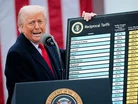
Shares of some of the world’s biggest apparel and footwear companies are surging after US President Donald Trump announced a trade deal with Vietnam.
As Vietnam serves as a major production base for names like Nike, Lululemon, Gap and Under Armour, the agreement averts the higher 46% tariffs previously threatened and instead sets a lower rate of 20%.
The retail sector has closely tracked these negotiations, as Vietnam supplies a large portion of their merchandise, from T-shirts and denim to trainers and sportswear. Nike alone produces around half of its footwear in Vietnamese factories.
When President Trump first proposed the higher tariff in April, industry stocks dropped sharply. On Wednesday (2 July), after the new deal was revealed, they bounced back: Nike shares climbed 4.2%, Lululemon added 2.9%, and Under Armour and Levi Strauss also saw gains.

Trump posted the announcement on Truth Social: "It is my Great Honor [sic] to announce that I have just made a Trade Deal with the Socialist Republic of Vietnam."
He adds: "It is my opinion that the SUV or, as it is sometimes referred to, Large Engine Vehicle, which does so well in the United States, will be a wonderful addition to the various product lines within Vietnam."
While details of the trade pact remain limited, the agreement reportedly allows tariff-free access for US exports into Vietnam.
Meanwhile, Vietnamese exports to the US face a 20% tariff, down from the previously announced 46%. A 40% levy on goods trans-shipped through Vietnam – typically referring to goods routed through the country to avoid tariffs, often from China – is also part of the deal, though the US has not clarified how this will be enforced.
Relief for retail, but questions remain
Retailers welcome the lower tariff rate as it avoids what some had warned could be a supply chain disaster.
Companies such as Gap and Abercrombie & Fitch had already begun diversifying production away from China in favour of Vietnam, Cambodia and Indonesia. Trump’s broader tariff threats placed all of these sourcing strategies under strain.
David Swartz, Analyst at Morningstar Research, says: "Investors may be looking at this as a sign that many of the threatened tariffs (on Vietnam and other countries) will be rescinded."
Nike, whose supply chain would have been hit hard by the original 46% rate, estimates the tariffs could have cost the company US$1bn. The firm has said it plans to manage the impact, but avoiding the harsher levy altogether provides an immediate cushion.
Matthew McCartney of Wedbush Securities points to supply chain flexibility as key: "The transshipping aspect is an important wrinkle, but I’d expect suppliers will quickly move to adjust supply chains to avoid paying that hefty duty."
Retailers like Best Buy, which also sources electronics through Vietnam, benefit as well. The company had already factored in a 10% base tariff into its annual forecasts but now faces reduced pressure.
Matthew adds: "This deal brings clarity to the industry for a critical consumer electronics hub and eliminates some downside risk to Best Buy’s outlook."
Vietnam’s trade status and China’s shadow
The Vietnamese government had reasons to act quickly. Vietnam sends around 30% of its exports to the US and relies heavily on access to American consumers.
Hanoi also used the talks to push for the US to recognise Vietnam as a market economy and to ease restrictions on high-tech product exports—requests that Washington has repeatedly declined.
Adam Sitkoff, Executive Director of the American Chamber of Commerce in Hanoi, notes: "Assessing the pros and cons of the deal is difficult without seeing further details about what the tariffs actually mean.
"Do the 40% tariffs on ‘trans-shipped’ goods apply to any product that contains content from another nation? The answers to these questions can be the difference between celebrating or crying."
The structure of the deal signals broader geopolitical goals. Analysts believe the trans-shipment clause targets Chinese companies that re-route goods through Vietnam to dodge US tariffs.
Julien Chaisse of the City University of Hong Kong says: "The new US-Vietnam deal is not just about trade; it is clearly aimed at China ... it is meant to block the flow of Chinese goods that often move through Vietnam to dodge existing US duties."
This approach mirrors the UK-US trade agreement signed in May, which included conditions that effectively shut Chinese firms out of certain British supply chains.
Now, Beijing is watching closely as the US pursues similar pacts with other countries. China’s commerce ministry warns that it "firmly oppose[s] any party striking a deal at the expense of China’s interests" and is threatening "resolute countermeasures" if its concerns are ignored.
For Vietnam, some details remain unresolved, including how the 20% tariff will apply – whether it's a flat rate or layered over existing duties – and how the 40% trans-shipping levy will be enforced.