Top 10: Supply Chain Sustainability Platforms
Global volatility is proving the need for resilient supply chains now more than ever – and businesses are turning to sustainability initiatives in order to mitigate some of these risks.
As consumers prioritise brands with clear ESG policies, it is more important than ever that companies can rely on their traceability and reporting systems.
Supply chain sustainability platforms make it easier for businesses to manage their supplier performances and meet their targets.
Supply Chain Digital examines the Top 10 platforms which stand out for their efforts in driving sustainability.
10. Circulor
Revenue: US$8m - $16m
Employees: 50-200
CEO: Giles Palmer
Founded: 2017
Since its foundation in 2017, Circulor has been working to make supply chains more responsible and sustainable. Its technology allows for the tracking of materials and helps businesses measure their environmental impact to ensure sourcing practices.
It has 2.6 billion traceability data points and more than 150 facilities actively providing data to the platform, providing it with a wealth of knowledge to pass on to clients. With real-time monitoring and analytics, businesses can manage risk and ensure responsible sourcing.
9. Sweep
Revenue: US$33.6m
Employees: ~200
Co-Founder & CEO: Rachel Delacour
Founded: 2020
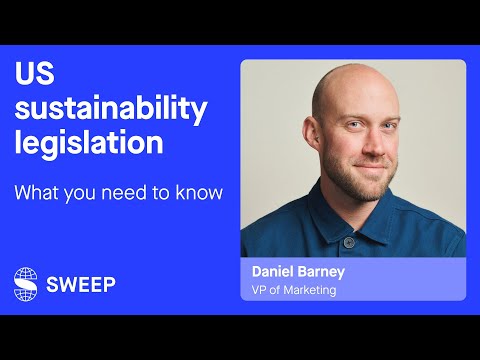
Through its platform, Sweep delivers transparent and actionable data-backed insights to help organisations deliver sustainable value. Its SaaS solution makes it easier for businesses to meet complex reporting requirements and map environmental impact across their value chain.
As a result, they can more easily implement sustainability strategies with well-informed decision-making capabilities. Sweep is built to comply with international ESG standards and regulations, meaning that companies can build long-term resilience while identifying climate risks and regulatory concerns.
8. Altana AI
Revenue: ~US$45.6m
Employees: ~200
Co-Founder & CEO: Evan Smith
Founded: 2018
Altana’s AI-powered product network aims to connect businesses and governments on a singular platform, in order to trace goods. It tracks where they come from, moves them safely and creates more trust with their partners.
By keeping trade flowing, Altana helps build a more resilient and secure global economy. The platform unifies siloed information, with a cataloguing feature, allowing for n-tier visibility and new connections. It also includes product passports to allow collaboration across the chain and analytics into trade risk.
7. Sourcemap
Revenue: US$17.4m
Employees: ~126
CEO: Leonardo Bonanni
Founded: 2011
Using Sourcemap, companies can automatically trace their entire upstream supply chain to the raw material. Through its audit-ready tool which creates reports directly to customs authorities around the world, businesses can comply with every global supply chain regulation.
It offers procurement and N-Tier mapping to identify logistics bottlenecks, fraud, supplier concentrations and more, all to ensure resilience. It also has continuous supplier watchlist monitoring to ensure due diligence across the supply chain.
6. EcoVadis
Revenue: ~US$162.2m
Employees: 1,9000
CEO: Pierre-François Thaler & Frédéric Trinel
Founded: 2007
EcoVadis is a trusted company which works towards embedding sustainability intelligence into every business decision around the world. It offers global, actionable ratings to businesses of all sizes. These businesses also rely on EcoVadis’ detailed insights to ensure they are complying with ESG regulations, reducing GHG emissions and improving the sustainability performance across their value chain.
Its Carbon Action Manager helps clients unlock supplier-specific emissions data and collaborate across their entire supply chain to reduce measurable and scalable Scope 3 reductions.
5. IntegrityNext
Revenue: US$27.6m
Employees: ~210
CEO: Bruno Teuber
Founded: 2016

IntegrityNext offers a thorough, enterprise-grade platform which works to connect, scale and accelerate sustainable performances across global supply chains.
It relies on AI and innovation in order to deliver insights and automation which enable smarter decisions to maximise business value. It offers a range of solutions that can be tailored to its clients needs, whether that's regulatory compliance or decarbonisation. It offers help on sustainable procurement, carbon emissions, deforestation regulation and more.
4. Sedex
Revenue: US$60.4m
Employees: ~600
CEO: Jon Hancock
Founded: 2004
Sedex offers verified audits that power due diligence and reporting across the entire global supply chain, including end-to-end social and environmental due diligence. With it, leaders can gain visibility across all tiers, use risk assessment tools to score suppliers objectively and turn findings into practical corrective action plans.
Sedex’s sustainability coordinator service offers tailored support that strengthens performance and compliance. Sustainability coordinators can build KPI dashboards to streamline data across teams and senior leadership in order to gain full transparency and understanding.
3. Oracle Fusion ESG
Revenue: US$57.4bn
Employees: ~162,000
CEO: Clay Magouyrk and Mike Sicilia
Founded: 1977
Oracle Fusion Cloud Enterprise Performance Management (EPM) helps integrate data to allow for the planning and management of ESG practices. Its sustainability management solution is designed to handle pre-transformed ESG activity data, such as energy use, fleet mileage, spending and workforce data.
Using Oracle, businesses can easily track source data that has been verified and validated with ESG standards. Oracle calculates key performance indicators, with capabilities for flexible mapping across Scope 1, 2 and 3.
2. Microsoft Cloud for Sustainability
Revenue: US$281.7bn
Employees: ~228,000
CEO: Satya Nadella
Founded: 1975
Microsoft Cloud for Sustainability and Microsoft Sustainability Manager offer thorough insights across sustainable supply chains, featuring data and AI capabilities to help companies transform with ESG intelligence. Using automated inputs, companies can undergo more efficient reporting that stays up to date within the emerging climate economy.
The platform offers total value chain transparency, with impact and progress reports, using a detailed ESG data estate that helps businesses keep on track of their own ESG data. Microsoft also analyses insights in order to present action points, using a range of AI-powered forecasting and modelling.
Following these insights and action points, Microsoft can help businesses grow their impact, offering collaborative opportunities and innovative ideas for growth. It also offers industry-specific solutions, catering action points for each sector’s needs.
1. SAP Sustainability Control Tower
Revenue: €36.8bn (US$43.4bn)
Employees: ~109,00
CEO: Christian Klein
Founded: 1972
SAP Sustainability Control Tower aims to streamline how clients manage sustainability data and performance, ensuring compliance and the embedding of sustainability into core business operations. Through this platform, businesses can capture ESG metrics using enterprise-wide data from SAP and third party systems, which can then be used to generate ESG reports. The Control Tower helps users comply with reporting standards like ESRS and EU Taxonomy in order to drive progress through embedded sustainability practices.
Using SAP-delivered or custom definitions, sustainability reporting can be configured, calculated and managed. ESG metrics can be analysed alongside operational and financial data, with interactive dashboards to uncover trends and track progress. Users can generate ESG reports with prebuilt templates and AI-assisted drafting to reduce manual work and ensure consistent and accurate reporting.









Executives
Bruno Teuber
Chief Executive Officer
Christian Klein
CEO & Member of the Executive Board

Clay Magouyrk
CEO
Evan Smith
CEO and Co-Founder

Giles Palmer
CEO

Jon Hancock
Chief Executive Officer
Leonardo Bonanni
Founder and CEO

Mike Sicilia
Chief Executive Officer
Pierre-Francois Thaler
Cofounder & Co-CEO

Rachel Delacour
CEO
Satya Nadella
Chairman and CEO