
This Week's Top Five Stories in Supply Chain
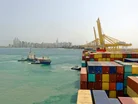
How US-Iran Conflict is Reshaping Global Supply Chains
The escalation of military conflict between the United States, Israel and Iran has triggered an immediate crisis across global supply chains, with the effective closure of the Strait of Hormuz creating unprecedented disruptions to maritime trade, air cargo and critical industries worldwide.
The Islamic Revolutionary Guard Corps has issued radio warnings prohibiting vessel passage through the strait, reportedly trapping nearly 170 container ships and halting movement of 20% of the world's seaborne oil supply.
"The speed and scope of escalation in the Middle East will have taken many businesses by surprise and has highlighted just how unstable the region can become in as little as 48 hours," says Simon Geale, EVP at Proxima.
"What will concern companies is that we may just be at the start of a prolonged conflict and there may be much more to come in terms of the impact on global supply chains."

Is Robotics the Key to Supply Chain Stability?
Manufacturers across the globe are turning to industrial robotics as labour markets tighten and the economics of automation become increasingly favourable.
The shift could signal a fundamental recalibration of how production capacity is scaled in an era where human workforce availability can no longer be guaranteed.
According to the International Federation of Robotics, more than 542,000 industrial robots were installed during 2024. The geographic concentration of these deployments reveals a clear pattern, with three-quarters positioned across Asia, 16% throughout Europe and 9% in the Americas.
Looking ahead to 2026, both the OECD and the IMF project global growth will reach 3.1%, suggesting economic conditions that could support continued capital investment in automation technologies.
Diageo: Supply Chain Shortages and Sliding Shares
Diageo has cut financial forecasts following a period of unsuccessful global sales, facing market weakness in the US and China.
The company has also fallen victim to supply concerns, with shortages resulting in an inability to meet demand.
As a result, Diageo is facing a sharp stock price fall, as people loose faith in the drinks maker.
Which Country is the Largest Exporter of Oil?
The US produces more oil than any other country on Earth, but it’s Saudi Arabia that keeps the world moving.
As of the most recent data for 2025, Saudi Arabia remains the world's number one exporter of oil.
While the United States leads global production, accounting for roughly 21% of the world's output, it consumes the vast majority of what it produces domestically. Saudi Arabia, by contrast, exports a far larger share of its total output, consistently ranking as the top exporter by both volume and value.
Botswana’s Role in Diversifying Critical Mineral Supply
Businesses seeking to diversify their rare earth sourcing away from China could find a potential competitor emerging in Botswana.
The detection of critical minerals and rare earth elements in the southern African nation represents a significant development for organisations looking to reduce supply chain concentration risk.
Rare earth elements and other critical minerals have become key commodities due to the increase in electric vehicles, smartphones and renewable energy.
Tsodilo Resources Limited has detected these materials within its operations, offering potential relief for stretched global supply networks.