

The Supply Chain Interview: Bhavik Pathak, Alstom
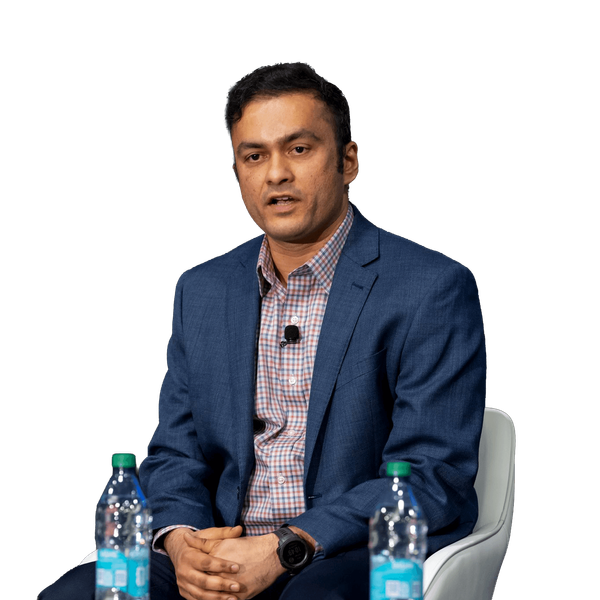
The Supply Chain Interview: Bhavik Pathak, Alstom
The global supply chain conversation is no longer centred solely on transactional sourcing or securing the lowest unit price. Instead, organisations are increasingly focused on how quickly they can build operational ecosystems capable of withstanding disruption. Geopolitical tensions, fluctuating material costs and sudden tariff changes have fundamentally reshaped supply chain priorities, pushing resilience to the forefront of procurement strategy.
Few industries understand this challenge better than rail transport, where globally distributed supply chains must meet strict quality and safety standards while managing immense operational complexity.
“I would say there is a massive shift in terms of resilience,” says Bhavik Pathak, Director and Head of Supplier Quality for the Americas Region at Alstom.
“The value has changed. It's not very typical or traditional sourcing activities. Now, the value has shifted because we want to have a solid supply chain across the board.”
Alstom is one of the world’s largest rail manufacturers, designing and supplying everything from high-speed trains and trams to signalling systems and rail maintenance solutions. The company operates across 63 countries with more than 83,000 employees globally. In the Americas region alone, it employs around 12,000 people spanning operations from Canada to Argentina.
For Bhavik, managing such a vast network means rethinking the traditional sourcing model.
“If I talk about our market, the rail market, our supply bases are spread globally,” he explains. “It’s not just a matter of getting the part at the lowest price. We need to ultimately reduce the risk for the organisation.”
That shift has accelerated as manufacturers face overlapping pressures from geopolitical instability, tariffs, logistics disruption and volatile commodity pricing. According to Bhavik, the key question is no longer simply who can supply the cheapest component, but how quickly a supply network can recover during a crisis.
“Let’s say we have a crisis situation, how fast can we recover?” he asks. “Because of the geopolitical tensions and a lot going on right now in the global market, prices are fluctuating and then it comes with tariffs and all that.”

Moving beyond unit price
To navigate these pressures, Alstom is increasingly evaluating suppliers through the lens of Total Cost of Ownership (TCO), rather than focusing exclusively on initial purchase price.
For Bhavik, this means considering hidden operational risks such as freight volatility, supplier resilience and recovery timelines during disruption.
“Quality is not just about compliance,” he says. “Quality is all about trying to take a strategic advantage. It’s not just focusing on the unit price; it is the total cost of ownership.”
This represents a major cultural shift for procurement and supplier quality teams. Historically, aggressive cost reduction strategies often pushed financial pressure further down the supply chain, increasing instability among lower-tier suppliers.
“If I just keep on pushing my supplier to get better pricing, they’re going to push their suppliers,” Bhavik explains. “Ultimately, there is going to be the probability of quality deterioration as well.”
Instead of relying on purely transactional supplier relationships, Alstom is prioritising long-term collaboration and shared operational visibility.
“The key thing to do is to partner with your suppliers,” Bhavik says. “It should not be focused on the pricing only. It should be continuous improvement, and you can share those benefits.”
Importantly, Bhavik argues that collaboration also means sharing operational challenges when market disruption occurs.
“You can share those pains as well,” he adds. “If you have a situation from a tariff, you need to open up and listen to your supplier, work with your management and everybody, and you need to adopt that.”
For manufacturers operating across large international supply networks, this collaborative approach is becoming increasingly important as volatility becomes a permanent feature of global trade.
Manufacturing for green mobility
At the same time, Alstom’s supply chain transformation is unfolding alongside a broader industry push towards sustainability and green mobility.
The company is investing in renewable energy initiatives across its manufacturing operations while continuing to develop lower-emission rail technologies, including hydrogen-powered trains.
“Wherever it’s possible, we try to adopt solar technology,” says Bhavik. “Some of our plants in our region, certain sections, we are just relying on that green energy right now.”
Alongside renewable-powered manufacturing, Alstom is also investing heavily in research and development around hydrogen propulsion technology.
“We have a solution where we have a hydrogen train,” Bhavik explains. “Recently we had a trial in Canada for our hydrogen train solution.” The company continues to expand R&D investment and innovation capabilities to strengthen these technologies further.
“There is dedicated research and development ongoing as well to make this technology more robust,” he says. “We have an innovation centre as well. We are heavily investing in those because that’s the need of the hour right now.”
For Alstom, sustainability is increasingly becoming integrated into long-term operational strategy, rather than sitting separately as a corporate responsibility initiative.
The rise of predictive supply chains
Looking ahead over the next five years, Bhavik believes the next major transformation will come through predictive risk management powered by AI and better-quality operational data.
The goal is to move supply chain management away from reactive crisis response towards earlier identification of disruption risks.
“For the next five years right now, the focus is on to ensure that we mitigate the risk quickly, we predict the risk quickly,” he says.
However, Bhavik stresses that AI systems are only as valuable as the data foundations supporting them.
“AI works on data,” he explains. “If we do not have the right quality of data, that won’t help.”
To address this, Alstom is actively collecting procurement and supplier quality data to build predictive risk models capable of triggering faster operational action.
“We are collecting the data, we are using AI to predict those models and trigger action,” Bhavik says. The objective is ultimately to reduce operational disruption while protecting profitability.
“What do we do right now to avoid the crisis situation in the future? How can we safeguard the company’s margins? That’s the fundamental bottom line.”
This transformation is also reshaping the role of procurement and supplier quality professionals themselves. Traditional buyer and compliance-focused positions are evolving into broader strategic roles focused on resilience, data intelligence and risk mitigation.
“We are changing from a traditional buyer model or the supplier quality engineer model to more of a risk and value architect,” Bhavik says.
As global supply chains continue to evolve, Bhavik believes the organisations that succeed will be those capable of anticipating disruption early, collaborating closely with suppliers and building resilience directly into their operational strategy.
Company portals
Executives
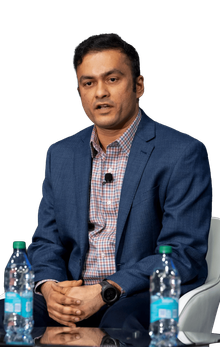
Bhavik Pathak
Director and Head of Supplier Quality - Americas Region