Strauss and DHL Announce Strategic Logistics Partnership
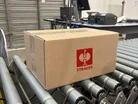
Historically, custom workwear has meant a process involving multiple layers: from buying blank inventory to shipping to a third-party embroiderer and then eventually waiting on a final delivery of the product.
A new joint venture between Strauss and DHL Supply Chain in Columbus, Ohio, streamlines this process significantly. It embeds the advanced customisation machinery directly onto DHL’s warehouse floor, meaning workwear firm Strauss is collapsing the traditional supply chain into a single, high-speed flow.
Customers will be able to receive their customised corporate gear at a much faster rate as a result of this new collaboration.
- Location: Westerville (Columbus metro), Ohio
- Integration Time: Six months (Go-live: June 24, 2026)
- Current Capacity: Up to 1.3 million units per year
- Scalability: High (designed to expand with North American growth)

The late-stage customisation strategy
The partnership of these two brands is built on postponement as a supply chain strategy. In practice, this means committing inventory to specific corporate logos months in advance, which ties up working capital and risks dead stock.
The co-location of embroidery and digital print machinery inside DHL’s Westerville, Ohio distribution centre means that the fulfilment process is compressed. When a B2B order is placed, the physical garment is picked, routed immediately to the in-house customisation line, packaged and shipped all in the same building.
By integrating fulfilment and customisation into a single, scalable operation, we're enabling Strauss to expand its footprint with greater speed, efficiency and consistency.
The “one-touch” workflow means traditional lead times are significantly reduced from weeks to days, allowing Strauss to offer greater flexibility. This flexibility includes profitable, quick turnarounds of small-batch logo branding for its mid-sized customers.
Operational rollout at speed
The rollout of this partnership has been as fast as the fulfilment of orders. The joint project between DHL Supply Chain and Strauss successfully completed the integration of these complex systems in six months and officially went live on 24 June 2026. The first package left the facility the very same afternoon.
The location choice was also strategic, with Strauss’s US headquarters also in Columbus; from a logistics perspective, the brand is within a one-day drive of almost 60% of the US population.
“We are excited to have DHL Supply Chain as our global logistics partner and be so close to them in our second home,” says Matthias Fischer, COO and Treasurer at Strauss.
“This partnership gives us the ability to provide our customers and business partners with the gear they need and personalise it to their exact requirements faster and more efficiently than ever before.”
The facility has an annual capacity of 1.3 million units, as well as the physical footprint and digital architecture that allow it to scale fast as Strauss looks to increase its North American market share.
Looking ahead at its plans to expand into the market further, Strauss is currently preparing to roll out a heavily upgraded US B2B online store. This will not be a simple e-commerce site, but instead will be a direct portal into DHL’s warehouse management systems.
The operation will mean that when a corporate buyer uploads their logo and configures their uniforms online, those digital assets will be piped directly into the customisation queue in Columbus.
The new era of 3PLs
Commenting on the collaborative operations, Patrick Bennett, CFO, DHL Supply Chain North America, says that DHL Supply Chain is providing the “operational backbone” to support STRAUSS’s growth into the US.
“By integrating fulfilment and customisation into a single, scalable operation, we’re enabling STRAUSS to expand its footprint with greater speed, efficiency and consistency. This end-to-end supply chain solution ensures they can meet rising demand while delivering the high-quality, personalised workwear their customers expect.”
Looking at the wider logistics industry, the Strauss-DHL partnership highlights a shift where third-party logistics (3PL) providers are no longer acting solely as “box-movers”.
For successful retail and B2B partnerships, 3PLs must evolve into co-manufacturers, which means absorbing value-added services like embroidery and tailoring into the fulfilment centre.
Logistics providers aren't just saving their clients shipping costs, but are unlocking entirely new business models. For Strauss, it means entering the highly competitive US market not as a legacy importer, but as an agile, digital-first disrupter.
Company portals


Executives
Patrick Bennett
CFO North America DHL Supply Chain