S&P Global Ratings: How Value Chains Compound Climate Risk
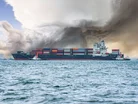
Physical climate risk is on the rise and failure to accurately assess a company’s exposure within its value chains can have significant financial and operational implications.
Bruce Thomson, Lead Social and Sustainable Supply Chain Specialist at S&P Global Ratings, shares his insights on the crucial connection between physical climate risk and value chains and why adaptation is essential to mitigating climate shocks.
Are physical climate risks rising – and to what extent are these risks transmitted through supply chains?
Physical climate risk can be acute, driven by an event such as a flood or storm, or chronic, arising from longer-term shifts in climate patterns. Extreme weather events and chronic physical climate risks are worsening in many regions and, in 2024, they caused global economic losses of US$320bn, up from an inflation-adjusted US$268bn in 2023. By 2050, if global warming does not stay well below 2C, up to 4.4% of the world’s GDP could be lost annually, if countries across the world do not adapt.
But, physical climate risk isn’t isolated to an entity’s own assets and operations – it also includes indirect exposure via its supply chain and, more broadly, its value chain. Value chains include all value-add activities, extending to those outside of what is commonly considered part of a product supply chain, such as R&D or customer service support. But the degree of value chain physical climate risk exposure for a given sector or company, and potential for operational and financial disruption, hinges largely on the complexity and interdependencies of its value chain. Under a slow transition scenario (SSP3-7.0) and absent adaptation, both direct and value-chain risk exposures to potential climate impacts are each set to increase by more than 8% by 2050.
For organisations, value chain physical climate risk exposures can materialise in credit impacts through multiple channels including business disruption or downtime, changes in input and production cost, costs of adaptation and resilience measures.
We can see the impact of physical climate risks for companies across the world. In 2021, lower-than-expected rainfall in the area around Germany’s River Rhine caused cargo ships to reduce their loads by half to avoid grounding. Similar results were also seen in 2023, affecting one of Europe’s most important commercial waterways for commodities. Additionally in 2023, Lake Gatun in Panama experienced one of the driest years on record, leading to authorities to restrict both the number and size of ships passing through the Panama Canal. The canal carries about 3% of world trade by volume each year and the restriction caused significant disruption to global shipping.
But of course, whether these risk exposures actually translate into credit material impacts depends on a number of company-specific factors, including, among others, the substitutability of suppliers or inputs and any advance resilience planning in place.

Are these effects more concentrated in a particular sector?
Value chain exposures to physical climate risks is greater for companies operating in sectors with long and complex value chains, or those that rely more heavily on the natural environment. In our latest report on this topic, S&P Global Ratings analysed 29 distinct economic sectors, finding that all 29 inherited at least some physical climate risk from their value chains. The study, which looked at nine major categories of physical climate risk (extreme heat, extreme cold, wildfire, drought, water stress, coastal flooding, fluvial flooding, pluvial flooding and storms) also indicated that all sectors will have at least moderate direct exposure to climate hazards by 2030.
Previous research found that the five sectors most directly exposed are agribusiness, forest and paper products, consumer food products, chemicals and building materials.
But this new research shows that the agribusiness, consumer food, automotive and chemical sectors have the greatest exposures in their value chains. Where these exposures come from, however, can vary. The consumer food sector depends on its value chain for 71% of the value of its output, including over 32% that comes from the highly-exposed agribusiness sector. This heavy dependency on exposed upstream sectors contributes to its relatively high value chain risk. Companies in the automotives sector, in contrast, rely relatively more heavily on other companies in their own sector (such as auto parts suppliers to auto manufacturers), which compounds the sector’s own exposures.
What approaches are companies taking to minimise climate shocks across supply chains?
Companies’ progress on adapting to the physical impacts of climate change is not generally keeping pace with worsening climate hazards. Based on our analysis, only about one-fifth of companies have adaptation plans and less than half plan to implement their adaptation plans within the next decade, based on analysis of 6,871 company disclosures. Additionally, only 6.5% of companies chose supply chain management as a top material issue.
As the risks grow, investments in adaptation and resilience will be required to protect companies and countries from climate shocks. The interventions required will vary and depend on where the companies’ assets are located and the sensitivity of those assets to climate hazards.
Interestingly, there may be a positive externality – another ripple effect – to these investments. Companies with operations in countries that are better adapted to worsening climate hazards are more likely to indirectly benefit from more robust infrastructure. Adaptation in one sector may also contribute to the resilience of one or multiple downstream sectors via value-chain effects.
As such, understanding companies’ value chain exposures to physical climate risks can help prioritise areas where investments in adaptation and resilience may have the greatest impact on supply chain resilience. By analysing specific vulnerabilities, investments may be directed toward adaptive solutions – and these investments may foster innovation in terms of the technologies, products, or services that are needed to address the threats posed by worsening climate hazards.