PSC LIVE: Sustainable Supply Chains, from Ideas to Action

One message is cutting through the noise in procurement: Scope 3 is no longer a future ambition, it’s a present-day operational challenge.
At Procurement & Supply Chain LIVE: The US Summit, leaders from Trane Technologies, Cummins, Osapiens and BlueYonder converged on a shared reality that procurement sits at the centre of the sustainability transition.
But progress hinges on action. Data must be usable, compliance must be immediate and supplier relationships must evolve from transactional to collaborative.
From the complexities of gathering actionable emissions data across tens of thousands of suppliers to the mounting pressure of global regulation, the discussion made clear that waiting for perfect conditions is no longer viable.
Organisations must balance pragmatism with urgency, building capability, making targeted investments and embedding sustainability into everyday procurement decisions.
What emerged from the discussion was a shift in mindset: Scope 3 is about momentum. Those willing to act early, whether through smarter data strategies, proactive compliance or first-mover investments, are already shaping the direction of the market.

Scope 3: Putting data to effective use
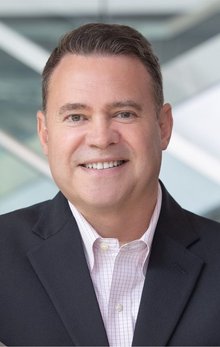
Scott Tew, VP & Global Head of Sustainability Strategy at Trane Technologies, recognises that data requirements must be focussed if they are to create success: “We have 28,000 global suppliers,” he says. “Obviously, they're not all at the same place. Some do not have data, some do not have the capabilities. So number one, we think about capability building.
“I think one of the areas that has been overwhelming in this space recently is that so many suppliers are overwhelmed with what is being requested of them. We're trying not to do that to our suppliers. We're trying to be very focused on the data that we need.
“We'll work with you to build a dashboard, a way that we can co-find the data that we need from our side on your side too. And we think that that strengthens the partnership."
Of course, data alone is not enough. Procurement and supply chain professionals also need the drive, desire and direction to act on it.
Balaji Sampathnarayanan, Sustainability Strategy & Environmental Compliance Leader at Cummins, says: “Perfection is the enemy of adequacy. Especially when it comes to data. You can have all the data in the world and try to collect them, but if you don't make them into actions, find ways to be intelligent with it. It doesn't make sense.”
The compliance reality: start now, not later
There is, of course, an urgency to sustainability, even if it creates divisions. How do procurement leaders take compliance from an abstract issue to a practical reality?
Alberto Zamora, Co-Founder & CEO of Osapiens, sounds a warning. He says companies need to act now - not tomorrow - on compliance issues.
“In future, certain packages that don't fulfil the recyclability requirements cannot be put in the market by 2030,” he says. “It looks like still four years, - but you need to change your packaging now, and that takes one or two years. I think we are dealing with compliant topics already that look like they are coming only in two years."
Tab Dayani, Senior Director of Sustainability Products at BlueYonder, says the business case needs to be made for why compliance matters right now.
Scope 3 in practice
He says: “Often, procurement professionals might look at it and think, ‘I'm either not touching it or it's a long-term ambition for us. It's not something I need to do immediately’.
“[But] as a procurement professional, if I don't have my due diligence statement to comply with EUDR, my shipments will get held up at port. And then I'm going to get penalised because ultimately my stuff's not going to get to where it needs to be on time.
“CBAM - I'm going to have to pay carbon taxes on the backend of my imports if I'm not responsible about where I'm sourcing this stuff. The German Supply Chain Act; all of these traceability legislations.
“The ability to see upstream into your entire supply chain past your tier one suppliers is becoming increasingly crucial for procurement professionals, but also supply chain planners.
“A lot of the work that we do is how do we convince people that it's now and it is vital because it has real business impact.”
Even once the case is made, procurement professionals still need to know how they can act. What are the mechanisms, contractual levers to make Scope 3 a reality?
Scott says: “If it's something really important that could help decarbonise, you have to be willing to actually invest and be a first mover. Make an investment. Send a purchase order to a supplier that's offering something to help decarbonisation.
“A great example would be steel for us. We were the first purchase order in the nation for the low emission steel. That sent a signal to the marketplace that low-emission steel is available.
“Competitors in the industry saw what was happening. We have sort of a ‘me too’ industry. They were quick to send their own purchase orders and other sectors have also followed.”
Compliance and collaboration
Balaji adds: “At Cummins we think of supplies as partners and collaborators, not people who we would leave if we have a disagreement. That gives us a view where we are willing to work with our suppliers and start thinking about what it takes to decarbonise.
Collaboration and partnerships are key. He says: “How do you start the conversation about decarbonising steel? It comes back to the point of having long-term partners in decarbonising.
“We have been working to develop a consortium of suppliers. We have had about 11 pilot projects with our suppliers. We have suppliers who are also customers, like Microsoft, Bosch and BASF. That helps us understand where they're coming from; their biggest challenges.”
Company portals


Executives
Alberto Zamora
Co-founder & CEO
Scott Tew
Vice-President, Sustainability Strategy + Co-founder, Center for Energy Efficiency & Sustainability