Microsoft: Lessons in 100% Global Clean Energy Sourcing
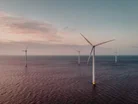
Microsoft has matched 100% of its global annual electricity consumption with renewable energy in 2025, a significant achievement that could offer valuable insights for supply chain professionals grappling with their own decarbonisation challenges.
The tech giant's journey from signing a modest 110-megawatt (MW) power purchase agreement (PPA) in Texas in 2013 to contracting 40 gigawatts (GW) of new renewable energy capacity across 26 countries demonstrates the scale of procurement transformation required to address climate commitments.
The figures behind Microsoft's renewable energy milestone are substantial. Since 2020, the company has worked with more than 95 utilities and developers through more than 400 contracts, with 19GW now online and actively delivering clean energy to power grids worldwide. The remainder is scheduled to come online within five years.
According to Offshore Wind Biz, this capacity could power every home in Scotland for 17 years. Microsoft claims its renewable procurement has reduced its reported Scope 2 carbon dioxide emissions by an estimated 25 million tonnes.

Understanding the scope challenge
The environmental claim centres on Scope 2 emissions, those generated by electricity that a company purchases.
However, for supply chain professionals, the more significant challenge lies in Scope 3 emissions, which Microsoft acknowledges remain "considerably more difficult to address" as part of its 2030 carbon negative target.
These indirect emissions, embedded in supply chains and product usage, require fundamentally different approaches than direct electricity procurement.
Microsoft states it will continue participating in industry forums to strengthen carbon accounting frameworks so that procurement "is measured with greater accuracy and delivers real world emissions reductions".
Developing replicable procurement structures
Central to Microsoft's strategy has been building commercial structures that other corporate buyers can adopt, a model that could prove instructive for supply chain leaders seeking to decarbonise their operations.
According to Bloomberg New Energy Finance, more than 200 global corporations collectively purchased nearly 200GW of clean energy worldwide since 2008.
The company's landmark 10.5GW framework agreement with Brookfield, one of the largest single clean energy deals on record, is designed to send what Melanie Nakagawa, Microsoft's Chief Sustainability Officer, describes as a long-term demand signal that enables developers to raise financing more efficiently and build out supply chains.
Microsoft currently has six energy partners with more than a gigawatt of contracted capacity each and more than 20 partners with at least five separate projects apiece.
Catalysing market transformation globally
Beyond volume, Microsoft's approach demonstrates how large-scale procurement can catalyse market development in emerging clean energy regions.
In Japan, the company signed one of the first corporate PPAs in the country's restructured power market, a 25MW, 20-year virtual PPA with Shizen.
Microsoft credits that deal with helping to catalyse more than 2GW of corporate clean energy procurement in the country since 2024, according to Bloomberg New Energy Finance.
In India, Microsoft purchased a 437MW solar and wind hybrid offtake from Renew, structured to support energy access and rural electrification.
Melanie Nakagawa and Noelle Walsh, Microsoft's President of Cloud Operations and Innovation, who jointly authored the announcement, characterised the milestone as a "shared achievement among the utility professionals, clean energy developers, community leaders, technology innovators and forward-thinking policymakers".
Microsoft is already looking beyond wind and solar, partnering with Helion and Constellation Energy on a 50MW fusion project in Washington state and striking a deal with Constellation to restart the 835MW Crane Clean Energy Centre in Pennsylvania.
Whether Microsoft can maintain its renewable matching claims as electricity demand accelerates, while simultaneously addressing the far more complex Scope 3 emissions embedded throughout its supply chain, will be the real test of its 2030 carbon negative ambition.
Company portals

Executives
Melanie Nakagawa
Chief Sustainability Officer

Noelle Walsh
President, Microsoft Cloud Operations + Innovation