
What is Mars Doing to Tackle Ethical Supply Chain Concerns?
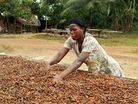
Major chocolate manufacturers are confronting critical vulnerabilities in their cocoa supply chains through unprecedented collaboration.
Nestlé, Mars, Lindt, Hershey and Mondelēz have joined forces through the TogetherCocoa Foundation to address systemic risks including poverty, child labour and deforestation that threaten the long-term viability of global cocoa sourcing operations.
According to Fairtrade, cocoa farming is linked with low income, child labour, gender equality and deforestation. The Rainforest Alliance reports that "up to 58% of cocoa farmers in Côte d'Ivoire and Ghana are living in extreme poverty, which means they make less than US$2.15 per day."

The TogetherCocoa Foundation, established in Geneva, Switzerland, represents a strategic partnership aimed at strengthening supply chain resilience across the cocoa sector. The European Union has found that 60% of Côte d'Ivoire's cocoa production, or 37% of global cocoa production, is concentrated in the western regions of the country. This concentration creates potential bottlenecks and sourcing vulnerabilities that require coordinated industry response.
The foundation's objective centres on closing the living income gap experienced by farming households in Côte d'Ivoire and Ghana, thereby stabilising the supplier base. According to the Rainforest Alliance, "approximately 1.5 million children are engaged in child labour in cocoa production in Côte d'Ivoire and Ghana alone," highlighting compliance risks for companies operating under increasingly stringent regulatory frameworks.
"We believe that making a large-scale, long-term positive impact on cocoa farming families in Côte d'Ivoire and Ghana is only possible through close collaboration with other industry players and the local governments," writes Nestlé.
Embedding sustainability across operations
The Nestlé Cocoa Plan (NCP) demonstrates how sustainability could be integrated throughout supply chain operations. Launched in 2009, the programme works with more than 180,000 farmers in 11 origin countries, covering nearly 298,000 tonnes of cocoa in 2024.
The NCP operates across three pillars: better farming, better lives and better cocoa. Through training in good agricultural practices, agroforestry and regenerative agriculture, farmers receive support to increase yields while protecting biodiversity, soil health and water resources.
Social sustainability is strengthened through Village Savings and Loans Associations and the Child Labor Monitoring and Remediation System developed with the International Cocoa Initiative. Traceability models such as Mass Balance and Segregated sourcing, often certified by the Rainforest Alliance, help to ensure that cocoa volumes are verified and transparently tracked, with a goal of sourcing 100% through the programme by 2025.
Managing supply chain risks
For more than 100 years, Mars has been using cocoa from around the world to make its well-known products. From 2018 to 2028, Mars has pledged to provide US$1bn to support programmes that positively impact the cocoa-growing communities and environment.
The company's Responsibly Sourced Cocoa programme aims to promote a positive impact on the cocoa supply chain, working with suppliers, certifiers and stakeholders for sustainable and responsible sourcing. "Our (Mars') approach is to help contribute to the development of a more modern, inclusive and sustainable cocoa ecosystem," says Harper McConnell, Chief Growth and Impact Officer for the Rainforest Alliance and former Global Vice President, Cocoa Sustainability at Mars.
Mars' suppliers must not only understand the risks within their supply chains but also actively mitigate these risks. Through programmes like the Women for Change Village Savings and Loans Associations (VSLAs), more than 100,000 women have been supported to overcome financial barriers, fostering economic independence and resilience within cocoa-growing communities.
Income-boosting initiatives target farmers directly, with 15,000 cocoa farmers benefiting from approaches designed to improve yields and livelihoods. According to the Rainforest Alliance, "Côte d'Ivoire and Ghana, which together produce nearly two-thirds of the world's cocoa, lost 25% and 8% (respectively) of primary forest between 2002 and 2019."
Biodiversity is being supported through the distribution of more than 1.8 million non-cocoa trees for shade and habitat creation, while forest protection efforts have reached more than 99,000 farmers in Côte d'Ivoire and Ghana, alongside risk assessments covering 718,000 hectares globally.
Together, these initiatives illustrate how integrating social empowerment, education and ecosystem preservation could create a more sustainable, resilient cocoa supply chain.
Company portals







Executives

Harper McConnell
Chief Growth and Impact Officer