Maersk & Coca-Cola: Optimising the Supply Chain Using AI
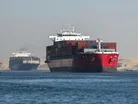
The World Economic Forum’s Chief Economist Outlook shows that 86% of economists say businesses must lead adoption of AI infrastructure across key industries.
Global fragmentation has exposed vulnerabilities in supply chains which could restrict trade routes.
Leaders must invest in intelligent infrastructure in order to be best positioned to thrive in the long term.

Global trade is facing disruptions that are becoming more frequent and pervasive, including cyberattacks, climate events and supply chain breakdowns.
After President Donald Trump has imposed tariffs, more than 60 countries have prepared retaliatory measures to combat the restrictions.
The rising geopolitical tensions mean that trade routes must be diverted and leaders must prepare for uncertainty.
AI offers an avenue of growth for businesses as global fragmentation puts pressure on trade.
AI: Optimising global trade supply chains
Agentic AI can be used to detect regulatory shifts, reroute shipments and update documentation without human intervention.
It can monitor global events such as weather, sanctions and cyber threats in real time, detect anomalies across routes and run compliance checks to avoid fines or delays.
AI can enable predictive modelling by creating simulations across the supply chain.
Simulations can help leaders make informed decisions that align with their business goals and tackle disruptions.
Maersk’s digital twins solution
Maersk provides an example of how AI can successfully be implemented into the supply chain.
The company utilises AI-powered digital twins to transform their port operations.
Digital twins allow Maersk to test hypotheses without using real-world resources.
It can optimise the supply chain by integrating data from sales history and customer behaviour to accurately predict demand.
Krishnan Srinivasan, Chief Data Officer at Maersk, says: “We have all these inputs from our terminals, from different sensors and data. And we have actually created a complete digital twin of the whole terminal.”
“This provides us with the capability to do ‘what if’ scenarios - much ahead of time,” he says. “What used to take days takes hours.”
How Coca-Cola streamlines its supply chain
Coca-Cola uses its Customer Demand & Supply Planning system to transform its supply chain.
It uses machine learning to plan scenarios which allows the company to work faster.
The system can produce forecasts of sales demand which ensures products are provided to consumers accurately and efficiently.
José Antonio Echeverría, Chief Customer Service & Supply Chain Officer for Coca-Cola Europacific Partners, says: “This will help us to deliver better service for our customers and move forward on our journey to realise what the factory of the future looks like.”
“We are adopting and continually exploring new technology to improve and enhance how we work - creating an efficient, safe and sustainable supply chain.”
Despite clear benefits, AI adoption in trade remains limited.
Businesses that delay the transition into AI-assisted systems could face further challenges and uncertainty within the supply chain.
Leaders should prepare for disruption by embracing intelligent infrastructure within trade ecosystems.