How Just Eat's Robotic Food Delivery is Enhancing Logistics
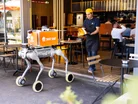
Just Eat Takeaway.com has begun piloting a new form of doorstep delivery in Zurich, working with Swiss robotics firm RIVR to introduce autonomous ground robots for food orders.
These robots are the first in Europe to combine wheels and legs powered by what’s known as Physical AI, an artificial intelligence system designed to help machines move more naturally in human environments.

Have you checked out August's Edition of Supply Chain Digital?
There you'll find a full feature interview with Just Eat's VP of Global Logistics, Jannie Appelt.
Follow the link here!
Walking, wheeling and navigating the streets
Unlike typical delivery bots that rely solely on wheels, the RIVR robot is built with a hybrid system.
It travels efficiently on flat surfaces using wheels but can also climb kerbs and stairs using legs. This allows it to reach doorsteps in built-up city areas without relying on ramps or assistance.
Its movement is guided by Physical AI, a type of AI that processes environmental information in real time. This means the robot reacts to common city obstacles, such as bins, grass patches and uneven paths, while safely navigating around people, bikes and vehicles.
The robot runs at approximately 15km per hour. It can operate in changing weather, whether it’s raining, snowing, windy or hot. Its cargo area holds 40 litres and includes an internal wall to prevent the food from spilling, meaning it’s able to carry large or mixed orders without issue.
Once the robot arrives at its destination, the handover mirrors a courier drop-off. A secure lock keeps the food safe in transit.
The restaurant partner then places the order in the robot’s compartment and the customer gets a notification once it reaches their address. They can then unlock the compartment to collect their meal.
Designed for city life
The RIVR robot is not only designed to operate independently but is also monitored in real time from a control centre. This means every delivery is tracked as it happens. In an emergency, the robot can either stop automatically or be halted remotely.
For added visibility, it carries both lights and a flag, so it stays easily noticeable day or night.
Zornitsa Chugreeva, Senior Global Innovation Director, Just Eat Takeaway.com, explains: “At Just Eat Takeaway.com, our vision is to empower everyday convenience and we believe automation is an important driver in bringing that vision to life.
"It drives our commitment to exploring, testing and integrating innovations and technologies, all aimed at enhancing our service and driving an even better experience for our ecosystem.”
That focus on automation comes alongside other trials.
Earlier this year, Just Eat Takeaway.com began testing drone deliveries in Ireland, partnering with the drone delivery company Manna. This latest move into ground-based robotics extends that strategy – bringing new solutions to urban delivery challenges.
Real deliveries, real customers, real streets
The first deliveries have taken place in Zurich, with food orders from local restaurant Zekis World. These are live customer orders, not tests in controlled environments.
By starting with actual food deliveries, Just Eat Takeaway.com and RIVR gather immediate feedback on how the robots perform in real-world conditions.
Marko Bjelonic, CEO at RIVR, says: “Our collaboration with Just Eat Takeaway.com is a glimpse into a future where automation blends naturally into our cities, helping people get what they need, when they need it.
"Physical AI allows our robots to understand and adapt to the real world. It’s a step toward making autonomous delivery not only efficient, but intuitive, safe and truly human-centred.”
The pilot is expected to expand later this year, with plans to roll out similar services in other European cities.
Just Eat Takeaway.com is also looking at the potential for these robots to be used beyond restaurant delivery, including in retail and convenience store orders.
The trial with RIVR marks a practical next step for the delivery platform. By experimenting with new technology that merges with everyday city life, it continues testing what modern delivery could look like in urban spaces.