
Why JLR Plans to Temporarily Shut Down Solihull Plant
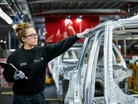
Jaguar Land Rover (JLR), owned by Tata Motors, is closing its UK Solihull plant for nearly two weeks, highlighting the fragility of modern automotive supply chains.
The shutdown, reported by the Financial Times, underscores how even major manufacturers remain vulnerable to disruptions beyond their immediate control, particularly when critical supplier relationships face unexpected challenges.
The temporary closure follows a turbulent period for the automaker, which saw its entire supply chain infrastructure compromised by a cyber incident in June 2025.

That earlier disruption demonstrated how interconnected dependencies across manufacturing networks can amplify the impact of a single point of failure, affecting not just production lines but also supplier coordination and logistics operations.
According to the Financial Times, JLR informed suppliers on Thursday 26 March that it would pause production for its Range Rover and Range Rover Sport models at the Solihull plant until 8 April 2026. The decision stems from a fire at a supplier facility in Norway, illustrating the geographic complexities inherent in global automotive supply chains.
In a statement to the Financial Times, JLR says: "We are working closely with that supplier to resolve the issue as quickly as possible and minimise an impact on our clients or our operations."
Supply chain vulnerabilities exposed
The June 2025 cyber incident revealed the extent to which digital infrastructure underpins supply chain operations. According to the Cyber Monitoring Centre (CMC), the incident impacted JLR's internal IT environment, leading to an IT shutdown and a halt in global manufacturing operations, including its major UK plants at Solihull.
The disruption's reach extended far beyond JLR's own facilities. The CMC estimates the event caused a UK financial impact of £1.9bn (US$2.52bn) and affected more than 5,000 UK organisations, many of which could be part of JLR's extended supplier network or dependent on related logistics and distribution channels.
The financial consequences were severe. In JLR's financial results, posted in November 2025, it reported a loss before tax and exceptional items of £485m (US$645m) for Q2 and £134m (US$178m) for H1, down from a profit of £398m (US$530m) and £1.1bn (US$1.47bn) respectively a year ago.
Sustainability, procurement and supply chain leaders won’t want to miss Procurement & Supply Chain LIVE, taking place at Navy Pier, Chicago, on April 21–22.
Co-located with Sustainability LIVE: The US Summit, the event unites senior decision-makers at a time when supply chains, sustainability and business performance are more interdependent than ever.
Secure your place now for The US Summit – group booking discounts available.
Operational continuity under pressure
The Solihull facility represents a critical node in JLR's manufacturing network, producing the Range Rover Electric, the company's first EV, alongside the Range Rover and Range Rover Sport models. The plant's significance to JLR's operational continuity strategy became more pronounced following investment in March 2025, when the company committed further resources to its Solihull, Halewood and Wolverhampton manufacturing facilities to produce electric vehicles and their component parts.
This investment included recruiting 50 EV technicians for the Solihull plant, with roles covering maintenance of automated manufacturing equipment essential to the production of Range Rover Electric. Such specialised workforce requirements highlight the complexity of maintaining operational resilience when supply chain disruptions force production pauses.
The continuing impact of US tariffs also impacted the company's finances, adding another layer of supply chain pressure through trade policy uncertainties.
Managing supplier dependencies
The current shutdown illustrates how supplier relationship management remains central to operational continuity. A single supplier incident in Norway has ripple effects across JLR's production schedule, affecting delivery timelines and customer commitments. This challenge becomes more acute as manufacturers pursue sustainability goals that require deeper supplier collaboration.
JLR aims to become carbon net zero across its supply chain, products and operations by 2039, an ambition that necessitates transparency and coordination across multiple tiers of suppliers. The Range Rover Electric, with its 117kWh battery, represents a key component of this strategy.
Matt Becker, Vehicle Engineering Director at JLR, says of the car: "In its driving character, Range Rover should seamlessly combine capability and refinement. Delivering both in an electric vehicle in a way that doesn't diminish the vehicle in other areas is incredibly challenging.
Company portals


Executives

Matthew Becker
Vehicle Engineering Director