
Inside M&S' £340m Automated Food Supply Chain Investment

A £340m (US$457m) investment by Marks & Spencer could modernise its food supply chain infrastructure through automated distribution technology.
The retailer has begun construction on a National Distribution Centre in Northamptonshire.
According to Marks & Spencer, automation in food distribution could reduce contamination risks and human error while increasing operational efficiency.
The facility will deploy pallet cranes, high speed shuttles and hands-free picking systems.

Investment in distribution capacity
Construction started on the 1.3m sq ft site following a steel-signing ceremony attended by Michelle Elliman from M&S Rugby store, Kevin Bennett, CEO of Gist and Food Logistics Director at M&S, Stuart Andrew MP for Daventry and Shadow Secretary of State for Health and Social Care and James Hemstock, Vice President of Capital Deployment at Prologis UK.
The ceremony marked what M&S describes as its largest supply chain event in company history.
The investment of £340m (US$457m) aims to double the size of the food business through expanded distribution capacity. According to M&S, more than 200 stores will be serviced by the NDC.
The facility could increase capacity, reduce long-term cost to serve and improve product availability. Kevin says the site "strengthens our network and puts us ahead of the volume curve as we build a bigger, better food business."
The NDC will create 1,000 permanent jobs on site. Kevin adds the deployment of automation would future-proof operations and UK retail logistics.
Automated systems for distribution
The centre will use advanced automation to support faster deliveries and more efficient stock and fill processes. According to Bennett, improved efficiency could allow workers to spend more time on shop floors with customers.
"Starting the build on this site marks a major step in transforming M&S into a true destination for the weekly shop, with a modernised supply chain at the heart of that ambition," Kevin says.
"This investment will boost capacity for future growth, lower our long-term cost to serve and improve product availability so customers get the right products in the right place at the right time."
The automation systems include pallet cranes, high speed shuttles and hands-free picking technology. These systems could boost efficiency, accuracy and ease of restocking.
Gist operates as M&S Food's logistics arm. The NDC will be part of a network designed to handle increasing volumes as the retailer expands its food business.
Sustainable logistics infrastructure
The NDC is designed to achieve a BREEAM Outstanding rating through specific sustainability features. These include:
- Recycled materials
- Rooftop solar
- Rainwater harvesting
- EV charging
- A dedicated vehicle maintenance unit
James Hemstock, Vice President of Capital Deployment at Prologis UK, says the construction milestone "reflects the incredible strength of collaboration behind this project.
"Working closely with M&S, Gist, Winvic and West Northamptonshire Council, this project from the outset has been shaped by a shared commitment to quality, sustainability and long-term value."
Stuart Andrew, MP for Daventry and Shadow Secretary of State for Health and Social Care, says the area has been at the heart of the UK's logistic network for some time.
"I welcome the investment by Marks & Spencer into the new distribution centre in Daventry," Stuart says.
"This investment shows confidence in the local people and businesses."
Food sourcing and farming practices
M&S has commitments extending beyond distribution infrastructure to farming systems. The company aims to become a net zero business by 2040.
According to M&S, more than two-thirds of food sales come from fruit, vegetables, vegetarian and vegan products. The retailer has expanded plant-based offerings through initiatives including the Plant Kitchen and Veggie ranges.
The Farming with Nature programme, launched in 2021, works with Select Farmers to implement regenerative agriculture practices. M&S has partnered with Agrisound, The Wildlife Trusts, LEAF and the Farming and Wildlife Advisory Group.
These partnerships trial technologies that monitor pollinators, soil carbon and biodiversity. Initiatives include reducing ploughing, planting cover crops and dedicating land to wildlife habitats, with 9,500 hectares already being protected and enhanced.
The company provides sustainability advice and training to growers. M&S focuses on low-carbon farming systems that could reduce emissions, protect biodiversity, improve soil health and support wildlife habitats.
Company portals


Executives

James Hemstock
Vice President of Capital Deployment

Kevin Bennett
CEO Gist / Food Logistics Director
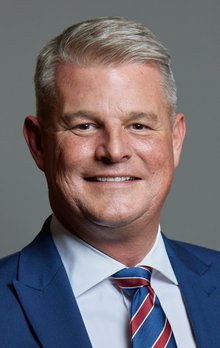
Stuart Andrew
MP for Daventry and Shadow Secretary of State for Health and Social Care