IEA: Critical Minerals Key as Oil Demand Grows Through 2050
Global energy demand rises fast, but securing the materials and infrastructure to support the transition to low-carbon systems is not keeping pace.
In the 2025 edition of its World Energy Outlook, the International Energy Agency (IEA) outlines several scenarios for the sector’s future, with energy security, affordability and sustainability competing for priority.
The report lands amid COP30 and major shifts in global energy policy, highlighting how supply chains, especially for critical minerals, are emerging as the defining concern for energy systems worldwide.
Supply chains under strain
In its Current Policy Scenario (CPS), the IEA expects global oil and natural gas demand to continue growing through 2050. Renewable energy still captures the largest share of overall demand growth, but fossil fuels maintain a strong presence.
The Stated Policies Scenario (STEPS) sees a different path, where coal demand peaks and oil levels out by 2030. However, the IEA warns that this version of the future also brings reduced renewable capacity. Under STEPS, the United States would install 30% less renewable energy capacity by 2035 than was expected just a year ago in the agency’s 2024 report.
Trevor Hutchings, CEO of the Renewable Energy Association, says: “We have the technologies we need to create a future built on clean, secure homegrown energy.
"But the situation is delicate – if we lose momentum, we risk letting this opportunity for jobs and economic growth slip through our fingers.”
Building this clean energy future depends heavily on the supply of critical minerals such as lithium, cobalt and rare earth elements. These are essential for electric vehicle batteries, power grids and semiconductors used in artificial intelligence and defence applications.
However, the report shows that more than half of these minerals are now under export controls.
To reduce exposure to supply disruptions, the IEA says governments must support the diversification and resilience of mineral supply chains. That includes increasing recycling rates and improving supply chain transparency.
Investment in electricity grids lags behind demand
Electricity plays an increasingly central role in all IEA scenarios.
In the Net Zero Emissions by 2050 Scenario (NZE), electricity demand grows by more than 50%, driven by rapid electrification in transport, heating and industry. Yet, infrastructure is not expanding fast enough to match this demand.
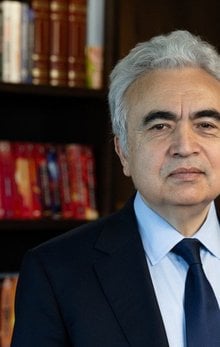
Fatih Birol, Executive Director of the IEA, adds: “With energy security front and centre for many governments, their responses need to consider the synergies and trade-offs that can arise with other policy goals – on affordability, access, competitiveness and climate change.
“Analysis in the World Energy Outlook has been highlighting for many years the growing role of electricity in economies around the world. Last year, we said the world was moving quickly into the Age of Electricity – and it’s clear today that it has already arrived.”
Half of all global energy investment now goes toward electrification. Yet most of this funding is absorbed by end-use systems like electric vehicles and heat pumps, not the grid infrastructure needed to distribute power reliably.
As a result, congestion issues are emerging, especially around areas with growing data centre activity.
The rise of AI has further accelerated electricity consumption, particularly in the US, China and the EU.
In 2025, investment in data centres is expected to reach US$580bn. Their expansion over the next decade, often concentrated near existing hubs, puts more pressure on already strained grids.
Closing the energy access gap
Beyond infrastructure and minerals, the IEA stresses the importance of universal energy access.
Today, 730 million people still live without electricity, and two billion lack access to clean cooking methods. These gaps have direct implications for health, productivity and economic development.
The IEA proposes solutions based on existing technologies such as liquefied petroleum gas, biofuels and electrified cooking systems. It claims that widespread adoption of these alternatives could cut deaths from household air pollution by nearly two thirds.
However, bridging the gap requires sustained investment. The agency says US$4bn each year is needed through 2040 for clean cooking solutions, while electricity access requires around US$23bn annually until 2035.
The link between energy access and economic growth is strong. As the IEA outlines, improving access helps stimulate agriculture, local manufacturing and services, which in turn fuels greater energy demand and new market opportunities.
Fatih says the latest World Energy Outlook scenarios offer a foundation for global dialogue: “The World Energy Outlook’s scenarios illustrate the key decision points that lie ahead and, together, provide a framework for evidence-based, data-driven discussion over the way forward.”
From the pace of oil demand to the fragility of mineral supply chains, the IEA's message is clear: energy transitions rely as much on logistics and infrastructure as they do on policy.
Without strong supply chains and investment in electricity networks, the shift to clean energy risks stalling.
Company portals


Executives
Fatih Birol
Executive Director
Trevor Hutchings
Chief Executive Officer