Hyundai Mobis: Driving Korean Automotive Chip Resilience
The global automotive sector is still grappling with semiconductor supply issues.
Hyundai Mobis is leading a coalition of more than 20 companies and research institutions in a strategic move to build a Korean supply chain for automotive semiconductors.
Through its new forum, Auto Semicon Korea (ASK), the company aims to reduce dependence on imported chips and create a connected, agile system that meets growing demand in the mobility sector.

Hyundai Mobis is adopting a clear position; it wants Korea to be self-reliant when it comes to these critical components.
It has launched the first private-sector-led initiative to do just that. Held at the DoubleTree by Hilton Seoul Pangyo, the inaugural ASK forum brings together 23 companies and institutions across the full chip lifecycle: fabless companies, foundries, packaging houses, design tool developers and vehicle manufacturers.
These include some of Korea’s biggest names like Samsung Electronics, LX Semicon and SK keyfoundry, alongside international players such as GlobalFoundries.
Hyundai Mobis President Lee Gyu-suk says the goal is to create “a self-sustaining domestic value chain” and to localise core automotive semiconductors, which until now have come mostly from Europe, North America and Japan.
As both a semiconductor designer and Tier 1 supplier to global carmakers, Hyundai Mobis occupies a strategic middle ground.
It connects upstream semiconductor capabilities with downstream automotive demand. This dual role allows it to play supply chain manager, project coordinator and technical validator all at once.
Lee says: “We are securing independent semiconductor design capabilities while pursuing joint development with fabless companies and design houses, and expanding cooperation with major foundries.
"We actively encourage companies specialised in home appliances or mobile to enter the mobility sector, and through this, we will take the lead in building the domestic ecosystem.”
Fast-tracking chips from lab to lane
Hyundai Mobis also wants to reduce the typical automotive semiconductor development cycle -- and it believes integrated development is the way to do it.
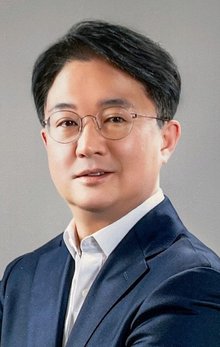
Park Chul-hong, Executive Vice President and Head of the Semiconductor Business at Hyundai Mobis, explains: “The key to automotive semiconductors lies in optimal integration with the controller.”
“To enhance the differentiated competitiveness of domestic companies, Hyundai Mobis defines controller-specific specifications and supports real-vehicle-based validation, enabling significantly faster development cycles.”
For electric drive systems, where chips control how far a vehicle can travel on a charge, the company claims that integrated design can trim nearly two years off the timeline.
It’s already developing and mass-producing 16 different types of semiconductors in-house, ranging from power to data processing chips, through external foundries. These amount to 20 million units and counting.
Hyundai Mobis has also obtained ISO 26262 certification for its semiconductor R&D processes. That allows it to share proven design and quality management methods with its partners, many of whom are newcomers to the automotive space.
The idea is to help these firms pivot from consumer electronics into mobility with a technical safety net already in place.
The result is a model that invites collaboration but also accelerates localisation. The more domestic firms participate, the faster the ecosystem matures - meaning shorter development cycles, lower risk of disruption and a broader base of companies that understand how to produce chips to automotive-grade standards.
From mobile chips to mobility systems
Hyundai Mobis says ASK will now become an annual event and future editions will welcome startups, trade associations and other industry stakeholders. It wants the forum to become a long-term anchor for Korea’s automotive semiconductor industry.
The stakes are high. A global market research firm estimates the automotive semiconductor sector is expanding at a compound annual growth rate of 9%, with the market reaching US$135bn by 2030.
Hyundai Mobis’ key segments - infotainment, connectivity, ADAS (advanced driver assistance systems) and electrification - are expected to make up 70% of that total.
That’s the target - Hyundai Mobis now wants the supply chain in place to meet it. The ASK forum marks the first formal step in that direction.
Company portals

Executives
Chul-Hong Park
Senior Vice President