How will Trump's Cane Sugar Coca-Cola Impact Supply Chains?
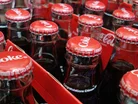
Coca-Cola is preparing to roll out a cane sugar version of its flagship drink in the United States, days after US President Donald Trump posted that the company had agreed to ditch high-fructose corn syrup.
Although the drinks maker confirms it is adding cane sugar to its ingredient list, it also makes clear this is not a full-scale switch.
The plan comes as Coca-Cola’s reveals its second quarter earnings report for 2025.
On an investor call, James Quincey, the company’s Chair and CEO, told shareholders that Coke intends “to expand our trademark … product range with US cane sugar to reflect consumer interest in differentiated experiences”.
He adds that the new formula will sit alongside the existing range, rather than replace any existing product.
“This is really an ‘and’ strategy and not an ‘or’ strategy,” James says. “We are going to continue to use a lot of the corn syrup that we do now.
”This expansion arrives as part of a wider context, as the US health secretary, Robert F Kennedy Jr, has been promoting a public health campaign titled “Make America healthy again,” or MAHA, with a focus on food and drink ingredients.
In the same week, Trump posted on social media: “I have been speaking to Coca-Cola about using REAL Cane Sugar in Coke in the United States, and they have agreed to do so. I’d like to thank all of those in authority at Coca-Cola.”
He adds: “This will be a very good move by them – You’ll see. It’s just better!”
Same sugar, different supply chains
Cane sugar is already used in Coca-Cola's Mexican version of the drink, which is available in the US but at nearly twice the cost.
One reason is basic supply chain logistics: the United States does not grow enough cane sugar to meet national demand. That reality limits the scale at which Coca-Cola can adopt cane sugar, even if demand increases.
The product coming to the US market will be made with domestically sourced cane sugar where available, but supply constraints mean the high-fructose corn syrup version will remain the staple.
That aligns with Coca-Cola’s dual-ingredient strategy, using both sweeteners depending on region, availability and cost.
Meanwhile, health experts stress the swap does not change much in terms of nutrition.
“Excess consumption of sugar from any source harms health,” says Eva Greenthal, Senior Policy Scientist at the Center for Science in the Public Interest.
“To make the US food supply healthier, the Trump administration should focus on less sugar, not different sugar.”
Corn syrup has long drawn criticism for its role in the US obesity epidemic, but Coca-Cola stands by the ingredient.
In a company statement, it says: “High fructose corn syrup (HFCS) – which we use to sweeten some of our beverages – is actually just a sweetener made from corn. It’s safe; it has about the same number of calories per serving as table sugar and is metabolised in a similar way by your body.”
It adds that the American Medical Association (AMA) “has confirmed that HFCS is no more likely to contribute to obesity than table sugar or other full-calorie sweeteners”.
The company concludes: “Please be assured that Coca-Cola brand soft drinks do not contain any harmful substances.”

A product shift tied to broader business performance
In its results update, the company reported a 1% dip in global unit case volume but 1% growth in net revenues. Organic revenues grew 5%, while operating income jumps 63%.
Coca-Cola also reported an operating margin of 34.1%, compared with 21.3% for the same period the previous year. When adjusted for currency effects, that margin rises slightly to 34.7%.
James attributes this to resilience and agility in a changing market: “Amid a shifting external landscape in the second quarter, the ability of our system to stay both focused and flexible enabled us to stay on course in the first half of the year.”
He adds: “We continue to execute with a clear intent on our priorities and are confident in our trajectory to deliver on our updated 2025 guidance and longer-term objectives.”
For now, the new cane sugar Coke is on its way – but the original isn’t going anywhere.