How Tetra Pak is Streamlining Supply Chains with AI
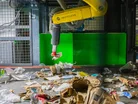
Tetra Pak is expanding its use of artificial intelligence (AI) and robotics in the UK’s recycling infrastructure, with a supply chain focus on processing efficiency and regulatory readiness.
Partnering with Recycleye, the Swedish packaging company has installed optical sorting equipment at a materials recovery facility (MRF) in Carlisle, as part of a US$1.7m programme aimed at boosting the country’s sorting capabilities.
The installation is part of Tetra Pak’s global US$41m annual investment into recycling operations.
From a supply chain perspective, the move reflects growing industry pressure to streamline materials handling, reduce manual sorting and anticipate changes in local waste policy that will affect upstream collection and downstream processing.

Automation and AI
The system installed in Carlisle uses Recycleye’s QuantiSort AI, which combines visual recognition software with air-powered sorting.
It identifies beverage cartons on mixed waste lines using a series of cameras and neural networks trained to distinguish cartons from other materials. Once identified, the system uses pneumatic valves to separate the cartons from the rest of the waste stream.
This allows recovery operations to operate at higher throughput with less contamination and fewer manual interventions.
QuantiSort is currently achieving a carton output purity of 98%, a considerable improvement on traditional manual or semi-automated systems.
For logistics and sorting contractors, this means lower reject rates and increased material value across the chain.
Victor Dewulf, Co-Founder and CEO of Recycleye, says: “This project demonstrates the capability of AI to detect and recover items such as food and beverage cartons, offering MRFs a flexible technology to adapt to changing material streams.”
The technology offers an adaptive advantage as carton composition changes or if packaging regulations evolve, enabling facilities to update their recognition criteria through software rather than physical upgrades.
Aligning with policy
The Carlisle facility, which processes material from across north-west England and southern Scotland, is the second site to be upgraded in Tetra Pak’s UK-focused infrastructure programme.
The first site, in Hartlepool, added robotic sorting arms produced by Recycleye in May.
A third upgrade is expected before the end of the year.
Together, these installations represent a domestic investment of US$2.9m into the UK’s recycling supply chain and aim to equip processors ahead of the 2026 launch of the UK government’s Simpler Recycling initiative.
From March 2026, all English councils will be required to collect beverage cartons at kerbside.
Mandy Kelly, CEO of the Alliance for Beverage Cartons and the Environment (ACE UK), which supports the rollout, comments: “As we move closer to the rollout of Simpler Recycling — which will require all councils in England to collect cartons at the kerbside — we’re proud to support another landmark investment in advanced sorting technology.”
The new legal requirement is expected to raise the volume of cartons entering MRFs.
By investing in AI-led infrastructure now, Tetra Pak aims to position its facilities to handle the increased volume while ensuring high recovery rates and reduced reliance on manual sorting.
Strengthening regional processing
The Carlisle site is operated by Cumbria Waste Group, which serves local authorities including Cumberland Council and Westmorland & Furness Council.
“Even though our Council customers are not yet actively targeting Tetra Pak it is surprising how much we are already recovering with the system working seamlessly with the rest of our plant,” says Andy Chant, CEO of Cumbria Waste Group.
Awantika Chadha, Sustainability Manager at Tetra Pak UK, says the collaboration with Recycleye is designed to scale UK material recovery infrastructure in line with evolving regulatory and environmental expectations.
“This announcement of another upgrade to a UK MRF demonstrates our commitment to improving the UK’s recycling infrastructure and transforming the UK's circular economy,” she says.
“We are particularly pleased to be helping to implement AI-powered optical sorter technology in the UK for the first time.”