How Steel Supply Chain is at Heart of India-Brazil Pact
India has moved to strengthen trade ties with Brazil by signing a pact to expand collaboration in mining and minerals as it aims to meet increasing domestic steel demand and support capacity expansion amid intensifying global competition for raw materials.
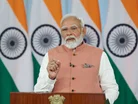
The agreement was formalised in the presence of India’s Prime Minister Narendra Modi and Brazilian President Luiz Inacio Lula da Silva.
Brazil holds large reserves of minerals critical to steelmaking and is among the world’s top producers of iron ore. Closer cooperation should enhance India’s access to raw materials including iron ore, and technologies required to sustain long-term growth.
Infrastructure investment and steel sector growth
The cooperation will focus on attracting investment in exploration, mining and steel sector infrastructure. Currently, India has a steelmaking capacity of 218 million metric tons and more companies are expanding output to meet increasing demand driven by industrialisation.
This agreement is expected to aid the development of blending centres and logistics hubs. "We are committed to taking bilateral trade much beyond US$20bn in the next five years," said Narendra Modi, Prime Minister of India.
Modi said that infrastructure development is a key driver for the trade partnership. Bilateral trade currently stands at US$15bn, with targets set for US$30bn by 2030.
Brazil’s record-breaking mineral export logistics
Brazil’s logistics networks reached a new milestone in 2025, with iron ore exports growing 7.1% to reach 416.4 million metric tons.
This record performance was supported by strong demand from international markets and increased production from major firms. The Brazilian mining sector generated revenue of R$ 298.8 billion in 2025, with iron ore accounting for over 52% of that total.
Export volumes in December 2025 surpassed 40 million tons, nearing monthly records. This logistical capacity is a key part of the Brazilian economy, where mining contributes significantly to the national trade balance, reinforcing Brazil’s role as a vital global mineral supplier.

Currency settlement and trade finance innovation
Another significant logistical and financial development involves the proposal to conduct trade in national currencies. President Lula advocated for using the Indian Rupee and Brazilian Real for trade settlements to reduce reliance on the US dollar.
Brazil's President Luiz Inacio Lula da Silva dismissed common currency rumours but focused on streamlining bilateral transactions. This shift could impact trade finance and supply chain payment systems, potentially lowering transaction costs and hedging against currency volatility for companies operating across the two nations.
Strategic partnership across critical mineral sectors
Since 2006, India and Brazil have been strategic partners, with cooperation across energy, critical minerals and digital infrastructure. Brazil is India’s largest trading partner in the Latin America region.
The latest MoU provides an institutional framework for strengthening cooperation across the steel value chain, focusing on manganese, nickel and niobium. These minerals are essential for modern industrial production.
"Our nations will also work closely in areas such as technology, innovation, digital public infrastructure, AI, semiconductors and more," said Modi.
This includes automation and advanced technologies in exploration and mining to ensure a more resilient and sustainable global mineral supply chain.
Global competition for raw material security
The Indian government is seeking new suppliers of rare earths to curb dependence and support capacity expansion.
Brazil possesses the world’s second-largest reserves of critical minerals used in modern technologies such as electric vehicles and smartphones. Enhanced cooperation is expected to improve access to key materials necessary for sustaining the growth of India’s steel sector.
The new partnership will enable technology-led improvements across the value chain, supporting efficient preparation of inputs. The two leaders discussed the expansion of the India-Mercosur preferential trade agreement to deepen economic ties.