Mondelēz International: Building Cocoa Supply Resilience
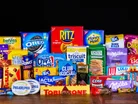
Mondelēz International has delivered solid top-line growth in its third quarter results for 2025 – despite facing major supply chain disruption from record-high cocoa inflation.
Mondelēz's performance highlights a strategy focused on pricing execution to counteract rising input costs that has been partially offset by a decline in sales volume.
The quarter represents the peak for these costs, according to CEO and Chair Dirk Van de Put.

Managing cocoa supply and price inflation
The primary challenge for Mondelēz has been the soaring price of cocoa, which saw a near-threefold increase between late 2023 and early 2025.
According to The Wall Street Journal reports from late 2024, the increase was the result of low global stocks, creating major supply deficits. Low stock was caused by factors impacting the harvest, including extreme and unpredictable weather patterns ranging from droughts to increased rainfall.
Earlier in 2024, Dirk addressed the inflation issue, stating that Mondelēz was “fully covered for 2024 and well-protected heading into 2025". At an investor conference in September 2024, he acknowledged that poor cocoa harvests in Africa had contributed to the price hikes but noted there was “more optimism” around higher prices in Europe.
This indicates a proactive and strategic approach to procurement and risk management within its supply chain.
“Although we anticipate challenging conditions to continue in some markets, we are encouraged by a moderation in cocoa prices, as well as promising signs for a strong cocoa crop this autumn,” Dirk explains.
This suggests a potential easing of the intense pressure on Mondelēz's confectionery supply chain.
Financial performance amid supply chain pressures
Mondelēz’s strategy for managing these costs is evident in its financial results. It reports that revenues increased by 5.9%, with organic net revenue growth of 3.4%.
This growth was led by its chocolate division where brands like Cadbury and Milka saw organic net revenue grow by 8.2% largely due to pricing adjustments. In contrast, biscuits and baked snacks grew by a more modest 1.2%.
However these pricing strategies have come with consequences. Mondelēz reports a decrease in gross profit of US$387m.
Adjusted earnings per share (EPS) is reported at US$0.73, down 24.2%. The company says this decline was “caused by operating declines, partially offset by lower taxes, fewer shares outstanding, higher equity method investment earnings and the impact from an acquisition".
Dirk adds: “Our teams are focused on executing clear plans for volume improvement, substantially increasing growth investments and creating meaningful cost efficiencies.”

Regional variations and future outlook
The impact of these global supply chain issues has varied across different markets.
While Latin America, Europe and the Asia, Middle East and Africa regions saw growth of 4.7%, 5.1% and 5.3% respectively, North America experienced a slight decline of 0.3%.
This could suggest differing levels of consumer sensitivity to price increases or variations in regional supply chain efficiencies.
Reflecting the ongoing volatility, Mondelēz has updated its 2025 outlook. It is now expecting organic net revenue growth of 4%+ and an approximate 15% decline in adjusted EPS on a constant currency basis.
Despite the challenges, Mondelēz predicts a free cash flow of US$3bn for 2025 and returned US$3.7bn to shareholders in the first nine months of the year.
Looking ahead, Dirk says: “We remain confident in our teams’ proven track record of navigating volatility, as well as our strong business fundamentals, which position us well for next year and beyond.”
Company portals

Executives
Dirk Van de Put
Chairman & CEO