Why Data Centre Cooling is Vital for Effective Supply Chains
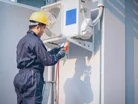
As climate models predict higher global temperatures, data centre operators are facing pressure to reinforce their systems against extreme heat and its strain on infrastructure.
With the UK’s June 2025 heatwave pushing thermometers to historic highs, the need for climate-resilient supply chains is now front and centre.
For an industry that underpins global logistics, financial services and everyday communications, cooling systems are not just a technical concern—they are vital for continuity across the trade network.
The physical strain on these hubs has direct implications for global supply chains. Disruption to cooling systems can cascade into outages, lost data and delayed services—knock-on effects that ripple from ecommerce platforms to port logistics.
Amid these challenges, the industry is reassessing how resilient its networks really are.

Cooling systems under heat
Nicholas Mazzei, Vice President of Sustainability at global logistics company DP World, highlights the challenges facing European data centres, many of which were not designed to withstand long periods of extreme heat.
Speaking on LinkedIn, he states: “The issue for us is that European infrastructure simply was not built for this [heat]. Most European data centres built pre-2019 assumed only a few days per year above 30 °C and of that, only a peak of up to 1-2 minutes above 32C.”
Nicholas recalls the system failures he experienced first-hand during a 2022 heatwave: “In 2022, 40C heat shattered cooling thresholds at UK and German sites. I was working in Berlin in 2022 for another company when many of us lost service on our work laptops in the 40C heatwaves as data centres failed.”
Data centres function as the backbone of the digital economy. When cooling thresholds are breached, overheating risks escalate, threatening server integrity and with it, vital services.
The stress on cooling units during heat spikes increases the chance of failure—posing a growing concern for supply chain reliability, particularly for sectors reliant on uninterrupted data flows.
Older facilities are particularly vulnerable. “Older sites may need upgrades,” Nicholas adds.
“Much of our infrastructure was built decades ago, before the real impacts of climate change became material. We need to be considering physical climate risk as a much more serious topic.”
Supply chain vulnerabilities
The implications extend beyond IT failure. In September 2024, DP World published its Global Asset Resilience Study, showing that US$81bn of global trade and at least US$122bn of economic activity are at annual risk due to port and terminal disruptions caused by extreme climate conditions.
The report also flags knock-on risks across infrastructure systems such as roads, railways, emergency response services and water supply networks. When any part of this system is compromised, the result is disruption across entire supply chains.
Maha AlQattan, former Group Chief Sustainability Officer at DP World, comments in the report: “As we decarbonise our operations and contribute to mitigating global temperature rise, we also understand the need to proactively prepare for climate risks that the trade sector may be susceptible to in the future.”
She adds: “Our Global Asset Resilience Study offers a scalable first step to building collective resilience across the trade value chain.”
- $81bn of global trade at risk annually
- $122bn in annual economic activity exposed
- Projected rise in flood risk post-2050, with wind currently accounting for half of the exposure
These figures highlight the importance of strengthening data centre resilience as part of wider supply chain adaptation efforts.
Strengthening digital infrastructure
With projections pointing to a sharp rise in data centre emissions—Morgan Stanley expects them to triple by 2030 and reach 2.5 billion tonnes of CO2 annually, in large part due to artificial intelligence—operators are under pressure to upgrade both their cooling systems and energy use.
To combat these challenges, Nicholas offers a three-point plan on LinkedIn:
Audit Cooling Limits: He recommends operators check the maximum ambient temperature their infrastructure is built to handle and compare to recent peak temperatures and future projections.
Map Vulnerabilities: He suggests an assessment of heat risks at all sites (including partners) and an identification of weak links in cooling or power in extreme heat.
Upgrade & Adapt: He calls for retrofitting facilities to add cooling capacity, improve airflow and modernise controls. He also advises heatwave emergency planning and setting stricter temperature thresholds for new builds.
“Data centre resilience is as crucial as trucks and warehouses in protecting your supply chain," Nicholas writes. "With extreme heat now routine, reinforce your digital and physical infrastructure to prevent outages and ensure business continuity.”
His message to logistics and data operators is clear: if they make these necessary changes now, they'll soon see improvements in their supply chains.
Explore the latest edition of Supply Chain Digital Magazine and be part of the conversation at our global conference series, Procurement & Supply Chain LIVE.
Discover all our upcoming events and secure your tickets today.
Supply Chain Digital is a BizClik brand