Hexagon Acquires Waygate Technologies in US$1.45bn Deal
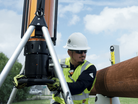
Hexagon will pay US$1.45bn for Waygate Technologies in a deal that could reshape how manufacturers manage quality assurance across production and maintenance operations.
The acquisition of Waygate from Baker Hughes brings non-destructive testing (NDT) capabilities to Hexagon's existing measurement portfolio. Waygate Technologies uses computed tomography and radiography to inspect internal structures of components without dismantling them.
This allows supply chain operators to verify structural integrity at multiple points in a manufacturing chain rather than relying on external measurements alone.
For manufacturers working with complex assemblies, the technology means quality verification can happen earlier in production sequences, potentially reducing costly rework when defects are discovered only at final assembly stages.

Internal inspection without disassembly
Waygate works in non-destructive testing. The technology lets operators examine jet engine blades or electric vehicle batteries for internal defects while keeping components intact.
According to Hexagon, inspection data feeds into AI-driven analytics to create digital twins of physical assets. Manufacturers can now consolidate dimensional checks and internal structure verification into one workflow.
This could reduce handoffs between separate quality assurance providers in the supply chain. When different inspection technologies require different specialist contractors, coordination delays can extend production timelines. Bringing these capabilities under one provider could streamline approval processes for components moving between production stages.
“This acquisition is a natural and exciting evolution of Hexagon Manufacturing Intelligence’s strategy,” says Anders Svensson, President and CEO of Hexagon.
"By combining Waygate's NDT expertise with Hexagon's precision measurement portfolio, software capabilities and global infrastructure, we will create a uniquely integrated offering that helps our customers achieve higher quality, greater efficiency and improved confidence across the full product lifecycle."
Maintenance and operational continuity
The deal moves Hexagon into maintenance, repair and operations markets. Waygate's remote visual inspection tools use cameras on flexible cables to examine aircraft turbines without removal from wings.
This capability could change operational downtime patterns for manufacturers and fleet operators. Inspections required by aviation regulators are tied to flight hours rather than production schedules.
Access to on-wing inspection tools could mean more predictable maintenance intervals across supply chains. Airlines and aerospace manufacturers currently schedule inspections around aircraft availability, which can create bottlenecks when multiple units require servicing simultaneously.
The shift extends Hexagon's role beyond initial production. Manufacturers using the combined technology could manage quality assurance during both fabrication and decades of operational service. This continuity means inspection data from operational assets could inform adjustments to production processes for future units.
Asset classification and margin targets
Hexagon identified Waygate's radiography and remote visual inspection units as growth and profitability assets. According to Anders, the company sees opportunity to apply its operating model to these divisions to improve margins over the medium term.
The Ultrasonic Testing and Imaging Solutions divisions carry a different designation. Hexagon labelled them stability assets and stated it will explore all strategic options for performance improvement.
The deal is expected to close in the second half of 2026. For the 1,500 employees at Waygate and manufacturers using Hexagon tools, the transaction could mean quality control becomes embedded throughout production chains rather than isolated at final inspection stages.
Company portals

Executives
Anders Svensson
President and CEO