
Hershey Reveals New Sustainable Supply Chain Strategy
The Hershey Company has outlined a sustainability framework that places supply chain stability at its centre.
According to Whitney Mayer, Head of Global Sustainability at The Hershey Company, the strategy addresses environmental and social challenges that intersect with business operations.
The approach, named 'Source, Make, Delight', targets a 50% reduction in absolute Scope 1 and 2 emissions by 2030. Hershey aims to source 100% of electricity from renewable and zero-emissions sources by the same deadline. These commitments form part of the company's broader climate action strategy.
The framework reflects what Whitney describes as rising expectations from consumers, customers and stakeholders. The strategy builds on past progress while taking what the company calls a more integrated enterprise-wide approach to managing risk and strengthening supply reliability.
Whitney says that sustainability efforts and business performance create tension at times. By working through that complexity, the company believes more resilient operations could emerge.

Ingredient sourcing across geographies
Hershey sources ingredients from multiple regions. Cocoa comes from West Africa while dairy and peanuts originate in the United Kingdom and US.
Each ingredient faces distinct environmental and social conditions. Many are grown in regions experiencing climate variability, water stress, deforestation and biodiversity loss. These environmental pressures create challenges for long-term ingredient availability.
Cocoa presents particular challenges. The crop is sensitive to changing rainfall patterns where diseases and environmental factors affect plant health. These conditions could reduce yields and quality, impacting crops and the livelihoods of farm families.
Supply chain resilience starts with farms and farmers, according to Hershey's strategy. The company states it also depends on the health of the broader ecosystems in which they operate.
Programmes targeting farming households
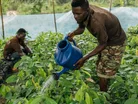
Hershey is investing in the Hershey Income Accelerator Program (HIAP), a US$40m initiative in Côte d'Ivoire. The programme aims to support 20,000 farming households with training, financial incentives and tools to improve productivity and incomes.
The firm has set a goal to cover one million hectares with regenerative, restorative or protective practices by 2035. These investments target the long-term health of agricultural systems and aim to build resilience within farming communities.
Whitney notes that the products depend on a diverse set of ingredients shaped by interconnected challenges. The strategy recognises these dependencies across multiple geographies.
The company is investing in programmes that strengthen both farms and the ecosystems they operate within. This dual focus could mean improved resilience across the supply base.
Operations and logistics networks
Hershey's ability to deliver snacks to consumers depends on how it optimises operations, logistics and supply chain networks. The company has committed to eliminating 25 million pounds of packaging.
Efficient operations represent a commitment to consumers, communities and the planet, according to Whitney. By developing a culture focused on eliminating waste across its global manufacturing network, Hershey is ensuring that sustainability sits at the centre of how it makes its products.
Efforts to improve operational efficiency include targeted investments in water recycling systems. The company is optimising its logistics network to reduce fuel use and miles travelled.
Performance improvements on the ground could show results through reduced environmental footprint. The strategy addresses how well Hershey manages waste and minimises impact across its operations.
Consumer expectations and product development
Hershey has been making products for more than 130 years. Today, consumers are considering health, sustainability and transparency alongside taste and value.
This evolution means rethinking how sustainability appears across the portfolio. By integrating sustainability considerations into how it designs and develops offerings, Hershey is working to deliver the choice and experiences consumers want.
Whitney writes that consumers are thinking more holistically about what they eat. The company is responding by embedding sustainability into product development processes.
The strategy helps shape how Hershey will source ingredients and make products over the next decade. This could mean the team continues delighting consumers while growing responsibly in a changing world.
Company portals

Executives

Whitney S. Mayer
Head of Global Sustainability