Could Greenland be the Answer to Rare Earth Diversification?
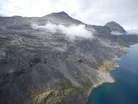
As global supply chains face mounting pressure to diversify away from Chinese rare earth dependencies, Greenland's vast mineral reserves present a compelling opportunity that could remain unrealised for years.
A new report from Wood Mackenzie titled 'Polar prize? The realities of developing Greenland's rare earth potential' examines why the Arctic territory's critical minerals remain largely inaccessible to supply chain managers seeking alternative sources.
With China controlling approximately 61% of global rare earth production and 90% of processing operations, supply chain vulnerability has become a strategic concern for high-tech manufacturers.

Rare earths are essential components in smartphones, solar panels and high-powered magnets, making any supply disruption potentially devastating for global value chains.
The European Commission has estimated that Greenland could produce 27 out of 34 minerals designated as 'critical' under its Critical Raw Materials Act.
However, despite ranking in the top 10 globally for reserves, Greenland currently operates no active mines, with most rare earth projects remaining in early-stage development.
Infrastructure challenges
The most immediate obstacle facing potential rare earth supply from Greenland centres on fundamental infrastructure gaps. According to Wood Mackenzie, companies would need to develop their own energy infrastructure and transport networks to maintain mining operations, as these capabilities do not currently exist at scale.
Port infrastructure presents another critical bottleneck for supply chain integration. Currently, only southwestern ports in Greenland operate year-round, with Nuuk being the only location with modern port infrastructure suitable for mineral exports. This limitation constrains potential shipping routes and could create seasonal supply disruptions that would complicate procurement planning for manufacturers requiring consistent rare earth deliveries.
The territory's small local population means mining operations would rely heavily on imported skilled labour, adding further complexity to operational planning.
Geographic realities
Operating conditions in Greenland include high snowfall, freezing temperatures and shortened daylight hours. These factors limit access to many mining areas, potentially creating unpredictable supply chain interruptions that could concern procurement managers seeking stable sourcing alternatives.
"Projects in Greenland must compete for investment with projects in countries such as Canada, Australia and the US that have more developed infrastructure and established mining sectors," states David Riley, Senior Research Analyst at Wood Mackenzie.
"The lack of infrastructure, low labour pool and high capital requirements are the main barriers to development. We expect these to remain major limiting factors on Greenland's ability to establish a rare earth mining sector, irrespective of whether Greenland remains a Danish territory, becomes a US territory, or looks to independence."
All sustainability, net zero and sustainable procurement leaders should attend:
- Procurement & Supply Chain LIVE: The Net Zero Summit - QEII Centre, London, March 4-5
- Procurement & Supply Chain LIVE: The US Summit - Navy Pier, Chicago, April 21-22
Co-located with Sustainability LIVE, these events brings together CPOs, CSCO, CSOs, ESG leaders and senior decision-makers at a moment when sustainability, supply chains and commercial performance are increasingly interconnected.
Tickets can be booked online today for The Net Zero Summit and The US Summit. Group discounts available.
Limited near-term supply
Several projects remain in various stages of development, though none appear positioned to contribute to global supply chains imminently.
- Energy Transition Metals' Kvanefjeld project has faced numerous stalls since January 2022 due to legal challenges over uranium content
- Critical Metals' Tanbreez project received a US$120m (£95m) Letter of Interest from the US Export-Import Bank, with plans for a summer 2026 pilot facility.
- Neo Performance Materials' Sarfartoq project remains in earliest exploration stages.
Regulatory barriers add further uncertainty to supply chain planning. Following the April 2021 election victory of the Inuit Ataqatigiit party, Greenland's parliament banned uranium exploration and exploitation in December 2021.
Currently, 6.5% of Energy Transition Metals is held by China's Shenghe Resources Holding Co, demonstrating continued Chinese involvement even in alternative supply sources.