General Mills: Future-Proofing Sweet Corn Supply Chains
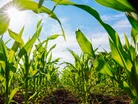
Global food manufacturer General Mills is embedding regenerative agriculture principles into its Green Giant sweet corn operations through a strategic collaboration with French agricultural cooperative Euralis.
The initiative targets the company's sweet corn production in south-western France, focusing on improving soil health, water stewardship and building long-term agricultural resilience across its supply network.
General Mills operates a portfolio of more than 100 consumer brands, including Cheerios, Nature Valley, Häagen-Dazs and Pillsbury. Green Giant, one of its established brands in UK markets, generated sales of £47.7m (US$59.4m) in 2025.
The regenerative agriculture programme encompasses 250 farms that supply the Green Giant production facility in the Landes region of France, where operations have been based since 1976. These participating farms are all situated within a 200km radius of the site, creating a tightly integrated supply network designed to maintain quality standards and supply security for sweet corn.
Benjamin Duché, EU Regenerative Agriculture Lead at General Mills, explains: "Our approach puts producers at the centre, supported by local expertise and robust measurement of progress.
"By working closely with partners on the ground, we are focused on delivering practical change that supports both environmental outcomes and long-term productivity."
Collaborative framework drives implementation
The success of General Mills' strategy depends on the partnership between Green Giant and Euralis. The agricultural cooperative provides advisory services to farmers and operates across multiple sectors, including agriculture, seeds and food products.
The programme is designed to scale agroecological practices that could improve soil fertility, protect water resources and strengthen the resilience of sweet corn cultivation. General Mills is offering targeted technical and financial support to participating farmers, including co-financing cover crops to support soil protection and regeneration.
As part of the project, all agronomist technicians at the Green Giant site will undertake an 18-month training programme. This training is focused on delivering field-level support adapted to local soil conditions and water management challenges.
The initiative aims to transition all of Green Giant's sweet corn acreage involved in the programme towards regenerative agriculture practices by the end of 2027. This timeline reflects the company's commitment to accelerating the adoption of sustainable farming methods whilst ensuring farmers receive adequate support throughout the transition period.
Supporting farmers through expert guidance
Cédric Brana, Head of the Fruit and Vegetable Producers' Organisation at Euralis, says: "As a leader in regenerative agriculture practices in its territories, Euralis is committed to deploying Opti'Ag (the comprehensive advisory programme for sustainable farming) across all its contract crops.
"This initiative naturally includes 250 Green Giant sweet corn producers. The advisory services provided by our agronomists are based on three pillars: soil diagnostics, the use of cover crops and water management. Opti'Ag meets the corporate social responsibility (CSR) expectations of our partner Green Giant and reflects our own CSR strategy."
The Opti'Ag programme represents a structured approach to supporting farmers through the transition, providing them with technical expertise tailored to their specific operational needs and local environmental conditions.
The three-pillar framework ensures farmers receive comprehensive guidance across the most critical aspects of regenerative agriculture. Soil diagnostics enable producers to understand their baseline conditions and track improvements over time, whilst cover crop strategies help maintain soil health between growing seasons.
Water management support is particularly valuable in the context of increasing climate variability, helping farmers optimise irrigation practices and build resilience against drought conditions. This integrated approach ensures that environmental benefits align with practical farming requirements.
Alignment with broader sustainability commitments
The Green Giant initiative contributes to General Mills' commitment to advance regenerative agriculture across 400,000 hectares of farmland globally by 2030. The company describes regenerative agriculture as a "principles-based, holistic approach to farming" that builds resilience in ecosystems and communities.
These principles include practices such as minimising soil disturbance, increasing crop diversity and maintaining soil cover. The approach aims to advance scientific understanding of regenerative agriculture outcomes and increase the adoption of regenerative farming practices.
Jeff Harmening, Chairman and CEO of General Mills, adds: "For nearly 160 years, General Mills has been making the food the world loves. We know it's more than what's on a plate – it's the farmers who grow it and the communities our plants support; it's about putting food safety and quality first; it's about accessible and affordable nutrition; and it's about providing families with taste, joy and choice.
"By partnering with farmers and local organisations, we have engaged more than 600,000 acres in programming designed to advance regenerative agriculture in our key sourcing regions."
General Mills has already rolled out similar pilot programmes across other key European supply chains, including dairy farms supplying Häagen-Dazs in northern France.
The programme in France represents part of a broader strategic effort to transform agricultural practices across General Mills' global supply chains, positioning regenerative agriculture as a core component of the company's operational approach.
Company portals


Executives
Benjamin Duché
Europe & Australia Regenerative Agriculture Leader
Cedric Brana
Head of Fruit and Vegetable Producers' Organisation

Jeff Harmening
Chairman and CEO