GE Vernova’s Green Secret to Electrifying the World
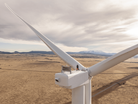
GE Vernova marks its first full year as an independent company by publishing a detailed sustainability report covering emissions, electrification and supply chain performance.
The report shows how the company uses its wide-reaching operations and global supply chains to deliver on climate goals while supplying one-quarter of the world’s electricity.
With more than 100 manufacturing sites in over 25 countries, GE Vernova organises its sustainability plans around four areas: Electrify, Decarbonise, Conserve and Thrive. Each includes specific targets and responsibilities to align environmental progress with business growth. This approach is backed by a governance system that places sustainability at the heart of strategic decisions.

Manufacturing and suppliers at the core of progress
As a company describing itself as the "world’s energy manufacturer," GE Vernova depends on a vast supply chain network to deliver its climate commitments.
The business spent US$20bn on raw materials across 109 countries in 2024, underlining the global footprint behind its operations. This network feeds into products such as gas turbines, wind blades, grid software and nuclear technologies.
The company generated US$35bn in revenue last year, with a backlog worth US$119bn. Its capacity to build and ship complex energy systems at scale is key to its decarbonisation strategy.
"They operate supply chains building some of the most complex equipment the planet needs," says Hon. Roger Martella, Chief Corporate Officer & Sustainability Officer.
This supply chain reach directly impacts emissions performance. In 2024, GE Vernova’s gross Scope 3 emissions, which include emissions from purchased goods and services, fell to 796 million tonnes, down 38% from the previous year.
Scope 3 emissions are indirect greenhouse gas emissions that occur in a company’s value chain, both upstream and downstream. These reductions are tied to cleaner energy sources and a shift toward more efficient systems.
In the company’s product output, 62% of new generation and 34% of grid-enabling capacity were delivered to developing and emerging markets such as Iraq, Ghana and Indonesia.
By focusing production and delivery on these areas, GE Vernova’s manufacturing base and supply logistics have also contributed to wider efforts around energy equity.
"I'm more confident and optimistic than ever about delivering on our mission to electrify and decarbonise the world," says Scott Strazik, CEO at GE Vernova. "We are not just imagining the future of energy, we are shaping it."
Energy demand and supply chain resilience
GE Vernova’s manufacturing output supported 31 GW of new power generation in 2024, roughly equal to the full capacity of Virginia, along with 71 GW of grid-enabling infrastructure and 6 GW of solar inverters.
As electricity demand rises, particularly from AI and data centres predicted to use 12% of US electricity by 2035, the company is shifting production toward dispatchable technologies like small modular reactors and high-efficiency gas turbines.
These technologies are supported by AI-enabled platforms such as GridOS and GridBeats, which are designed to optimise electricity delivery. The ability to meet this demand depends on maintaining stable and responsive supply chains that can support co-located, rapidly deployable generation assets.
Water use and resource input also fall within the company’s sustainability accounting. GE Vernova used 2.7 billion gallons of water in 2024, most of it for once-through cooling in production processes. Eleven environmental spills were recorded, along with two cases of wastewater exceeding limits, although there were no violations related to air quality.
To limit material waste, the company’s 4R circularity model — Reduce, Reuse, Recycle, Recover — is now applied to 38% of its top products, up from 23% in 2023.
By 2030, GE Vernova aims to reach 90% coverage. More than half its products are now supported by Life Cycle Assessments or Environmental Product Declarations, helping guide supply chain choices based on environmental impact.
Investing in supply chain innovation
Sustainability governance runs through the company’s internal structure, with a council led by the Chief Sustainability Officer reporting directly to the Board. Twenty business functions feed into this model, from operations to legal. These teams ensure compliance with international ESG frameworks, while building capacity across the company’s network.
US$1.2bn was spent on research and development in 2024, part of a planned US$9bn investment through 2028. These funds target improvements in grid systems, hydrogen-ready turbines, nuclear energy and carbon capture.
As part of its long-term climate strategy, GE Vernova continues work on small modular nuclear reactors, hydrogen and direct air capture — all of which will require stable, efficient and adaptable supply networks.
Direct emissions (Scope 1 and 2) were reduced by 51% compared to a 2019 baseline. The company now focuses on capital investment over offsets like renewable energy credits to make deeper cuts.
Looking ahead, GE Vernova aims to add 150 GW of generating capacity by 2030, growing its supply footprint while responding to the infrastructure needs of emerging markets and AI growth in developed economies.
Explore the latest edition of Supply Chain Digital Magazine and be part of the conversation at our global conference series, Procurement & Supply Chain LIVE.
Discover all our upcoming events and secure your tickets today.
Supply Chain Digital is a BizClik brand.