
Gartner: How Autonomous Tools are Reshaping Supply Chains
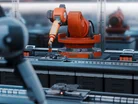
Research firm Gartner has published eight technology trends that are reshaping supply chain operations in 2026.
The trends centre on AI systems spanning physical robotics and autonomous decision-making agents.
Gartner's analysis suggests that AI adoption in supply chains could enable organisations to build resilience while transforming operational models. The trends fall into three categories covering governance frameworks, intelligent systems and multiagent coordination.

AI systems gain autonomy
According to Gartner, the identified trends point towards systems that can operate independently across digital and physical supply chain environments. These technologies are allowing supply chains to function with less human intervention in routine decision-making.
Christian Titze, VP Analyst and Chief of Research in Gartner's Supply Chain practice, says: "This year's trends highlight the growing role of AI as the foundation for more autonomous, intelligent and adaptive supply chains.
"As organisations move towards hyperconnected, AI-driven environments, leaders must focus not only on deploying advanced technologies but also on ensuring they work together to deliver measurable value and long-term resilience."
The research identifies multiple AI architectures that could address workforce constraints while improving operational flexibility. Each technology addresses specific supply chain challenges from labour shortages to real-time execution needs.
These trends represent more than incremental improvements. They are catalysts for transforming supply chains.
Robots perform multiple functions
Gartner highlighted polyfunctional robots as a technology that could address labour gaps in supply chain operations. These machines can perform multiple tasks within a single system rather than requiring dedicated equipment for each function.
The firm also identified physical AI as a top trend for 2026. Physical AI combines AI models with IoT sensors, robotics and automation systems to enable real-time sensing, analysis and execution across supply chain environments.
Agentic AI appeared in Gartner's trend list as a technology capable of planning, acting and adapting to achieve goals in complex environments. These systems could execute supply chain decisions without requiring constant human oversight.
Collaborative multiagent systems enable multiple AI agents to work together across workflows and environments. According to Gartner, organisations could use these systems to automate complex, multistep processes while improving scalability and adaptability.
- A BCG survey found that 44% of companies are deploying AI in supply chain management
- Gartner estimates 50% of cross-functional supply chain management solutions will use intelligent agents to autonomously execute decisions by 2030
- Gartner identified collaborative multiagent systems, which enable multiple AI agents to work together, in its supply chain technology trends for 2026
Early adoption creates advantages
According to The Boston Consulting Group, 44% of companies are deploying AI in supply chain management. The BCG survey suggests that AI adoption in supply chain contexts has reached substantial levels across organisations.
Christian says: "These trends represent more than incremental improvements. They are catalysts for transforming supply chains. Organisations that proactively evaluate and integrate these technologies in line with their business objectives will be better positioned to navigate disruption, scale innovation and maintain competitive advantage."
Gartner has previously forecast that by 2030, 50% of cross-functional supply chain management solutions will use intelligent agents to autonomously execute decisions in the ecosystem.
Governance frameworks
Gartner identified intelligent simulation as a trend that integrates AI, machine learning and advanced analytics into simulation models. This technology enables more dynamic planning across logistics, transportation and warehouse operations.
The firm also highlighted decision governance as organisations scale their AI adoption. Companies are implementing frameworks and guardrails to govern AI-enabled decision-making, ensuring transparency, accountability and compliance.
Domain-specific language models appeared in the trend list as AI systems that can be fine-tuned for supply chain applications. These models could understand supply chain terminology and processes better than general-purpose AI systems.
Gartner identified product provenance as a technology to trace and verify the origin and journey of products across the supply chain. This capability could address transparency requirements and regulatory compliance needs in global supply networks.
Company portals

Executives

Christian Titze
VP Analyst and Chief of Research, Supply Chain