The Future of Trade: Global Supply Chains Shift Focus
Global trade in 2025 demonstrated the need for business resilience and agility, with global supply chains having shifted dramatically over the year.
Facing an ever-changing series of disruptions and volatility, which does not seem to be slowing, businesses around the world have had to adapt in order to manage risk.
During Davos, the Economist Impact launched the Future of Trade, a new multi-year initiative examining how global trade systems are being reshaped by geopolitical tensions.

The future of trade
As global leaders gathered at Davos, Economist Impact launched 'The Future of Trade', a multi-year initiative designed to help businesses as they tackle fragmentation, shifting geopolitical dynamics and rapid technological change. Economist Impact brings together creativity, events experience and a global audience to deliver economic and social impact analysis, forecasting and scenario modelling.
The new initiative is supported by UN Trade and Development (UNCTAD) as a strategic partner and was unveiled in Davos, where business leaders, economists and policy makers were brought together to explore insights, concerns and solutions about the future of trade.
As global supply chains have began to utilise AI more or turn towards a future of digitalisation, the risks associated with it and the processes in interacting with this digitalisation change. Global supply chains also become more automated, with faster results, meaning that the role of the worker changes with it. 'The Future of Trade' initiative builds on years of independent research into global trade and supply chains, with thorough expertise on how businesses are working alongside the changing landscape.
The 'Future of Trade inception report' will be released in May, exploring further research and briefings to an even higher degree of detail and focus. The report will lay out a thorough roadmap, using the current landscape alongside emerging priorities for global trade.
Supply chain shifts
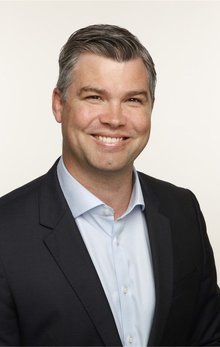
The initiative was announced at 'The Global Exchange', a half-day forum at Davos. During the forum, John Ferguson, lead of the new initiative and Global Head at Economist Impact, explored the main forces which are having major impacts on global supply chains in this modern era.
The main forces are:
- rapid technological acceleration as a result of AI and automation
- growing and intensifying geopolitical competition
- escalating climate disruption
As singular events, these forces are already disruptive enough, but working together, they are destabilising supply chains around the world. Climate disruption is impacting how goods are produced, with extreme weathers often rerouting transportation. As competitiveness grows, global trade becomes more fragmented as relationships become more strained.
More measures are being taken to protect own supply chains, resulting in less collaboration and more trade disputes.
“Global trade has moved from a focus on efficiency to a landscape defined by risk, rivalry and weaponisation,” explains John.
“Our new Future of Trade initiative aims to provide leaders with evidence-based insights to move beyond reactive strategies and shape a system that delivers stability, growth, and opportunity for all.”
All sustainability, net zero and sustainable procurement leaders should attend:
- Procurement & Supply Chain LIVE: The Net Zero Summit - QEII Centre, London, March 4-5
- Procurement & Supply Chain LIVE: The US Summit - Navy Pier, Chicago, April 21-22
Co-located with Sustainability LIVE, these events brings together CPOs, CSCO, CSOs, ESG leaders and senior decision-makers at a moment when sustainability, supply chains and commercial performance are increasingly interconnected.
Tickets can be booked online today for The Net Zero Summit and The US Summit. Group discounts available.
Growing priorities
Trust in a long-running, multilateral system is being tested, as the global trade environment becomes increasingly complex and volatile. The 'Future of Trade' report acts as a response to this growing discontent. Through its thorough research and strategic convenings, the initiative will generate independent, evidence-based insights which will form a more sustainable, resilient and inclusive global trade network.
The partnership with UNCTAD creates more room to develop global debate with high-quality data, analysis and insights. The research roadmap will set out to explore how persistent uncertainty is reshaping global commerce, with a focus on interlinked priorities.

The priorities are:
- Multilateral trade and local democracy - by exploring how to restore multilateral systems and find streamlined rules and structures to work off, trust can be rebuilt within the current era which is shaped by AI-transformation, geopolitics and climate change.
- Next generation trade - addressing how digital trade can be applied across all economies will help explore how digital and environmental trade can be strengthened
- Resilient trade networks - by focussing on how supply chains can remain resilient during a volatile world, the roadmap will explore how AI plays its role in this strength
“History shows that recovery is possible. Trade collapsed in the 1930s but was rebuilt over decades of institution-building and liberalisation. Today, the same resolve is required,” explains John.
“The Future of Trade will generate original insights and evidence in pursuit of building a new trading order that is inclusive, resilient, and sustainable.”
Through ongoing collaboration and research, the next chapter of globalisations will be open and participatory, leading to a more connected global supply chain and trade network.
Company portals


Executives
John Ferguson
Global Head - Economist Impact