
How Etihad Rail is Delivering on UAE's Supply Chain Ambition
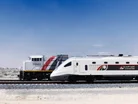
The UAE is building a rail network that will not only move people faster but could also reshape the nation’s freight operations and supply chain infrastructure.
The railway will connect 11 cities from Al Sila in the west to Fujairah in the east. Trains will operate at speeds of up to 200 km/h, with passenger services expected to begin in 2026.
Yet, while much of the spotlight is on commuter convenience, the supply chain benefits are just as transformative. Freight operations have already been running since 2023, moving materials, supporting industries and taking pressure off the road network.

The importance of freight trains
The freight network is already proving to be a powerful logistical solution.
At present, Etihad Rail transports around seven million tonnes of granulated sulphur annually from Shah and Habshan gas fields to the Ruwais port. That’s a direct replacement for hundreds of diesel truck trips and a major efficiency gain.
By 2030, freight trains are expected to move up to 60 million tonnes of cargo each year, including construction materials, containers, retail goods and industrial inputs.
Each fully-loaded train has the capacity to remove up to 300 trucks from the road. This not only eases traffic but also slashes emissions.
In fact, rail freight emits up to 80% less CO₂ than equivalent road transport. The network could reduce transport-related CO₂ emissions by 21% annually, aligning with the UAE’s Net Zero 2050 goal and saving about 8.2 million tonnes of CO₂ every year.
The railway integrates with key industrial hubs and ports including Jebel Ali, Khalifa Port, KIZAD and Fujairah Port, strengthening UAE’s position as a regional trade and logistics platform.
By linking port operations with inland terminals, Etihad Rail enables more efficient cargo consolidation, storage and distribution. This multimodal approach supports faster, cleaner and more cost-effective movement of goods across the country and to neighbouring markets such as Saudi Arabia and Oman.
Partnerships fuel supply chain expansion
Etihad Rail has already entered into a 20-year strategic partnership with DHL Global Forwarding, creating a joint venture that makes the rail network central to DHL’s operations in the UAE.
The agreement reflects a shift in how freight moves within the region, with rail now being seen as a core component of logistics planning.
Amadou Diallo, CEO for the Middle East & Africa at DHL Global Forwarding, explained at the time: “The UAE’s increasing focus on infrastructural investment in the logistics sector, and DHL Global Forwarding is excited to be part of this journey to support growing capacity requirements through rail freight.”
The collaboration promises better cost control, improved asset utilisation and more responsive supply chains for companies operating in the UAE.
Rail not only offers predictable transit schedules but also contributes to reduced maintenance costs and less wear and tear on highways. This combination of environmental and economic efficiency is helping position Etihad Rail as an integral part of regional and international trade routes.
Memoranda of Understanding with logistics operators such as COSCO’s Abu Dhabi Container Freight Station aim to build integration between rail and port services. These partnerships help create centralised cargo hubs where goods can be received, processed and distributed more efficiently than traditional road-based systems.
Economic returns and strategic vision
The impact of Etihad Rail extends well beyond transport. It’s expected to contribute AED 3.5bn to the UAE economy annually by 2030, with a return on investment estimated at four times the initial outlay.
More than 9,000 jobs will be created across operations, engineering, logistics and maintenance—fuel for both economic diversification and workforce development.
At the Abu Dhabi Infrastructure Summit on 4 August, Etihad Rail signed an agreement with the Abu Dhabi Projects and Infrastructure Centre (ADPIC) to boost collaboration across capital projects. The deal strengthens coordination on project delivery, data sharing and integration of transport infrastructure, helping to future-proof Abu Dhabi’s growth strategy.
The full network spans more than 1,200 km and will connect every emirate. While passenger services are set to enhance commuter convenience and tourism, the logistics impact is already taking shape.