How is Enel Embedding Sustainability Into Supply Chains?

Enel embeds sustainability deep within its procurement network, ensuring every purchasing decision supports the company’s wider clean energy mission.
From its Italian roots to its global footprint, the energy group integrates environmental and social responsibility into every link of its supply chain.
Enel distributes electricity to 69 million end users and delivers clean power to 54 million homes and businesses.
Through this vast network, its procurement operations act as a central mechanism for change, aligning suppliers and partners with a sustainable and circular economy model.

Building a sustainable supply chain
Enel’s procurement model focuses on circularity, innovation and long-term collaboration. Each element of its value chain contributes to the reduction of environmental impact, not only across its own sites but also across supplier networks.
Procurement teams are central to this, managing supplier relationships and ensuring that all partners share the same sustainability goals.
The group’s approach is guided by environmental, social and economic sustainability principles. Enel’s procurement professionals engage with suppliers to co-create products and services that minimise waste, reduce CO2 emissions and extend the useful life of materials.
The strategy relies on data transparency, supplier engagement and digital platforms that measure performance and encourage improvement.
Through its global procurement network, Enel seeks to transform how suppliers operate. The company has developed a “Circular Economy Initiative for Suppliers Engagement” programme to involve its partners in continuous sustainability improvement.
This initiative supports suppliers in tracking their CO2 emissions and introduces shared methods for resource efficiency and product reuse.
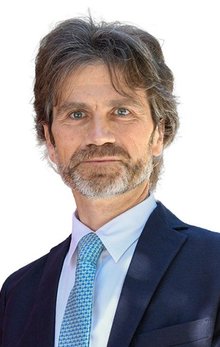
Enrico Zampone, Head of Global Procurement at Enel, says: “Caring for our suppliers and developing innovative tools to support them in navigating the complexities of ever-evolving markets are now essential elements of a modern and forward-looking business model, both for Enel and for the entire national system.”
His statement reflects a procurement philosophy centred on partnership. By fostering open communication, Enel enables suppliers to adapt to new market conditions while maintaining transparency.
This approach ensures that sustainability and performance improvement are collective responsibilities, not individual ones.
Circularity and supplier collaboration
Circular procurement forms the basis of Enel’s competitive advantage. The company integrates reuse, recycling and lifecycle optimisation into every purchasing process. Goods and services are selected for their potential to be repurposed, reducing waste and conserving resources throughout production and consumption cycles.
Enel’s supplier engagement framework strengthens accountability by requiring transparent emission reporting and sustainability assessments. Using digital platforms, Enel helps suppliers monitor and reduce their environmental footprint while aligning with the company’s long-term environmental, social and governance (ESG) goals.
This transparency benefits both Enel and its partners. It allows procurement teams to analyse data across the supply chain and apply corrective measures where needed. The outcome is a network of suppliers committed to continuous environmental improvement.
Enel’s circular economy practices also encourage innovation through material redesign and technology integration. By supporting suppliers in developing new solutions for reuse and recycling, Enel fosters innovation that benefits both operations and the wider clean energy market.
Innovating for the energy transition
At the intersection of procurement and innovation, Enel advances what it calls “innovability” — the fusion of open innovation and sustainability. This concept drives collaboration between suppliers, startups, academic institutions and investors to scale new technologies that contribute to the energy transition.
The company’s innovation arm works with external partners and internal teams to identify practical solutions that enhance both efficiency and sustainability. In the Italian Region of Piedmont, Enel integrates a desedimentation project with its Venaus floating photovoltaic system, combining solar power with water conservation.
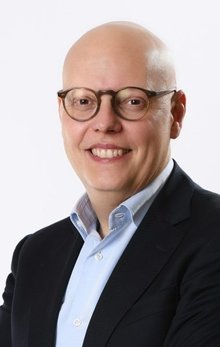
At the unveiling, Nicola Rossi, Head of Innovation at Enel Group, said: “Thanks to plant hybridisation, we have already achieved greater energy availability with better use of water resources, in order to protect the territory and local communities. With the innovative desedimentation plant presented today, Venaus becomes even more efficient and sustainable.”
This blend of technology, environmental stewardship and supplier collaboration defines Enel’s procurement identity. The company positions its procurement division as a key enabler of ESG outcomes and business value creation.
Through its circular economy initiatives, open innovation and supplier partnerships, Enel embeds sustainability in every procurement decision.
The result is a supply chain that not only supports Enel’s clean energy objectives but also empowers global partners to pursue their own sustainable futures.
Company portals

Executives
Enrico Zampone
Chief Procurement Officer
Nicola Rossi
Head of Innovation Enel Group