
Just Eat: Ditching Plastic and Delivering Change
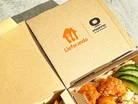
Across Europe’s food delivery networks, a quiet revolution is reshaping the way businesses think about packaging.
As consumer expectations evolve and sustainability regulations tighten, takeaway packaging – the one element of e-commerce that physically touches every customer – has become a focal point of transformation.
At the centre of this shift stands a new collaboration between Austria’s leading online food platform Lieferando, innovative materials company Xampla and packaging giant Huhtamaki.
Together, they are bringing to market a breakthrough solution designed to move the industry closer to a future without plastic.
Sustainable takeaway solutions
Lieferando Austria has introduced a new generation of takeaway boxes that feature Xampla’s Morro coating – a world-first, plant-based, plastic-free coating technology. These delivery boxes, manufactured by Huhtamaki, are now available to Lieferando’s 4,800 restaurant partners across Austria, marking the first time the innovation has been deployed in this market.
It’s a milestone that sits at the intersection of commerce, sustainability and material science, offering a tangible way for foodservice businesses to address one of their biggest environmental challenges: plastic waste.
Made from responsibly sourced corrugated cardboard and finished with the fully biodegradable Morro coating, the boxes are designed to combine ecological responsibility with the performance that busy restaurants demand. Durability, heat insulation and grease resistance make them suitable for a wide range of dishes, ensuring that restaurants do not have to choose between practicality and sustainability.

How was the Morro coating developed?
Morro coating is built on 15 years of research into plant proteins and natural polymers, where the underlying molecules are extracted from plants and processed without chemical modification so that they remain classed as natural, not plastic, under regulations such as EU REACH.
Xampla’s technology works by controlling how these plant-based polymers assemble at the microscopic level, creating a dense, continuous film that behaves like a high-performance barrier when applied to paper or board.
The coating is formulated as a liquid that can be run on conventional packaging lines, meaning it can be applied using industry-standard coating methods like gravure, reverse roller or spray coating onto a variety of paper substrates.
Once dried and cured, the plant-polymer network forms a robust, thin layer tightly bound to the paper, providing high grease, water and oxygen resistance while remaining heat-sealable for making sealed packs, sachets and lidded containers.
“Thanks to their durability and thermal insulation, these packages are suitable for a wide range of foods and dishes—including greasy meals that are traditionally difficult to transport,” says Lieferando Managing Director Natascha Mauthner.
A natural alternative
Beyond functionality, the launch demonstrates how innovation in packaging can help align the logistics of food delivery with broader corporate environmental commitments.
Lieferando’s parent company, Just Eat Takeaway.com, has made global plastic reduction a central pillar of its sustainable business strategy, setting targets to reduce single-use plastics across all its markets.
“The packaging innovation has already been successfully tested in the UK and Germany,” adds Natascha. “Feedback from those markets confirms that demand for eco-friendly packaging remains strong.
“We’re all the more pleased that this unique solution can now be ordered through our partner webshop in Austria and used by our local restaurant partners.”
At the heart of this initiative lies the Morro coating, developed by Xampla, a Cambridge-based materials innovation company known for creating high-performance, plastic-free materials from plants. Morro does not rely on chemical modification, making it distinct from bioplastics.
Instead, it’s formed from natural polymers derived from plants and designed to fully biodegrade in all environments – including soil, freshwater and marine ecosystems.
Xampla’s CEO Alexandra French explains the company’s philosophy: “We are excited to work with Lieferando and Huhtamaki – two forward-thinking partners who share our commitment to reducing plastic pollution.
“Our Morro coating is designed to integrate seamlessly into existing packaging processes and offers a high-performance alternative to plastic. Together, we are setting a new standard for environmentally conscious food packaging.”
The Morro technology is not only sustainable in theory; it has proven its capabilities on the market, earning a string of major awards this year alone. It took home “Packaging of the Year” at the Responsible Packaging Expo Awards 2025, alongside many other recognitions throughout the year.
These recognitions reflect an emerging consensus within the industry; that the future of packaging innovation will be defined not just by recyclability, but by designing materials that require no complex recovery infrastructure at all.
From lab to logistics
Bringing an entirely new material to market at industrial scale is a complex process.
To make Morro commercially viable for the tens of thousands of restaurants that depend on Lieferando, Xampla had to establish a robust network of manufacturing and distribution partners across Europe.
Huhtamaki acts as one of the primary manufacturing partners, integrating Morro coating into its biodegradable corrugated cardboard packaging line.
“This collaboration shows how long-established industry leaders can work with innovative startups to deliver real, scalable change,” a 2M Sustainable Packaging Technologies spokesperson said. “This is a brilliant example of how forward-thinking collaboration between industry leaders and innovative pioneers can deliver meaningful environmental impact.
“We're proud to support the scale-up of Morro Coating and help Lieferando make plastic-free takeaway packaging a real, accessible option for tens of thousands of restaurants and millions of consumers across Europe.”
In practice, scaling sustainable solutions like Morro means balancing commercial viability with environmental performance. It must meet high demands for consistency, moisture resistance and flexibility while running on existing production lines.
For packaging manufacturers and distributors, that compatibility is a crucial factor in adoption.
Reshaping brand, loyalty and compliance
Within the broader context of the food delivery economy, packaging is now a strategic element of brand identity and supply chain compliance.
Customers are no longer indifferent to what their meals are delivered in. Reports show that sustainable packaging can influence purchasing decisions and foster brand loyalty, as one McKinsey survey revealed that across 11 countries recyclability is the most important aspect of sustainability – with a significant portion of consumers willing to pay a premium for sustainable packaging options. Meanwhile, regulatory frameworks such as the EU Single-Use Plastics Directive are redefining what compliance looks like for both producers and distributors.
Lieferando’s alignment with this regulatory environment reflects how sustainability has evolved from a marketing advantage into an operational imperative.
The synergy between practical usability, sustainability standards and brand purpose positions these new boxes as a template for packaging innovation across the foodservice sector.
For Lieferando’s restaurant partners, it simplifies the path toward sustainable operations by offering a ready-to-use alternative that integrates smoothly with existing delivery models.
The power of collaboration
What distinguishes this initiative is not just the material innovation but the collaborative ecosystem behind it.
Xampla’s partnerships span multiple sectors, from packaging manufacturers like Huhtamaki and Transcend Packaging to chemical producers such as the 2M Group of Companies. Through these collaborations, Morro coating has moved from pilot-scale trials to mass adoption – now used by more than 40,000 restaurant partners through Just Eat Takeaway.com’s network across Europe.
These accomplishments are supported by strong investment from partners like Emerald Technology Ventures, BGF and Matterwave Ventures, all of whom are focused on sustainable solutions that redefine materials science and industrial production. These investors recognise that systemic change, especially in packaging, depends on collective innovation across design, manufacturing and distribution.
For large-scale players like Just Eat Takeaway.com, aligning with such innovators provides a clear route to operational sustainability without sacrificing competitiveness.
The global food delivery giant’s former Global Head of Responsible Business & Sustainability, Jaz Rabadia, adds: “We are always looking for opportunities to collaborate with innovative companies who share the goal of addressing single-use plastic waste with us.
“We are committed to making responsible choices that not only benefit our partners and consumers, but also contribute positively to the planet, and we’re looking forward to working with Xampla to encourage more partners to adopt plastic-free packaging.”
This corporate-level commitment signals a new model of sustainability leadership in commerce. By embedding environmental considerations directly into supply networks, businesses are redefining what responsible growth looks like in a digitised, delivery-oriented economy.
A post-plastic era?
For the packaging supply chain, innovations like Morro point to an era of transition. As regulatory pressures mount, the global packaging industry faces the dual challenge of decarbonisation and material substitution. Every improvement in packaging material design ripples through sourcing networks, production lines and end-of-life disposal processes.
The United Nations estimates that 400 million tonnes of plastic waste are produced every year globally. Most of it originates from short-lived products like packaging, yet alternatives have struggled to balance performance, affordability and sustainability.
The Morro material seeks to bridge that gap. Made entirely from plants and designed to leave nothing harmful behind, it represents a departure from petroleum-based logic towards a circular materials economy where waste no longer accumulates but decomposes naturally.
Austria may seem like just one market, but for Lieferando, it’s a critical test ground for scalable, sustainable delivery models that can be replicated across Europe. The combination of consumer demand, environmental awareness and regulatory support makes Austria an ideal setting for piloting the next generation of eco-conscious packaging.
If early adoption rates mirror those seen in the UK and Germany, the Austrian rollout could become a blueprint for other European delivery markets seeking to meet the dual pressure of consumer expectation and regulatory compliance.
As reusable and compostable materials evolve, the packaging industry is poised to play a leading role in achieving net-zero goals.
For supply chain decision-makers, Morro offers a powerful example of how collaboration, technology and purpose can align to deliver tangible progress toward a circular economy.
Did you know?


Executives

Alexandra French
CEO

Natascha Mauthner
Managing Director, Lieferando