DHL and Henkel: Decarbonising Maritime Logistics
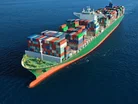
Following a successful joint venture in 2024, DHL Global Forwarding and Henkel are taking their partnership one step further by rolling out sustainable marine fuel (SMF).
Moving away from fossil fuels, DHL is demonstrating that supply chain decarbonisation in the maritime sector is possible.
A logistics partnership
With more than 31,000 freight forwarding experts in more than 190 countries, DHL Global Forwarding is the air and freight forwarding services division of the logistics powerhouse DHL.
Globally, DHL helps maintain streamlined and resilient trade flows and supply chains thanks to specialised solutions and the implementation of technological advancements.
The organisations has been actively working to uphold sustainable practices, with the aim of achieving net zero by 2050 – as demonstrated by its partnership with manufacturing giant Henkel.
Henkel is dedicated to pioneering new solutions for sustainable development within its chemicals and consumer goods.
Together, DHL and Henkel piloted SMF in 2024 during the shipment of Henkel's products and are now expanding this to meet their goals.
"This expansion of our partnership is another milestone in our joint decarbonisation journey," says Amanda Rasmussen, Chief Commercial Officer at DHL Global Forwarding.
"By combining Henkel's ambitious climate strategy with our sustainable logistics solutions, we are demonstrating that progress toward decarbonising supply chains is possible today. We hope this agreement will inspire other companies to transition to low-emission transportation services using sustainable marine fuel."
Fuel supply and demand
DHL and Henkel have been focusing on transport mode optimisation and shipment consolidation in order to reduce greenhouse gas (GHG) emissions.
With new collaboration, ocean carriers will be using waste- and residues-based maritime fuels (SMF) on behalf of DHL.
DHL Global Forwarding assigns the subsequent emissions reductions to Henkel via Book & Claim, allowing DHL to use sustainable fuels in place of fossil fuels within its network, as well as allocate environmental benefits to its customers.
It works like a dedicated registry: DHL pays for the fuel for another company and can claim the emissions reduction without ever using the sustainable fuel, as follows:
- Book: DHL purchases sustainable fuel from a supplier
- Supply: The purchased volume of fuel then goes into a tank at an airport or port
- Delivery: The fuel goes into a plane or a ship (though usually not into a DHL vehicle)
- Claim: DHL gets to claim the benefits, even though they did not use the fuel, as they paid for the sustainable product. These benefits can then be passed on to DHL customers.
Most of Henkel's ocean freight volumes will utilise SMF through DHL, expanding from its previous venture.
DHL Global Forwarding and Henkel are showing the growing demand for sustainable solutions within logistics, as well as helping strengthen the sustainable fuel market.
Building sustainable supply chains
GoGreen Plus is a DHL solution aimed at reducing carbon emissions for individuals and businesses through sustainable fuel.
By using sustainable fuels and low-carbon technology, DHL offers true value chain decarbonisation solutions – aided by the Book & Claim system.
"Working with DHL Global Forwarding on sustainable transport solutions is an important part of our strategy to reduce emissions within our logistics processes," said Ondřej Slezáček, Global Category Manager Sea & Air Freight at Henkel.
"Simultaneously, it helps accelerate the overall transition to low-emission logistics in our industry."
The agreement between the two companies covers 9,000 TEUs of ocean freight within 2025, meaning it will be utilising the GoGreen Plus scheme.
Through using SMF, GHG emissions will be reduced by approximately 4,700 tonnes of CO₂e – equating to a reduction of 85% GHG on the main haul in comparison to conventional marine fuel.
DHL is proving there is a market for SMF as well as solid solutions for embedding sustainability into ocean freight supply chains.