DHL's Green Shift: 10% SAF and 45,000+ EVs in Action
Operating across more than 220 countries presents significant challenges for logistics providers, particularly regarding carbon emissions and environmental impact.
DHL Group is addressing these concerns through its Strategy 2030 and 2025 Annual Report: The Next Step, which positions green logistics as a strategic "fourth bottom line" alongside traditional business metrics.
The company continues to work towards its target of achieving net zero greenhouse gas emissions by 2050, despite facing geopolitical challenges and changing trade patterns. This commitment could represent a transformation of its international operations into a framework centred on environmental and social responsibility.

DHL Group's logistics operations generate greenhouse gas emissions primarily through transport activities. The company reported a 4.3% reduction in logistics-related GHG emissions during 2025, with total emissions reaching 32.31 million tonnes of CO₂e. This progress came alongside additional decarbonisation expenditures of €444m (US$515m) for the year.
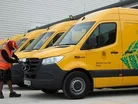
The organisation's air fleet now uses sustainable aviation fuel at a rate of 10.0%, while its pick-up and delivery fleet has expanded to 45,356 EVs, accounting for 46.2% of the total fleet. Renewable energy sources now provide 96.9% of the group's electricity, with solar capacity extending beyond 38.5MWp.
The company has also increased its use of hydrogenated vegetable oil alongside continued biogas utilisation. Sustainable fuel use, including mandatory blends, rose to 20.5% in Scope 1 and 6.9% in Scope 3 emissions.
DHL says: "For fiscal year 2026, we expect Realised Decarbonisation Effects amounting to 2.5 million tonnes CO₂e."
Green logistics as strategic priority
Tobias Meyer, CEO of DHL, explains in the company's annual report: "With Strategy 2030, we have embedded Green Logistics as the fourth bottom line in our group strategy."
"Our long-term goal remains unchanged: cutting greenhouse gas emissions from logistics to net zero by 2050. With the demand for more sustainable logistics solutions continuing its gradual rise in 2025, we have consistently expanded our capabilities in low-emission logistics.
"Our use of sustainable aviation fuels is substantially above the industry average and our fleet of electric vehicles is one of the world's largest. The actions we are taking are noticeably reducing our greenhouse gas emissions and strengthening our position as a leading provider of sustainable logistics solutions."
Strategy 2030, titled "accelerate sustainable growth," aims to strengthen the company's position in global logistics. The strategy emphasises growth, sustainability and adaptability to emerging trends, with plans to expand capabilities in high-growth markets and sectors including Life Sciences & Healthcare, New Energy and E-commerce.
Four pillars drive corporate strategy
The strategy centres on four bottom lines:
- Employer of Choice
- Provider of Choice
- Investment of Choice
- Green Logistics of Choice
These pillars could reflect the organisation's focus on employee well-being, customer service, sustainable profitability and climate-neutral operations.
Operating under the purpose of "Connecting people, improving lives," DHL utilises its operational expertise to enable global trade, minimise environmental impact and influence communities worldwide, aiming to create long-term value for employees, customers, investors and society.

Climate resilience across operations
DHL Group has developed a process to identify and assess climate-related impacts, risks and opportunities, incorporating findings from climate resilience analyses aligned with the Task Force on Climate-Related Financial Disclosures, the European Sustainability Reporting Standards and the EU Taxonomy.
The company evaluated physical climate risks for all sites using geospatial data and scenario analyses, including SSP and RCP pathways, to assess exposure across various time horizons, with no material physical risks identified. Transition risks and opportunities, particularly those relating to decarbonisation and GHG emissions, were analysed at divisional and group levels, with scenario planning based on the International Energy Agency's Sustainable Development Scenario.
Sustainability risks, encompassing environmental impacts such as pollution, water use, circular economy considerations and biodiversity, are integrated into standard risk management processes. Workers in the supply chain are assessed under due diligence frameworks including the EU Corporate Sustainability Due Diligence Directive and the German Supply Chain Act.
These measures could ensure that DHL mitigates climate and sustainability risks while advancing decarbonisation, responsible supply chain management and operational resilience.
Tobias acknowledges in the report, "Looking to the future, the environment remains challenging. But we are well positioned and aiming for further sustainable growth."
Company portals



Executives
Tobias Meyer
CEO