Building Resilient Global Supply Chains for Tomorrow
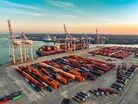
From geopolitical tensions to climate volatility, supply chains face growing pressure to perform amid constant uncertainty.
The traditional model of linear, globalised trade now struggles to deliver reliability, speed and sustainability at the same time.
Supply leaders must now operate with one eye on short-term disruption and the other on long-term resilience. Trade routes are shifting, consumer expectations are rising and technology is rewriting how goods move across borders.
Resilience has become a defining quality for global supply networks. As organisations rethink the way they move goods, they must also consider how to embed flexibility, visibility and environmental compliance into the foundations of their operations.

With these challenges in mind, the Global Logistics & Supply Chain Forum at Procurement & Supply Chain LIVE London 2025 presents a timely platform for discussion and insight.
Senior executives from across industries will take the stage to explore how global supply networks are evolving to meet the demands of a complex, connected world.
Strategies for future-fit logistics
The forum runs from 12:15 to 13:00 on Day 2 (24 September), focusing on the redesign of global logistics systems to withstand long-term disruption while continuing to deliver commercial value.
Speakers will explore a range of strategies shaping the next era of logistics.
One is nearshoring - relocating production or sourcing closer to the market of demand. This approach cuts dependency on long-haul freight, shortens lead times and adds resilience in the face of border or port disruptions.
Another key focus is multimodal logistics, which involves combining transport methods - such as rail, road, sea and air - to increase flexibility. This strategy allows businesses to shift between channels in response to disruption, cost pressures or capacity issues.
Real-time visibility is also high on the agenda. With more complex supplier networks, organisations need up-to-the-minute data to track goods, assess performance and act on disruption. Digital freight platforms, automation and AI tools now offer transparency at every point in the supply chain.
The panel will also look at ESG compliance. Regulations continue to tighten around emissions, ethical sourcing and corporate responsibility.
Logistics leaders must ensure their networks, including third-party providers, can meet those requirements without slowing operations or inflating costs.
Meet the experts
Chris Duddridge - Treefera
Chris Duddridge is Senior Vice President of Sales at Treefera. He has more than 20 years’ experience in the software sector, leading collaborative sales teams across the UK&I and EMEA regions.
At Treefera, Chris is responsible for go-to-market strategy, scaling the company’s presence and accelerating revenue growth. He aligns technology with customer needs in sectors like carbon, compliance, natural capital, risk and insurance.
A strong advocate for climate-positive futures, Chris supports carbon removal through digital innovation. His work enables supply chains to measure and manage environmental performance using verified data tools.
Hamideh Ahmadloo - Sika
Hamideh Ahmadloo is Strategic Sourcing Manager at Sika. She holds a PhD in Chemical Engineering and brings deep technical expertise in polymers and biotechnology.
She supports global supply development by applying strategic market analysis across the EMEA region.
Since the volatility triggered by COVID-19 and the Russia–Ukraine conflict, Hamideh has focused on building sourcing strategies that withstand geopolitical and commercial risk.
She also promotes inclusion across the supply chain, serving as global ambassador for Women in STEM and Chair-elect of the Member Engagement Committee for the Society of Women Engineers.
Why resilience sits at the centre of global supply strategy
Supply chain leaders now operate in an environment where disruption is constant. From regulatory shifts to environmental pressures, networks must be built for change — not just efficiency.
Procurement teams are central to this transformation. By working closely with suppliers, using real-time data and investing in infrastructure collaboration, businesses can move from reactive risk management to proactive resilience planning.
This panel offers attendees the opportunity to hear how experts from multiple sectors are taking decisive action to make their logistics systems more adaptable, efficient and compliant — without sacrificing performance or scale.
About Procurement and Supply Chain LIVE London 2025
Procurement & Supply Chain LIVE is returning to the Business Design Centre in London for its annual Global Summit on 23-24 September.
This unmissable event is aimed at facilitating knowledge sharing and connections among the world's procurement and supply chain leaders.
Those attending can enjoy inspiring keynotes, engaging panels and exclusive workshops covering a diverse range of topics, including supply chain transformation, procurement technology, sustainability and ESG, AI, finance, logistics and supplier relationship management.
To secure your tickets, click here.