
How is Mexico Developing Sustainable Avocado Supply Chains?
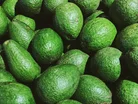
Each year the US consumes more than a million tonnes of avocados in food, drink and cosmetics.
Mexico supplies 80% of those avocados, with the fruit also shipped to Canada, Europe and Asia. That global trade has created pressure to tackle environmental impacts such as deforestation, water use and soil degradation.
From January 2026, all Mexican avocados exported to the US must come through deforestation-free supply chains.
The Mexican avocado industry has signed an agreement with the Federal Government of Mexico that extends the target to global exports by 2030.
It makes avocados the first product in the country’s agricultural sector with such a commitment.
Ana Ambrosi, Director of the Avocado Institute of Mexico, says: “We are trying to make sure that we have the accountability mechanisms to protect the future of our industry, but also to respond to what consumers and stakeholders and our customers are asking us for.”
“I think we live in a world where leading with purpose is important and sustainability is not a nice to have anymore. It’s a must.”
Scale of the supply chain
Trade body Avocados from Mexico now imports 2.5bn pounds each year, up from 1.2bn pounds in 2014. Production involves more than 54,000 orchards and supports 78,000 direct jobs in Mexico as well as 42,000 jobs in the US. Ana explains that most producers are “really small family farms.”
Mexico is unique in being able to grow avocados year-round thanks to its climate and volcanic soil.
“The industry has a huge socioeconomic impact, driving economic benefits and creating jobs on both sides of the US border,” Ana says.
Supply chain scrutiny increases after a 2023 Climate Rights International investigation reports avocado-driven deforestation between 40,000 and 70,000 acres in Michoacán and Jalisco.
The organisation warns that clearing forests for avocado monocultures reduces biodiversity, drains water resources and raises flood and landslide risks.

The World Avocado Organisation calculates that avocados have an average water footprint of 800 litres per kilogram and emit 2.4 kg of CO2 per kilogram.
That footprint is lower than beef, chocolate and coffee but higher than bananas and cherries. Ambrosi notes that over 60% of orchards rely solely on rainfall while others use drip irrigation and micro sprinklers.
The pathway to compliance
The federal plan sets out monitoring systems and pathways to regularisation and compensation for orchards that meet standards.
From January 2026, non-compliant fruit cannot be exported. Industry leaders expect at least 75% of the 54,000 orchards to qualify in the first year.
Enrique Audifred, Vice President of Sustainability at the Association of Avocado Exporting Producers and Packers of Mexico, says: “We appreciate the positive dialogue and collaboration with the federal government.
"This conservation agreement reflects our shared goal to restore and preserve Mexico’s forests in action. Our industry will continue to build a resilient and sustainable future for the Avocado Landscape of Mexico, delivering results that go far beyond this agreement.”
Ana adds that more than 90% of orchards are already located on land without deforestation issues. “When we started working on this new strategy, we acknowledged that growers and packers have responsibly produced avocados for generations.
“They have a lot of existing initiatives and programmes to address sustainability, but we really needed a new framework and strategic vision to guide our efforts.”
Building a deforestation-free supply chain
To assess supply chain risks, the sector completes a Taskforce on Nature-related Financial Disclosures report. It highlights four priority areas: water, biodiversity, climate and deforestation.
These themes feed into the “Path to Sustainability,” launched in April with an action plan aimed at net zero deforestation across Mexico’s avocado landscape by 2030.
Ramon Paz-Vega, Strategic Consultant for the Mexican Hass Avocado Importers Association, adds: “We’re grateful for the government’s partnership in this effort — especially as we make progress under our Path to Sustainability, which expands our commitment to protecting Mexico’s forests, water, biodiversity and more.”
Ana concludes: “This strategy and connecting thread took a while to develop, but I think we’re finally in a place where we’re united with one vision throughout the supply chain.”
The avocado sector therefore places deforestation-free supply chains at the centre of its global market strategy, balancing consumer expectations, government standards and environmental limits while maintaining year-round supply.