What's Behind Tesla's Record Delivery Drop?

Tesla experienced a record quarterly drop in deliveries during the second quarter of 2025.
It shipped 384,112 vehicles, falling nearly 3,000 short of expectations. Though that shortfall is relatively small, it points to deeper shifts affecting the company’s once untouchable place in the EV market.
At the same time, Tesla’s stock is rising despite a public dispute between CEO Elon Musk and US President Donald Trump, and amid slowing sales of its core product: the electric car.
The company has always aimed to be more than just a carmaker. While it still earns most of its revenue through EVs, its attention is now split across several parallel ventures — including solar energy, battery storage, humanoid robots and robotaxis. These areas are promising in the long term, but pull time, focus and resources away from the EV business.

EV market gets crowded as Tesla share slips
Tesla once held almost three-quarters of the US EV market. In the first quarter of 2022, that figure stood at 75%. Fast forward to early 2025 and it has fallen to 43.5%.
One of the reasons is General Motors (GM). The company now offers a wide range of EVs under well-known brands like Cadillac, Chevrolet, GMC Hummer and Buick.
“We’re now the #2 EV company in the US, thanks to the dozen EV models we offer,” says Cassandra Garber, GM’s Chief Sustainability Officer.
She adds: “I love our vehicles! You need to experience GM’s incredible advancements in design and technology.”
On the global stage, Chinese automaker BYD overtook Tesla in 2024, securing 22.2% of the global EV market, compared with Tesla’s 10.3%. Other competitors such as Wuling, BMW and Li Auto are closing the gap as well, producing EVs at scale and, crucially, adapting more smoothly to changing supply chains and regional demand.
The pace at which these brands are scaling has put pressure on Tesla’s ability to maintain leadership, particularly as it channels resources into future tech.
Solar projects expand, but so do logistics risks
Tesla’s solar business, launched after it acquired SolarCity in 2016 for US$2.6bn, continues to grow. It provides solar panels and battery storage systems — but this area brings its own logistical challenges.
In 2024, Tesla signed a major deal with Intersect Power for a 15.3 GWh storage contract, supporting large-scale renewable energy projects.
According to Mike Snyder, Tesla’s Vice President of Energy and Charging: “Intersect continues to be an exceptional partner and their development expertise combined with the plug-and-play nature of Tesla’s vertically integrated technology enables the speed and scale needed to enhance grid resilience and support greater renewables integration.”
That integration, however, requires increasingly complex supply chains, particularly for lithium-ion batteries and critical solar components.
While Tesla’s vertical model aims to mitigate some risk by owning more of its supply routes, these efforts are resource-intensive and vulnerable to regional regulations and bottlenecks.
Tesla’s multi-product focus also puts pressure on the flow of parts and production capacity. With battery tech shared across vehicles and energy systems, the company has to decide which business line to prioritise — and when.
Autonomy and AI pull resources, invite scrutiny
Tesla’s new robotaxis, launched in June 2025 in Austin, Texas, rely on in-vehicle cameras instead of the radar and LiDAR systems used by rivals like Waymo and Zoox. That choice lowers hardware costs but raises concerns about safety.
During initial trials, footage appears online showing Tesla’s robotaxis behaving erratically and failing to follow some traffic rules.
In response, the US National Highway Traffic Safety Administration states it “does not pre-approve new technologies or vehicle systems,” but confirms it is in contact with Tesla about the trial footage.
Tesla’s focus on camera-only autonomy not only draws regulator attention but also depends on AI systems under development.
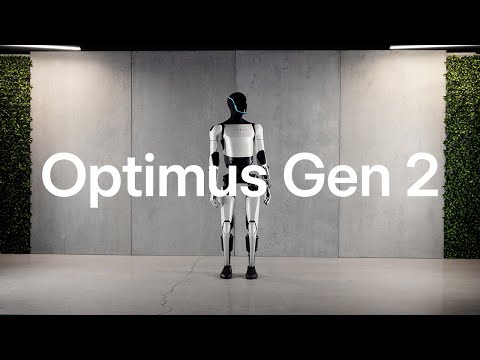
The same AI is said to power Optimus, the company’s humanoid robot. Introduced in 2021 and known also as Tesla Bot, Optimus is described on the company’s website as “capable of performing unsafe, repetitive or boring tasks.”
Elon Musk has said he expects the robot to outgrow the car business in value. But again, this ambition relies on AI systems and supply chains already under pressure from Tesla’s existing product lines.
As more competitors find local suppliers, build dedicated EV platforms and manage logistics more nimbly, Tesla’s wider ambitions may strain its ability to stay agile in the EV space. The company is still expanding, but its dominance no longer looks guaranteed.