How Amazon’s Lab Redefines Sustainable Delivery Automation
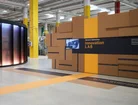
At the foot of the Italian Alps, inside a fulfilment centre in Vercelli, Amazon is trialling robots and automation that aim to transform the way goods move through its supply chain.
The Operations Innovation Lab isn’t just about tech for tech’s sake — its focus is on using robotics to improve workplace safety, speed up delivery and reduce packaging waste.
Founded in 2019, the lab is now home to Amazon’s mechatronics and sustainable packaging teams in Europe.
Engineers and scientists from around the world converge here to design and test the company’s next generation of logistics technology — with many of these innovations already active across Amazon fulfilment centres.

Packaging tailored by robots
Central to Amazon’s logistics transformation is how the company packages products. Wasteful, oversized boxes are being replaced by more precise, machine-made alternatives.
A standout development is the automated packaging system currently running in Amazon’s Bristol fulfilment centre.
This system creates paper bags tailored to each item’s dimensions, reducing the amount of material needed. The bags are made from recycled paper and go straight from printer to conveyor, minimising handling and waste in a single process.
Another breakthrough is the Universal Robotic Labeller. This system applies labels to items of all shapes and sizes, including unpackaged goods. It plays a critical role in reducing unnecessary wrapping and improving recyclability.
Visitors at the Vercelli lab get hands-on with these technologies. During tours, they’re guided by engineers through demonstrations that show how these machines function in real time. At each step, the emphasis is on precision and adaptability — essential qualities when shipping millions of unique items daily.
Across the company’s global supply chain, this focus on automation feeds into broader changes.
In Sumner, Washington, Amazon has deployed packaging machines that adjust cardboard use in real time. These systems measure the dimensions of each item and instantly build a box to fit — avoiding oversized packaging and the extra shipping volume it requires.
As Kara Hurst, Chief Sustainability Officer at Amazon, puts it: “Inside our Innovation Lab in Sumner, WA we’re developing ways to make each box, bag and envelope smaller, lighter and more sustainable, without compromising product protection.”
Sorting faster, shipping smarter
Alongside packaging, the lab is trialling solutions to streamline item sorting and dispatch. One key example is the Flat Sorter Robotic Induct (FSRI). This AI-driven robot uses vision sensors to scan and categorise parcels by size and destination. It takes over a labour-intensive process, freeing up employees to focus on less repetitive work.
Also in use is the Bags Containerisation Matrix Sorter (BCMS), a machine that organises parcels by postcode. Rather than sort each item individually, the BCMS groups them into a shared bag, making bulk shipping easier and less labour-heavy.
Robotics is not only changing the pace of sorting but improving safety too.
By reducing the number of times a worker has to lift or handle a parcel, these machines lower the risk of strain or injury. The Kindle, one of Amazon’s best-known products, now doubles as a tool for workers, helping them interface directly with these robotic systems.
Richard Zeger, Senior Robotics R&D Manager and Head of the Vercelli Innovation Lab, explains: “It makes sorting so much easier for FC workers and basically removes the step of needing to manually sort packages that head to the same direction.”
From testing ground to global supply chain
The Vercelli site isn’t an isolated lab. It’s part of a global network designed to rethink how packages move, from order to doorstep.
Amazon’s Boston headquarters continues to develop new warehouse systems, while in the Pacific Northwest, the Sumner lab puts sustainable packing materials through their paces with drop, shake and impact tests.
Some innovations are more niche, such as a wearable vest that alerts robots when a human is near. Others are more experimental — like a wall of living plants embedded with sensors, used both for software development and sustainability research.
What connects these ideas is a single principle: to make supply chains more efficient, safer for people and less harmful to the environment.
The visitor centre at Vercelli showcases these efforts in action. Its guided one-hour tour includes three sections — an overview of Amazon’s logistics operation, insights into the innovation process and a close look at robots already deployed on the warehouse floor.