Why Local Sourcing Drives Panasonic’s US EV Battery Plant
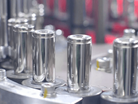
Panasonic is pressing ahead with plans to localise and scale up its EV battery production in North America.
Its latest project, a gigafactory in De Soto, Kansas, is set to be the world’s largest and will be key to expanding EV adoption in the US.
The company is not only focusing on production capacity but also embedding sustainability into its operations.
As it focuses on supply chain efficiency, local material sourcing and circular economy practices, Panasonic is aiming to cut both emissions and reliance on overseas imports.

Localising battery production
Panasonic has long been one of the largest suppliers of lithium-ion batteries in the region.
As of December 2023, more than three million EVs are powered by its batteries. The move to build its next major facility in Kansas is part of a broader strategy to meet growing demand and support transport decarbonisation efforts.
The Kansas factory, which broke ground in November 2022, is due to start production in 2025. It will produce 2170 cylindrical lithium-ion cells, a battery format popular with carmakers thanks to its high energy density, safety and reliability.
Allan Swan, President of Panasonic Energy Corporation of North America, leads operations at the existing Tesla Gigafactory in Nevada and is now overseeing the Kansas project.
Speaking to the company, Allan says: “The automotive battery business is the flagship of the Panasonic Group’s efforts to confront climate change issues.”
In the US, EV uptake is increasing in response to tighter environmental rules and changing consumer expectations. Panasonic sees this as an ideal market to deploy its high-capacity battery technology.
"In addition, high demand for long-distance travel in the US makes this the market where we can best utilise our high-capacity technology, one of our strengths,” adds Allan.
This capacity advantage aligns with the North American need for longer-range vehicles, especially for freight and public transport. Allan adds: “If trucks, trains and buses are included, this is a very large market for automotive batteries.”
Supply chain resilience
Panasonic’s plans hinge not only on ramping up manufacturing but also on securing local supply chains.
Battery production requires high volumes of raw materials such as lithium, nickel, graphite and copper. Transporting these materials across global routes adds emissions and increases exposure to supply disruptions.
By sourcing materials from within North America, Panasonic aims to shorten supply chains and strengthen control.
Allan explains: “North America offers local sourcing of raw materials mined and processed in a responsible manner, often using renewable energy and other sustainability best practices.”
The shift towards domestic materials also supports emissions reduction by lowering the carbon cost of transportation.
“By procuring Canadian materials for our US plants, we can shorten the supply chain, significantly reducing distribution-related CO2 emissions,” he says.
Several sourcing deals support this approach. Partners include Nouveau Monde Graphite, which supplies renewable-powered graphite from Canada, and Novonix, which provides synthetic graphite produced with lower CO₂ emissions. Sila Nanotechnologies is also on board, contributing silicon anode materials.
Panasonic’s partnership with Redwood Materials is another key piece of the circular supply chain puzzle.
The recycling firm works with Panasonic to reuse waste materials from its Nevada plant. The company has also committed to purchasing recycled cathode materials and copper foil, both essential for lithium-ion cell manufacturing.
“These are like-minded companies that are sincerely facing the challenge of reducing CO₂ emissions,” Allan says.
Net-zero ambition
Battery production is energy intensive, with nearly 90% of associated emissions linked to materials and logistics, according to Panasonic. The company is aiming to make the Kansas factory a net zero facility, targeting major cuts in energy use and embedding efficiency into all processes.
Allan explains: “Our Kansas plant is designed to operate as a Panasonic-designated net zero facility. We will minimise the amount of electricity needed for production and all aspects, from wiring to machinery and equipment, will support CO₂ emissions reduction.”
Over the next decade, the facility will transition to 100% locally-sourced renewable energy. This forms part of a broader plan to cut the Carbon Footprint of Products (CFP) across Panasonic’s entire battery value chain, from sourcing and manufacturing to reuse and recycling.
All these efforts are part of the Panasonic GREEN IMPACT initiative, the company’s global push to reduce 93 million tonnes of CO₂ emissions by early 2031. Battery production, circular supply chains and EV adoption are central to this target.