
A New Supply Chain Focus for Apple Under CEO John Ternus

John Ternus will take over as Apple's CEO on 1 September this year.
His background as a hardware engineer contrasts with Tim Cook's experience in operations and supply chain management.
This transition comes as Apple faces rising component costs, geopolitical pressures on manufacturing networks and the need to integrate AI hardware across its product lines.
Hardware leadership and procurement challenges
John has worked at Apple since 2001 as a hardware engineer. He contributed to products including AirPods, Apple Watch and Vision Pro. His expertise centres on device engineering rather than supply chain operations.
According to the company, Tim transformed Apple into a US$4tn enterprise with a focus on service offerings and supply chain efficiency. John's appointment could signal a shift towards hardware innovation over operational optimisation.
The new CEO faces mounting component pricing pressures. According to discussions on its Q2 conference call, Apple investors noted rapidly rising prices for memory, processors and SSDs linked to AI infrastructure buildout.
Melissa Otto from S&P Global reports that Apple is expected to deliver US$242.6bn in revenue for fiscal year 2026. She adds that "large looming questions remain about the supply chain".

Component sourcing and manufacturing constraints
Apple has not invested as heavily in AI infrastructure as Microsoft, Google, Amazon and Meta. Those companies have spent billions on data centre construction and AI chip procurement. Apple instead relies on Google's Gemini to power AI features, including a Siri update expected later this year.
In 2024, Apple launched Apple Intelligence. The programme includes image generators, text rewriters and integration with OpenAI's ChatGPT. According to Demandsage, there were more than 1.5 billion iPhone users in 2025.
Timothy Hubbard, Assistant Professor of Management at the University of Notre Dame, spoke to CNBC about the appointment. He said: "By choosing a hardware leader in John Ternus, Apple may be signalling that it still believes the future of AI will run through tightly integrated devices, not just software."
This approach could require retooling manufacturing processes and securing new supplier relationships for AI-enabled components. The company's reliance on third-party AI models may limit supply chain complexity compared to vertically integrated competitors.
Production planning for emerging hardware
Bloomberg reported in January that Apple will accelerate development of three AI wearables built around Siri. The devices include smart glasses, a pendant and AirPods with cameras. Each product category introduces distinct manufacturing and logistics requirements.
Apple also expects to introduce a foldable phone. Ben Bajarin, CEO of Creative Strategies, described it as "the most consequential hardware moment in years". Speaking to CNBC in March, Ben said: "I think the biggest question is what comes after the iPhone.
"These are mature categories and we have no idea what comes after that but we do know it will be some form of AI hardware."
New form factors require establishing supplier capacity for flexible displays, hinges and miniaturised components.
The Vision Pro represents Apple's entry into spatial computing. The device's complex assembly and specialised optics create unique procurement challenges. Scaling production for consumer volumes could test the company's manufacturing partnerships.
In the first quarter of fiscal 2026, Apple set a revenue record of US$143.8bn.
According to the company, iPhone revenue rose 23% year-over-year to US$85.3bn. This exceeded market expectations by US$4.7bn. The iPhone remains the strongest driver of Apple's revenue growth.
Melissa Otto projected US$55.5bn in iPhone sales for the current quarter. She noted that "iPhone expectations are continuing to show positive momentum this quarter, driven by upgrades".
Bank of America analyst Wamsi Mohan analysed Apple's trajectory under John's leadership. He suggested the company could enter a new era defined by AI-powered hardware and smart home devices.
Wamsi adds that "2027 could be a big product year" for Apple, coinciding with the 20th anniversary of the iPhone. This timeline could require long-lead procurement planning for components and manufacturing capacity. Geopolitical factors, including tariffs and trade restrictions, add uncertainty to multi-year supply chain strategy.






Executives
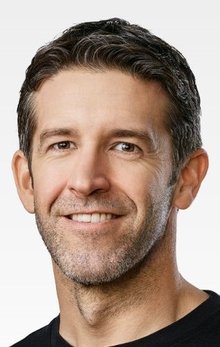
John Ternus
CEO
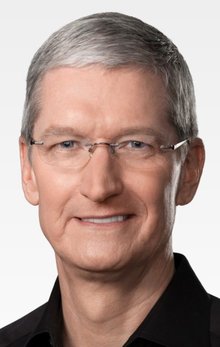
Tim Cook
Executive Chairman