Nestlé and sennder's Bid to Decarbonise Logistics
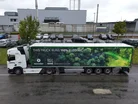
Nestlé is accelerating its journey towards net-zero emissions by 2050 through an ambitious partnership with Europe’s leading digital road freight forwarder, sennder.
Over the past three years, the companies have significantly reduced carbon emissions by transporting more than 3,000 green loads, cutting more than 2,000 tonnes of CO2e through the use of electric trucks and HVO100, a renewable diesel.

Scaling sustainable solutions with sennder
Nestlé's collaboration with sennder supports its efforts to overhaul its logistics operations and align them with sustainability targets. The company is focused on three key strategies: boosting transport efficiency, adopting advanced logistics technologies and integrating renewable energy.
By investing in modern infrastructure and operations, Nestlé is making strides towards greener logistics.
A central achievement of the partnership has been the introduction of electric trucks for Nestlé’s THOMY product line in North Rhine-Westphalia, Germany. In just four months, sennder completed more than 100 deliveries, covering more than 10,000 kilometres with zero tailpipe emissions. This shift alone is expected to cut CO2e emissions by around 55 tonnes annually along a single transport route.
“Nestlé and sennder have been working together since 2021 to implement the two most scalable green solutions in road freight," highlights Graham Major-Ex, Senior Director of Green Business & eMobility at sennder.
"One is HVO, which is a renewable diesel that reduces carbon emissions by up to 90%. The second is electric trucks, which run with zero tailpipe emissions and significantly reduce carbon emissions on every single transport.”
Innovation in electric freight
sennder and Nestlé are deploying a series of innovative strategies to make electric vehicle (EV) transport cost-effective and efficient.
sennder's extensive network optimises both truck and driver utilisation by consolidating loads across routes, while Nestlé has established strategically located charging stations near its facilities, reducing energy costs and minimising downtime.
To further improve productivity, transport schedules have been carefully aligned with driver hours and EV charging times. This approach maximises the operational efficiency of electric trucks while minimising waste.
Looking ahead, Nestlé continues to invest in renewable energy infrastructure, including solar-powered warehouses and charging points with photovoltaic systems and battery storage, further driving down its environmental impact.
Matthias Fleischer, Vice President of Supply Chain at Nestlé Germany, sees electric transport as essential to meeting the company's sustainability goals.
“Achieving our net-zero emissions goal by 2050 requires significant logistics optimisation," he explains. "Partnering with sennder to implement electric trucks in Germany has been a critical step in ensuring our transport operations are both efficient and sustainable.
"While improvements in infrastructure and battery technology are ongoing, electric trucks are increasingly viable for short-distance journeys.”
Scaling through partnerships and flexible leasing
A critical component of the Nestlé-sennder collaboration is the involvement of Juna, sennder’s joint venture with Scania.
Juna provides carriers with electric trucks under a pay-per-use leasing model, removing significant upfront costs and ensuring capacity utilisation via sennder’s platform.
Schober Logistics, which leases trucks for Nestlé through Juna, demonstrates how this model supports the commercial viability of EV transport. By simplifying the transition to EVs, this approach enables carriers to adopt more sustainable solutions without the financial burden of purchasing vehicles outright.
The partnership between sennder and Nestlé represents an example of how advanced technologies, data-driven strategies and collaboration can lead to greener road freight solutions. It shows the potential for digital freight innovation to transform traditional logistics and drive sustainability at scale.
Graham concludes: "The road freight industry is going through a technological transformation. We are here to help our customers adopt electric trucks at scale to enable them to build a future-looking competitive advantage."
Explore the latest edition of Supply Chain Digital and be part of the conversation at our global conference series, Procurement & Supply Chain LIVE.
Discover all our upcoming events and secure your tickets today.
Supply Chain Digital is a BizClik brand.