Grundfos & Maersk: Leading the Way in Decarbonised Logistics
Grundfos and A.P. Moller - Maersk are joining forces to tackle some of the most pressing environmental challenges of our time.
With a shared focus on reducing greenhouse gas (GHG) emissions, these industry leaders are paving the way for greener logistics and supply chain operations.
Grundfos, a Danish leader in advanced pump solutions and water technology, is well-known for addressing global water and climate issues. Its mission is to enhance the quality of life while respecting and protecting the flow of water.
A.P. Moller - Maersk, a global logistics company operating in over 130 countries with 100,000 employees, is pursuing a net-zero GHG emissions target by 2040, using new technologies, low-emission fuels, and advanced vessels.
Together, the two companies are exploring solutions to reduce the environmental impact of logistics, especially in road transport.
The challenge of electrifying truck fleets
Every day, thousands of containers are moved by truck for "hinterland haulage"—connecting ports, factories, warehouses and final destinations. This crucial leg of the supply chain generates significant GHG emissions, harmful exhaust fumes and noise pollution.
Switching to electric vehicles (EV trucks) presents an opportunity to address these issues, but the transition is far from straightforward.
E-trucks are up to three times more expensive than diesel trucks, offer shorter ranges and require charging infrastructure that is scarce in most countries. Additionally, the higher costs of EV logistics mean customers need to pay more for greener options.
"This is a gigantic task, but we must not be intimidated by it," says Birna Odefors, Managing Director of Maersk Area Nordics. Birna highlights the commitment of Nordic customers to decarbonised logistics, with many leading the way in adopting sustainable practices.
One standout example is Grundfos, which has started using Maersk's electric truck service.
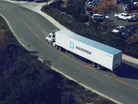
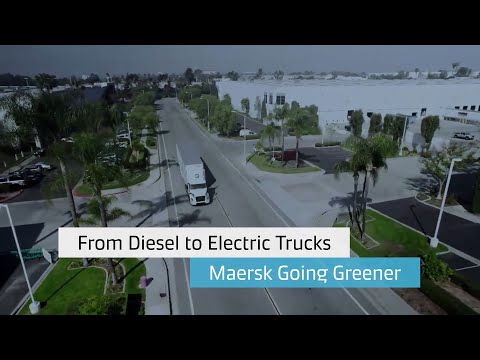
Since October 2024, electric trucks have been transporting containers between Grundfos’ factory and the port of Aarhus, Denmark. This pilot programme is set to expand to 600-800 containers annually.
Building a greener supply chain
For Grundfos, decarbonising logistics is a natural extension of its broader environmental goals.
"After ocean freight port-to-port reduction, we really wanted to take the next step and also save emissions in pre-carriage of containers as well as the last mile to our plants or warehouse sites," explains Dirk Van Der Heijden, Senior Director of Global Logistics at Grundfos.
The company has already achieved significant reductions in GHG emissions by using Maersk's ECO Delivery Ocean product, which relies on alternative fuels like waste-based biodiesel and bio-methanol. This approach cuts GHG emissions by up to 80% compared to traditional marine bunker oil.
Now, with the adoption of electric trucks charged using renewable electricity, Grundfos is eliminating direct tailpipe emissions from its road transport.
Dirk adds: "In view of the dire climate consequences that we can see in the news almost every day, we cannot wait and must take action wherever we can. We as producers and exporters want to actively drive the topic of decarbonisation of the supply chain and are pleased to partner with Maersk who is willing to try and implement new ways."
Shared goals for a sustainable future
Both Grundfos and Maersk have ambitious climate goals validated by the Science-Based Targets initiative (SBTi), a globally recognised organisation that supports businesses in setting science-driven emissions reduction targets.
Grundfos aims to achieve net-zero emissions by 2050, with interim milestones set for 2030. Similarly, Maersk is working toward a 2040 net-zero target, with plans to reduce GHG emissions across all transport modes and its 500 logistics centres by 2030.
The collaboration between Grundfos and Maersk demonstrates how companies can work together to make meaningful progress on environmental goals. By addressing both the technological and financial challenges of EV adoption, they are setting a standard for decarbonised logistics.
Explore the latest edition of Supply Chain Digital and be part of the conversation at our global conference series, Procurement & Supply Chain LIVE.
Discover all our upcoming events and secure your tickets today.
Supply Chain Digital is a BizClik brand.