


Shiv Trisal: Bringing Digital Tech into the Real World

Shiv Trisal: Bringing Digital Tech into the Real World
Shiv Trisal has spent his career asking one question: how do you bring digital technology into the physical world?
As Global Industrials GTM Lead at Databricks, the data and AI platform, he works with executive teams to turn abstract AI ambitions into operational reality.
Shiv's remit spans manufacturing, transportation and energy. His focus is on identifying the right use cases, making the right bets and ensuring AI investment translates into measurable commercial impact.
"My role is really working with our customers' executive teams to take some of their abstract AI ambitions and convert them into operational reality,” he says. “It's about what big bets they will make and seeing them through, so that it actually translates into some sort of P&L impact.”
Shiv grew up in India, where he studied electronics engineering, working on complex sensor-based systems – essentially what would later be called the Internet of Things (IoT), the networking of physical devices to collect and share data.
He later completed an MBA at Wharton, one of the world's leading business schools, sharpening his ability to translate system-level insight into organisational strategy. That combination of engineering rigour, creative thinking and business acumen became the foundation for everything that followed.
“One thing that's always motivated me is how you bring these digital technologies into the physical world,” he explains. “Every time I get curious, it's for that reason: how do you attack these very physical sectors that need what AI brings – and how do you actually bridge the gap between the promise and reality?”
A shared vision
Shiv first encountered Databricks while working in the aerospace industry, researching how to predict aircraft maintenance events before they occurred. He was immediately drawn to the company's founding vision: to unify the previously siloed worlds of data and AI into a single operating system for enterprise.
“The founders at Databricks had the right vision,” says Shiv. “Joining felt less like a career change and more like an alignment with how I think this sector really needs to realign and compete in the future.”
That sense of purpose is what keeps Shiv motivated day to day. He gets most satisfaction from the moments complex ideas finally click – when AI integration genuinely strengthens a business rather than simply adding novelty.
“Everybody has access to the frontier models now,” he continues, referring to the large-scale AI systems developed by leading technology laboratories. “What you do with them is where the actual moat is built. It's about integrating these models into the physical world, capturing institutional knowledge and making human relationships better.”
How to approach problem-solving
One of the biggest challenges Shiv regularly encounters is more strategic than technical: persuading organisations to point AI at the problems that actually matter.
He cites the early wave of generative AI chatbots for employee queries as a cautionary tale, in that they were often engaging but rarely transformative.
He asks: “Did that move the needle on the operating margin of that company or the way they serve customers? Probably not. Problem selection is not IT's responsibility – it's a C-suite responsibility.”
Offering some parting advice to his peers, Shiv adds: “Chase interesting work, not titles. The most enduring impact has come from times I've truly immersed myself in problems with people who live with them every day and worked backwards from that reality to deliver something that improves the outcomes.”
Company portals

Executives
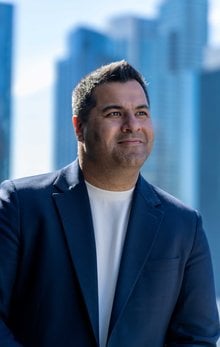
Shiv Trisal
Global Industrials GTM Lead