
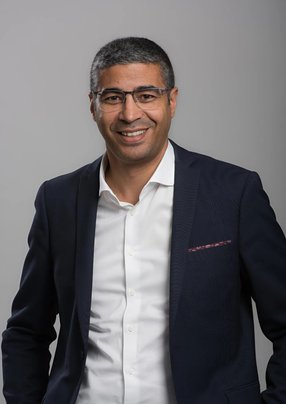
Mourad Tamoud, Schneider Electric
CSCO at Schneider Electric
As supply chains increasingly form the backbone of global business operations, few leaders exemplify the strategic transformation of the discipline quite like Mourad Tamoud.
As Chief Supply Chain Officer at Schneider Electric, Mourad oversees a vast network spanning 160 factories, 75 distribution centres and 80,000 employees worldwide.
His journey from accidental supply chain professional to C-suite executive reflects the broader evolution of an industry that has moved from operational necessity to strategic differentiator.
From problem-solver to supply chain visionary
Mourad’s path into supply chain management wasn't predetermined, but rather discovered through a natural affinity for complexity and efficiency.
"My journey into the supply chain field wasn't something I planned from the start, but I quickly discovered a passion for it early in my career," he explains.
"I've always been drawn to problem-solving and driving efficiency, and the supply chain presented this incredible opportunity to directly impact not only operational performance but also broader business outcomes."
This approach has shaped Mourad’s career and led to his current role at Schneider Electric where he heads up procurement, logistics and planning, as well as strategy and performance functions.
To this day, his enthusiasm for the field stems from its meaningful impact: "It's such a dynamic, interconnected space where you can see the tangible results of your decisions – and that's always motivated me."
Schneider Electric: Powering sustainable transformation
Schneider Electric operates at the intersection of sustainability and digital transformation, specialising in energy management and industrial automation.
The French multinational provides solutions that connect and enhance power, processes and systems for improved efficiency and sustainability.
As Mourad describes it, the company is "committed to sustainability and energy efficiency, helping our customers accelerate their digital transformation while addressing the pressing challenges of climate change”.
Within this context, Schneider Electric's global supply chain serves as more than just a logistics network—it's a critical enabler of the company's mission.
Mourad emphasises that its supply chain "plays a critical role in this, ensuring we can deliver the right products and solutions to the right place at the right time”.
The responsibility extends beyond mere operational efficiency to encompass environmental stewardship and resilience, areas where Mourad notes the company has made significant strides.
Leadership built on collaboration
Mourad's leadership approach reflects the interconnected nature of modern supply chains, emphasising collaboration and empowerment over traditional hierarchical structures.
He asserts: “To me, leadership is about building a strong team, giving them the tools and support they need to succeed and fostering an environment where innovation and continuous improvement thrive.”
This philosophy extends to accessibility and communication – particularly crucial in supply chain management where unexpected challenges can emerge rapidly.
Mourad adds: "I also believe in being present and accessible as a leader. Communication is key, especially in a field like supply chain where challenges can arise unexpectedly.
“Being able to connect with people at all levels of the organisation helps us stay agile and aligned."
Supply chains as strategic business enablers
The transformation of supply chains from cost centres to strategic assets represents one of the most significant shifts in modern business thinking.
Mourad articulates this evolution clearly: "Supply chains have become absolutely central to business success. Today, they're not just about moving products from point A to point B—they're a critical enabler of overall business strategy."
At Schneider Electric, this strategic positioning manifests in multiple ways.
"A well-run supply chain can drive growth and increase profitability, improve customer satisfaction and even strengthen a company's sustainability efforts,” Mourad goes on.
"At Schneider Electric, we see our supply chain as a key differentiator. It allows us to serve our customers better, faster and more reliably while supporting our commitment to sustainability."
Clearly, the integration of supply chain strategy with broader business goals requires intentional collaboration across organisational functions.
Mourad emphasises that supply chain leaders must work closely with other functions – such as sales, marketing, R&D and finance – to truly understand the company’s priorities and customer expectations.
This alignment process involves connecting operational capabilities with strategic vision from the earliest stages of planning.
"It's about connecting the dots early and making sure the supply chain strategy supports the organisation's mission," Mourad continues. “For example, if the business is focused on digital transformation or sustainability, those priorities must be reflected in how we design and operate the supply chain, while ensuring commercial business factors are met."
The evolution of the CSCO
The role of the CSCO has undergone dramatic transformation, evolving from purely operational oversight to strategic business partnership.
"The role of the Chief Supply Chain Officer has evolved significantly in recent years,” notes Mourad. “It used to be more operational, focused primarily on efficiency and cost management; now, it’s a much more strategic role."
Modern CSCOs are expected to contribute to broader business decisions, "whether it's navigating disruptions, driving innovation, or supporting sustainability goals," Mourad adds. The evolution necessitates deeper engagement with the C-suite and highlights the importance of supply chain literacy among senior leadership.
On that note, Mourad advocates for broader supply chain understanding among C-suite executives, arguing that such knowledge enhances organisational agility and preparedness.
"Every decision we make as an organisation—from product development to market expansion—has supply chain implications," he explains. "Having leaders who understand those dynamics makes us more agile and better prepared to tackle challenges."
At Schneider Electric, this cross-functional collaboration has proven beneficial: “By ensuring supply chain considerations are part of the conversation from the start, we're able to design strategies that not only meet customer demands but also support our broader goals around efficiency and sustainability.”
People: The heart of supply chain success
Despite the increasing digitisation of supply chain operations, Mourad maintains that human capital remains paramount.
"Supply chains are ultimately built and managed by people,” he emphasises. “Their creativity, expertise and commitment drive innovation.”
In fact, Schneider Electric's commitment to people development is both substantial and specific. Over the next three years, the company plans to increase its digital talent by 40% and double the number of digital experts in areas such as artificial intelligence, generative AI, machine learning and robotics.
Additionally, it is investing in development through its Catalyst Leadership programme to ensure leaders can nurture growth mindsets among their teams.
Mourad says: “A technology-driven supply chain is only as strong as the people who use it, which is why we view investing in talent as a critical priority.”
That being said, Industry 4.0 technologies represent a cornerstone of Mourad's vision for future supply chains.
"From AI to IoT, these tools help us make smarter decisions, predict challenges before they occur and respond with greater speed and accuracy," he details.
Schneider Electric has already realised significant opportunities through digitalisation in areas such as predictive maintenance, dynamic planning and traceability.
However, Mourad acknowledges the challenges inherent in technology deployment: "Deploying these technologies effectively requires overcoming barriers such as scalability and integration across legacy systems."
The key to success, he contends, lies not merely in implementation but in deep integration.
"It's not enough to implement these tools; they need to be deeply embedded into operations to deliver meaningful value," adds Schneider’s supply chain chief. "This takes a clear roadmap, investment in digital skills and a culture that embraces change."
A vision for tomorrow's supply chains
Mourad sees the future of supply chains as encompassing three core principles: resilience, sustainability and adaptability.
He states: "My vision is one where supply chains not only operate efficiently but also contribute meaningfully to environmental goals and empower the people behind them."
This vision materialises through Schneider Electric's Impact Supply Chain transformation strategy, which Mourad describes as making the supply chain "smarter, more sustainable and more customer-centric”.
The strategy integrates digital tools to improve transparency and responsiveness while emphasising sustainability to reduce environmental impact.
Mourad expands: "The progress so far has been encouraging, but we know this is an ongoing journey. Each improvement we make aligns with our larger goal: to build supply chains that not only meet today's needs but are ready for the challenges of tomorrow."
As supply chains continue to evolve from operational functions to strategic differentiators, leaders like Mourad Tamoud exemplify the deep commitment to transformation that is required.
His approach—balancing technological advancement with human development, operational efficiency with strategic vision and current performance with future readiness—provides a blueprint for the next generation of supply chain leadership.
To read the full article in the magazine, click HERE.