
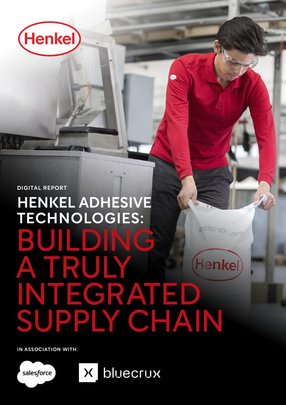
Henkel Adhesive Technologies: Integrating the Supply Chain
Mirko Koerrenz is proud of what he and his colleagues built. And he should be. Over the course of several years from 2020, Henkel Adhesive Technologies’s Supply Chain Leadership Team (SCLT) drove a wide-ranging customer-centric transformation programme that fundamentally changed the way the business thought about its customers, its performance and its place in the value chain.
By the time it closed, it had delivered genuine results and steered the business in an excellent strategic direction. And then, in the honest way that the best leaders tend to operate, the team collectively looked at what they had achieved and asked a harder question: was it enough?
"We have worked very hard on achieving functional excellence over the last couple of years," says Mirko, Henkel Adhesive Technologies’s Director of Customer Service Experience. "But we also figured out that if we want to move on, we need to integrate because customers do not look at our supply chain and see us as separate entities. They see us as one."
It’s an accurate assessment that highlights the strategic weight of true integration. The conclusion the SCLT had arrived at was that integration – genuine, end-to-end integration of functions, data, regions and collective mindset – was not just the logical next step in an operational journey, but rather, the factor that would determine whether Henkel Adhesive Technologies’s supply chain became a true competitive differentiator in an increasingly complex world.
The previous transformation had been considerable, including the likes of new KPIs, redesigned customer touchpoints and a reimagined approach to service. However, the leadership team understood that functional excellence, however well executed, is not the same as a seamless and holistic customer experience, teams and regions may well be performing at the top of their game in isolation but the customer can still experience something fragmented.
Bjoern Kirchner, Corporate Vice President of Global Supply Chain for Henkel Adhesive Technologies, explains: "Integrating our data, systems and people is the real way to take an extra step when it comes to customer-centricity. For our customers, it doesn't really matter how individual functions perform. It's ultimately Henkel [Adhesive Technologies] performing. And so we need to work on the integration of all our parts in the supply chain."
That shift in perspective from internal performance to external experience had already been seeded during Henkel Adhesive Technologies’s first supply chain transformation. A key moment, Bjoern recalls, came when the team introduced its Perfect Order KPI: a measurement built not on internal data points, but on how customers themselves perceived the company's performance.
"We realised there was a big gap between how we perceived how good we were, and how our customers perceived us," says Bjoern. "The whole accountability of our performance switched, and I think that really was a decisive moment in our supply chain transformation."
For Mirko, the moment was also personal. The customer service experience transformation was a foundation, a programme that had successfully delivered, but also shown where the next challenge and focus was. "To be integrated means for us to share data, to make qualified decisions and to deliver the best customer experience," he says.
"Customer service is always at the forefront for us; we have a direct link to our customers every day. To give them the best, fastest and most accurate answers across planning, logistics, order and delivery, we need integration, access to data across the chain and the ability to make the most effective decisions."
The answer, the team agreed, wasn't to be found in driving functions and teams further in silos or on a regional basis. Instead, it was about connecting them across technology, processes and culture.
Delivering integration
Integration isn’t an unfamiliar word in the modern corporate world, either in supply chain circles or any key business function. At Henkel Adhesive Technologies, the leadership team is deliberate about what it means in practice, and equally clear about what makes it difficult to achieve.
Isabelle von Babo, Vice President Supply Chain Europe for Henkel Adhesive Technologies, leads an organisation spanning customer service, supply chain planning and logistics, which puts her at the intersection of precisely the kind of cross-functional complexity that integration is designed to address.
"The world has become so much faster, and things are immediately connected,” she says. “Taking one decision today immediately has an impact somewhere else in the organisation seconds later. We have to be integrated because we need to be connected at any time to really make sure we take the right decisions that maximise our customer’s experience of partnering with us."
That connectedness requires two things, and the entire leadership team is consistent on defining both: mindset and data. And of the two, mindset comes first. "You can give people all the capabilities," Isabelle says, "but if the mindset and the understanding aren't there, if people don't understand why the journey you’re on is important, you will not achieve integration. So for sure, this is the key enabler."
Changing that mindset, she explains, is about helping people understand how their decisions connect to others and how a choice made in one function lands somewhere else in the chain. It requires listening across boundaries, not just optimising within them, and empowering teams to have the courage to dare to try something new rather than defaulting to established habits.
Mirko echoes the point. He has spent considerable time and effort building a mindset and accountability programme within his whole customer service experience organisation focused on customer centricity and designed to push people's sense of responsibility beyond the edges of their own function.
"People need to think differently," he says. "They need to be open to look beyond their functional responsibility. That is the first enabler. Then, obviously, the focus is on data, standardised data, AI-ready data and effective processes for using that data. Both are essential but first, most of all, I believe mindset is the key."
On the data side, the team is equally aligned. Torsten Meyer, Global Head of Material Master Data for Henkel Adhesive Technologies, sees his and his team’s role as providing the foundation on which integration can actually be built. The principle, as he describes it, is straightforward: one voice requires one platform, one set of KPIs, one standardised process landscape.
"In the past we were siloed, everybody optimised for their own area of responsibility," he says. "We have already created the bridges between them to be much more efficient as part of our last transformation but the discussions are now on a completely different level, it's about how to improve, not about whose position is right.
“We need to speak and act with one voice,” Torsten adds. “That means having one set of KPIs, one target and one data platform that acts as the foundation for the vision.”
Chris van Veluwen, Senior Manager Process, Governance & Analytics for Henkel Adhesive Technologies, has been building the technical infrastructure to make this shift towards data-led integration possible. His team's end-to-end BI system gives functions visibility across the whole supply chain, replacing isolated performance views with a shared picture of how things are actually going.
"It all starts with data sharing," he says. "Henkel [Adhesive Technologies] has made a lot of investment in a BI environment where we can easily share information across the whole enterprise. The idea is that functions really collaborate end to end, not trying to improve their individual aspects in isolation, but collaboratively looking at the entire process and finding opportunities for improvement together as one team. That's the true spirit of integration."
Leanne Chen, Vice President of Supply Chain North America and Mexico for Henkel Adhesive Technologies, draws the picture in terms her teams understand immediately. In a world of growing complexity, she argues, silo-based decision-making is no longer adequate for business success.
"We should stop hoping we're going to go back to the pre-COVID situation," she says. "The world is getting much more dynamic and complicated. While we're making decisions, we cannot just make a silo decision anymore, all the pieces are changing every day. You have to look at it as a whole because, if you can't even see clearly, you can't make a decision. Strong data creates that lens.
“Integration means we are talking about one supply chain,” she adds. “And it’s really very simple. When you buy from Amazon, you don’t care who helps you place the order, which IT is supporting you or who helped maintain your apps. You want a simple process and seamless, best-in-class customer experience. To the outside world, Henkel [Adhesive Technologies] is one company, not a group of functions, so that’s how we have to deliver.”
Where integration works
While Henkel Adhesive Technologies’s integration is ongoing, the SCLT can already point to where it is working across functions, regions and the supply chain as a whole. For Istvan Lencz, Global Director of Logistics for Henkel Adhesive Technologies, one of the clearest examples is in shipment visibility.
Getting product to customers on time and in full is the core of his function's remit, but visibility is inherently a cross-functional problem that requires customer service, logistics and planning to work from the same picture at the same time.
"We rolled out a capability to make sure that our customers know what's happening with their order, whether it's on the road or on the sea," he says. "This was a big value, not only for our customers, but for all the internal functions as well. We had to work closely together to deliver it."
The benefits of that joined-up approach extend further than the immediate customer interaction. Istvan points to sustainability as a case in point, an area where integration is proving to be as much an environmental driver as an operational or strategic one.
"If you try to reduce our emissions just purely focusing on logistics, we can achieve very little," he says. "But if we work closely together with all the functions, and beyond the functions with our customers, our impact is way bigger and we can reduce our footprint much faster."
Global Supply Chain Planning Head for Henkel Adhesive Technologies, Enrique Schleske sits at what he describes as the centre of the supply chain, connecting manufacturing, logistics, customer service and beyond. His team has been building integration through collaborative product availability forums with customer service, bringing both functions together around shared problems in real time.
"By having these forums together, we have been able to have more product availability, deliver earlier and comply with customer requirements without incurring any additional costs, inventory or things that may have a negative impact on the effectiveness of our supply chain," he says. "That's just a brief example of what we're doing at the moment in integration."
In North America, Leanne’s has taken a structural approach. Last year they created a dedicated customer collaboration function, a team designed specifically to give key customers a single, integrated point of contact with Henkel Adhesive Technologies, irrespective of which internal function owns the underlying issue.
"It's not just focused on one function," she explains. "It's more a case of ‘what does the customer want? How do they look at us?’, and then we work back through the different functions to create an end-to-end experience. We just started last year and we already have some very successful experiences with our customers."
Isabelle points to a shift in how customer service performance is being measured across her European organisation, moving from function-by-function optimisation to a genuinely end-to-end view. "We realised that our systems were optimising themselves, not necessarily the total chain connected," she says. "Elevating this to the end-to-end level, beyond the different functions, was one of the big achievements of last year."
Viktar Shadurka, Head of Operations and Supply Chain Latin America for Henkel Adhesive Technologies, has been standardising planning processes across raw materials, finished goods, distribution and production scheduling, creating the common ground on which regional integration can happen.
"It means changing the way we look at our supply chain jobs," he says. "It’s been about shifting from a ‘me to us’ mindset, learning how our job influences other supply chain elements and collaborating together for one major goal: the best customer experience."
Bjoern, who oversees the global Centre of Expertise (CoE) alongside regional teams around the world, is working to dissolve what he calls ‘ivory tower syndrome’, the tendency for central functions to become disconnected from the practical realities of regional execution. Key, he says, is establishing a shared agenda centred around common performance goals and transformation priorities held jointly between the CoE and the regions.
"Integration is an offer to our team members," he says. "It means opening up, learning more about the functions they're not directly involved in. There's a real growth opportunity in that. But we also have to make sure that the uncertainty which comes with this is covered, and that we help people on that journey.
“The good thing is that we are already seeing integration happening, both in terms of that mindset and culture, but more concrete examples, too,” Bjoern adds. “For example, our team is working really hard right now on optimising our interregional shipment and material flows, which are crucial to our distribution network. We’re already seeing significant improvement in performance and optimisation, which will continue.”
The power of partnership
A transformation of this scale and ambition is not something Henkel Adhesive Technologies has been navigating alone. A longstanding relationship with supply chain transformation partner Bluecrux has been central to the journey. The company is a consulting and technology firm that transforms complex supply chains into smart, efficient value chains.
For Mirko, the relationship has a particular significance: "I had a kind of pioneer role together with Bluecrux within Henkel Adhesive Technologies. We started off together on the customer service experience transformation project a couple of years ago, and Bluecrux was fundamental to running through that with us and bringing it to a successful close."
What made that partnership work, Mirko explains, was not simply expertise but the way expertise was deployed. Bluecrux did not arrive with a fixed position and just consult. Rather, they embedded themselves in Henkel Adhesive Technologies’s teams, co-led workstreams and challenged thinking from the inside.
"You don't want consultants who have a firm opinion and try to teach and push it through," he says. "You want a collaborative approach. To be part of a team, to be challenged, but also to challenge back and to adapt where adaptation is necessary. That's how we work, and that's what Bluecrux does so well."
Bjoern sees the partnership in similar terms. The relationship, he says, operates on equal footing that’s less service provider and client, more two organisations thinking through the same problems together.
"The collaboration with Bluecrux is on eye level," he says. "I don't perceive them as the ones who execute for me. We do this together. We treat each other with respect and with professionalism, and I think that is the basis for a partnership where everybody brings to the table what they are best at. That builds the trust needed to go through difficult phases together."
There is also, for Bjoern, a dimension to the partnership that goes beyond the immediate deliverables. Bluecrux's way of working, he says, creates individual relationships at every level of the engagement, not just at the leadership tier. "You feel that there's someone who thinks with you, thinks for you, is there to support," he says. "That holds true not only at the leadership level, but on every workstream. They blend into our team, and my team gets to grow alongside them. I like that."
As well as Bluecrux, Henkel Adhesive Technologies has worked with Salesforce across its transformation efforts. The partnership with Salesforce reaches back to 2022, when Henkel Adhesive Technologies selected the Salesforce Service Cloud to become its Global Customer Service hub, offering a future-proof, state-of-the-art customer interaction functionality to support teams in managing and serving customers globally.
Since then, it has partnered with Salesforce in a joint project team, which has set up and rolled out the Service Cloud solution in an integrated and agile working mode globally before its conclusion in 2025.
Delivering the ultimate customer experience
Henkel Adhesive Technologies's integrated supply chain is, by the team's own admission, a journey still very much in progress. The building blocks are in place: the mindset work, the data infrastructure, the cross-functional forums and shared KPIs. The question now is how far the SCLT and those in the company’s supply chain functions can push those strong foundations.
For Leanne, the answer lies in the potential that a truly integrated supply chain ultimately enables. "In the ideal world, a supply chain is an enabler for business success and we ultimately deliver the customer experience," she says. "The best supply chain can enable the business strategies, whatever they are and wherever they are focused. In a very complex world, it's about how we create timely, optimal decisions for our customers and our business, and how we drive flawless execution."
Enrique, whose planning function sits at the connective centre of the whole chain, suggests the ultimate ambition stretches well beyond the boundaries of supply chain as the concept is currently understood.
"I would say this is just the beginning," he forecasts. "The vision for the integrated supply chain is not only what is perceived as supply chain itself, it's about integrating with finance, sales, marketing and other functions across the whole business. When you have a full company integration, then we can do so much better. We start within our micro domains, we keep expanding and there are no limits to what we can deliver."
Company portals
Executives
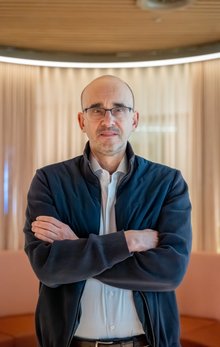
Bjoern Kirchner
Global head of supply chain for adhesive technologies | Henkel

Chris van Veluwen
Senior Manager Process Governance & Analytics Henkel Adhesive Technologies
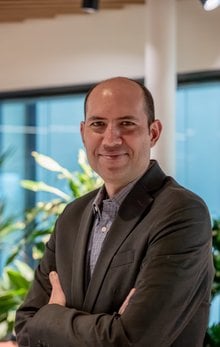
Enrique Schleske
Director Global Supply Chain Planning Head Henkel Adhesive Technologies

Isabelle Von Babo
Vice President Supply Chain Europe Henkel Adhesive Technologies
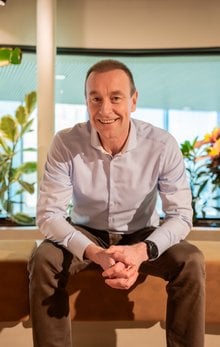
Istvan Lencz
Director of Global Logistics Henkel Adhesive Technologies
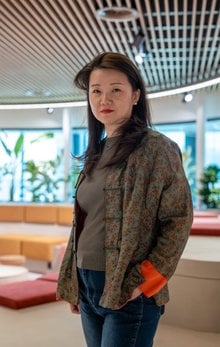
Leanne Chen
Vice President of Supply Chain North America and Mexico Henkel Adhesive Technologies
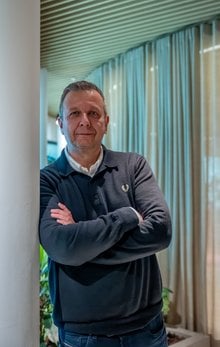
Mirko Koerrenz
Director Global Customer Service Experience Henkel Adhesive Technologies
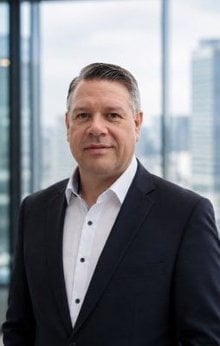
Torsten Meyer
Global Head of Material Master Data Henkel Adhesive Technologies
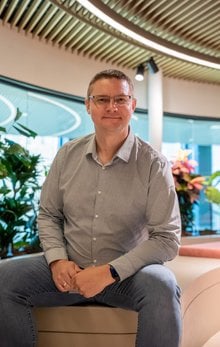
Viktar Shadurka
Head of Operations and Supply Chain Latin America Henkel Adhesive Technologies