How Zipline is Saving Lives With Last-Mile Delivery Drones
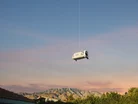
Zipline was founded with the idea of bringing life saving supplies to the most remote communities, launching its first flight in Rwanda in 2016.
Since then, 134.2 million miles have been flown around the world, saving more than 60,000 lives and making more than 2.4 million deliveries.
It has taken part in Rwanda’s national blood delivery network, as well as Ghana’s COVID-19 vaccine distribution, operating off the idea that all humans deserve access to speedy and reliable healthcare.
Now, it has grown to prove its worth as a multi-function last-mile delivery service, scaling across the US to deliver food, retail and healthcare products directly to customers in the space of minutes.

Designed to save lives
The company designs, manufacturers and operates one of the world’s largest automated delivery systems, serving tens of millions of people around the world.
Its expertise in robotics can be seen in its South San Francisco headquarters, where all of the hardware is built. Its complex technology has had a significant impact on healthcare in remote areas.
Zipline offers hospitals, health facilities and community health workers with on-demand access to pharmacies. As a result, Zipline-supported facilities have seen maternal deaths cut by up to 56%. Immunisation rates have increased 13-37% in areas where it operates, and stockouts of medicine and vaccines have reduced by 60%.
Its capabilities of safely, securely and quickly delivering life-saving healthcare has helped transform medicare in previously cut-off areas.
The technology
Zipline drones utilise cloud-based technology to operate, essentially flying itself and navigating its own deliveries. To achieve optimal efficiency, it finds the best route possible and is able to avoid obstacles through the use of sensors and real-time data.
The drones can fly up to 155 miles roundtrip on a single charge, meaning they can get to places that previously have not been reached. They can head to their location at a moment’s notice, due to the 24/7 fulfilment hub operations.
Each drone can fly up to 70 mph on a direct path, utilising folding propellers for stable hovering and fast forward flight.
They are designed to blend into the background and reduce disruption on the ground, with the capabilities of hovering up to 300 feet in the air. This makes them an unobtrusive presence to any area they operate in. The company states that it is six times quieter during delivery than other drones in the industry, developing innovative measures to ensure the commercial drone can have its place in last mile logistics.
As they are delivering vital medications and food, Zipline drones need to be able to store the products accurately. As a result, they have insulted pods, helping keep hot food hot and cold items cold throughout the flight. This keeps everything in optimal temperature and reduces the risk of spoilage.
- More than 60,000 lives have been saved through Zipline
- 2.4 million deliveries have been made
- Maternal deaths have been cut by up to 56% at Zipline-supported facilities
- 86 seconds is its fastest delivery time
- Drones hover up to 300ft in the air
Delivery platforms
The drones operate from two different platforms. Its P1 is utilised for long-range deliveries, with a payload of four pounds and a range of 120+ miles roundtrip. It has a cruise speed of 60mph and utilises a parachute-controlled floating delivery from 60-80 feet above ground level.
Its P2 platform is focused on delivering items to the home – such as its food delivery services in the US. It is designed to service a 10 mile radius or 24 mile one-way trip, with a payload of eight pounds.
This drone type offers precise delivery, capable of delivering to front yards, back yards and public spaces. It takes advantage of a tethered delivery system, from up to 300 feet above ground level.