
How is DP World Making Global Supply Chains Sustainable?
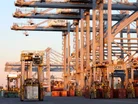
An operator of more than 60 ports and terminals around the world, DP World plays a crucial role in powering global trade.
This world leader in end-to-end supply chain solutions recently surpassed 100 million twenty-foot equivalent units (TEUs) of container handling capacity across its portfolio and handled a record 88.3 million TEUs in 2024 – an 8.3% rise despite macroeconomic headwinds and a gloomy outlook for the future.
Another factor DP World must consider when it comes to ensuring the smooth running of its operations is climate change, as risks such as rising sea levels, flooding and extreme heat increasingly pose challenges.
Recognising this harsh reality, the organisation has conducted a pioneering study assessing the impact of climate change on its global network of ports and terminals (P&Ts) through to the end of the century.
In collaboration with climate analytics firm Jupiter Intelligence and consultants at Guidehouse, the research examined three climate scenarios and assessed the potential impact of six hazards across 50 ports and terminals around the world.
Climate adaptation
Andy Tam, Global Vice President of Energy Management & Decarbonisation, stood at the helm when it came to managing the research project.
Sharing further background on the study, he explains: “We realised a couple of years ago that there were several acute, climate-related disruptions to our business. For example, we noticed high winds in Busan, South Korea, meaning we had to tie down our cranes. In Canada, increases in temperature during the summer would impact our operations, as would extreme cold in the winter.
“Many organisations are focusing on mitigation with their decarbonisation strategies, but not many are focusing on adaptation. We’re an infrastructure-heavy company, so we wanted to make sure our assets were resilient because we know climate change is coming.
“Over the past couple of years, our customers, regulators and investors have been getting increasingly intelligent on this topic. Instead of just asking whether we have a decarbonisation strategy, they’re asking what we’re doing in relation to climate change for our asset base.”
So, the decision was taken by Andy and DP World to try to understand from a data-driven perspective how its assets would be impacted in the near and long term.
Overall, the engagement took about 12 months and involved numerous in-depth discussions with a variety of internal stakeholders including global ops and engineering, group health and safety and environment, group risk and group planning and project management.
“We were all aligned because we knew this was not only something that impacted us, but also our external stakeholders,” Andy adds.
Understanding future risks
DP World's climate impact study took a methodical approach to understanding future risks, analysing multiple scenarios across an 80-year timeframe.
"We looked at five-year increments starting from 2020 all the way to 2100 across three different climate scenarios: low, medium and high," continues Andy.
"We analysed that across six different perils that would affect our assets: heat, cold, hail, precipitation, wind speed and flooding."
The assessment encompassed the full spectrum of port infrastructure, from quay cranes and berths to terminal tractors and electrical substations. Human factors were also considered, particularly how increased humidity might affect the workforce.
To make the findings accessible and meaningful, the team developed a metric based on the percentage of impacted revenues.
“If you peel back the onion,” Andy explains, “that is based on downtime at our ports; peel back another layer, it’s based on downtime of our assets; peel back one final layer, it's based on the amount of times an asset class breaches a maximum operating threshold. For example, if wind speed is above 75km/h, we’ll have to tie down the quay crane.”
Researchers’ granular analysis led to a reassuring conclusion. Based on data from 2020 and 2021, the study projected that, even in a worst-case scenario, less than 0.5% of DP World's P&Ts revenue would be impacted through 2100.
However, Andy emphasises the importance of ongoing assessment: "That's a good finding, but these kinds of insights are only as good as the data that comes in, so we'll continue to refresh the study."
Addressing sustainability challenges
DP World's climate strategy marks a significant shift in corporate environmental commitment, balancing both mitigation and adaptation with increasingly ambitious targets.
The company's recent verification through the Science Based Targets initiative (SBTi) demonstrates this heightened focus.
"Previously, our target was 28% by 2030 in terms of our total emissions reduction,” Andy states. “As part of SBTi verification, we had to increase that to 42%.
“It's not just numbers – the execution part is crucial. But we were willing to do it because we understood you have to pull two levers, adapting as well as mitigating.”
The wider sustainability challenge is particularly complex given DP World's diverse operations. In marine services, which represents the organisation’s largest portion of emissions, the company faces significant technological hurdles.
"Currently, there's no economical or accessible alternative to bunkering fields," Andy notes.
However, the company is actively pursuing solutions, including investment in dual-fuel technology in its Unifeeder business, which has chartered two dual-fuel methanol vessels with the option to charter two more in future.
Meanwhile, the P&Ts division is emerging as a trailblazer in sustainability transformation.
"Our ports and terminals are doing a phenomenal job in terms of addressing the sustainability challenge," Andy emphasises. “We have very solid plans in terms of what we're going to do to reduce our Scope 1 and 2 emissions."
The approach includes an aggressive electrification strategy that extends beyond already-electrified quay cranes to encompass yard rubber tire gantry cranes (RTGs) and terminal tractors.
Perhaps the most nuanced approach is required in logistics, where solutions must be tailored to regional infrastructure capabilities.
“We can electrify our trucking fleets in Europe, but this represents a different challenge in Sub-Saharan Africa purely because of charging infrastructure,” adds Andy.
The result is a multi-faceted strategy incorporating various technologies, including diesel dual fuel (DDF) and hydrogen diesel internal combustion engines for long-haul trucking in Africa.
DP World is also exploring LNG (liquefied natural gas) and CNG (compressed natural gas) trucking solutions, though these are longer-term initiatives.
Andy concludes: “We’re first going to focus on Europe and areas where we have accessibility to electrification options; then, as R&D progresses, we’ll adopt those technologies for other geographies.”
DP World: Raising the bar
DP World's comprehensive approach to climate change demonstrates the evolution of corporate environmental responsibility in the logistics sector.
Through its groundbreaking climate impact study and ambitious emissions reduction targets, the company is addressing both adaptation and mitigation strategies across its global operations.
While the study's findings suggest minimal revenue impact from climate risks through 2100, DP World certainly isn't resting on its laurels. Instead, it's pursuing aggressive sustainability initiatives, from dual-fuel vessels to terminal electrification, while adapting solutions to regional infrastructure capabilities.
It’s a balanced approach that reflects a deep commitment to both operational resilience and environmental stewardship.
To read the full article in the magazine, click HERE.
Explore the latest edition of Sustainability Magazine and be part of the conversation at our global conference series, Sustainability LIVE.
Discover all our upcoming events and secure your tickets today.
Sustainability Magazine is a BizClik brand